
Saudi and Pakistani Foreign Ministers Discuss Regional Security Amid Ongoing Middle East Tensions
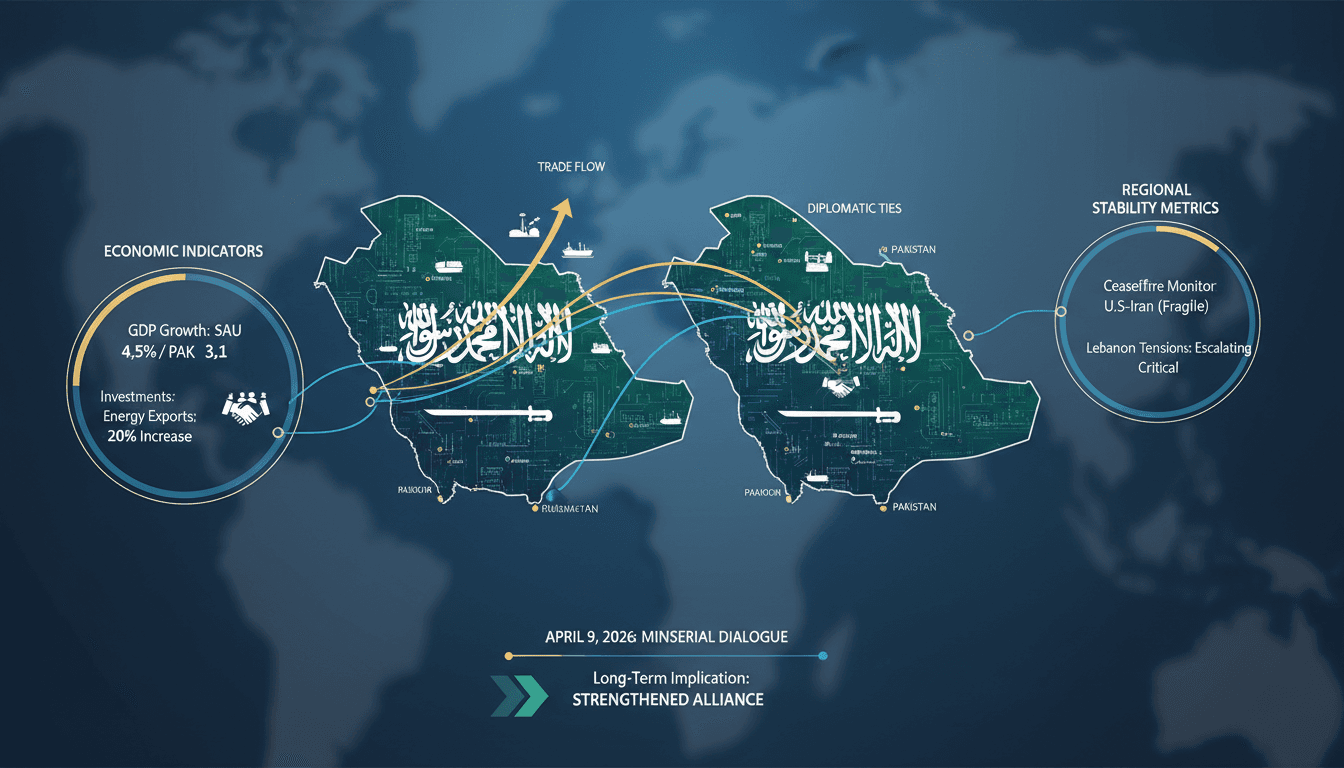
Here's what it means for you.
If you’re engaged in trade or investment in the Gulf region, the outcomes of these diplomatic discussions could directly impact economic stability and operational logistics.
Why it matters
The ongoing coordination between Saudi Arabia and Pakistan is pivotal for maintaining security in a region that significantly influences global oil prices and trade routes.
What happened (in 30 seconds)
- Saudi Foreign Minister Prince Faisal bin Farhan received a call from Pakistani Deputy Prime Minister and Foreign Minister Mohammad Ishaq Dar on April 9, 2026.
- The ministers discussed regional security dynamics following a fragile U.S.-Iran ceasefire and ongoing tensions in Lebanon and the Strait of Hormuz.
- Diplomatic coordination is ongoing, with both nations committed to restoring stability in the Middle East.
The context you actually need
- The backdrop includes a two-week ceasefire in the U.S.-Iran conflict, mediated by Pakistan, which has heightened the need for regional dialogue.
- Israel's operations in Lebanon remain a point of contention, complicating the ceasefire and regional security efforts.
- Saudi Arabia and Pakistan share deep economic ties, with annual bilateral trade reaching $5.2 billion, reinforcing their strategic partnership.
What's really happening
On April 9, 2026, the diplomatic conversation between Saudi Arabia and Pakistan underscores a critical moment in Middle Eastern geopolitics. The call was initiated by Pakistan amid a backdrop of escalating tensions following the U.S.-Iran war, which had recently culminated in a ceasefire. This fragile peace is crucial, as it affects not only regional players but also global markets, particularly oil prices and shipping routes through the Strait of Hormuz.
The Strait is a vital artery for global trade, with approximately 20% of the world's oil passing through it. Iran's control over this area has been a longstanding point of contention, and any disruption can lead to significant economic repercussions worldwide. The ongoing Israeli operations in Lebanon further complicate the situation, as they are not included in the ceasefire, raising fears of wider conflict.
Saudi Arabia and Pakistan, both strategic allies, have been proactive in addressing these challenges. Their previous consultations, including quadrilateral meetings with other regional players, indicate a concerted effort to stabilize the Gulf region. The economic interdependence between the two nations, highlighted by their $5.2 billion annual trade volume, reinforces their diplomatic alignment. This economic bond is not merely transactional; it serves as a foundation for political cooperation, particularly in times of crisis.
The call reflects a broader strategy to engage multiple stakeholders in the region to foster dialogue and de-escalation. Both ministers assessed ongoing multilateral efforts aimed at restoring security and stability, recognizing that coordinated action is essential to mitigate the risks posed by regional conflicts. The discussions also signal a commitment to addressing issues such as ceasefire violations in Gaza and ensuring Gulf stability, which are critical for the broader geopolitical landscape.
As these diplomatic efforts unfold, the implications extend beyond the immediate region. For businesses and investors, particularly those operating in Dubai—a key trade hub with over 1.7 million Pakistani expatriates—the stabilization of the region could enhance trade flows and secure aviation routes. This is particularly relevant given the current tensions in the Strait of Hormuz, where shipping disruptions could significantly impact logistics and costs.
Who feels it first (and how)
- Businesses in Dubai: Increased trade stability could enhance operational efficiency and profitability.
- Expatriates from Pakistan: A stable region may secure remittance flows back to Pakistan, impacting family incomes.
- Investors in Gulf markets: Stability in the region could lead to improved market confidence, affecting stock prices and investment opportunities.
What to watch next
- Future diplomatic meetings: Look for announcements regarding further consultations between Saudi Arabia and Pakistan, as they may indicate shifts in regional security dynamics.
- Market reactions: Monitor the Saudi Tadawul and Dubai DFM indices for any signs of volatility or stability in response to ongoing diplomatic efforts.
- Ceasefire developments: Keep an eye on the U.S.-Iran ceasefire and Israeli operations in Lebanon, as changes could trigger immediate economic implications.
Saudi Arabia and Pakistan are committed to diplomatic coordination for regional stability.
Continued discussions will evolve, potentially leading to new agreements or initiatives aimed at de-escalation.
The long-term effectiveness of these diplomatic efforts in achieving lasting peace and stability in the region remains uncertain.
Frequently Asked Questions
- Why it matters?
- The ongoing coordination between Saudi Arabia and Pakistan is pivotal for maintaining security in a region that significantly influences global oil prices and trade routes.
- What happened (in 30 seconds)?
- Saudi Foreign Minister Prince Faisal bin Farhan received a call from Pakistani Deputy Prime Minister and Foreign Minister Mohammad Ishaq Dar on April 9, 2026. The ministers discussed regional security dynamics following a fragile U.S.-Iran ceasefire and ongoing tensions in Lebanon and the Strait of Hormuz. Diplomatic coordination is ongoing, with both nations committed to restoring stability in the Middle East.
- What's really happening?
- On April 9, 2026, the diplomatic conversation between Saudi Arabia and Pakistan underscores a critical moment in Middle Eastern geopolitics. The call was initiated by Pakistan amid a backdrop of escalating tensions following the U.S.-Iran war, which had recently culminated in a ceasefire. This fragile peace is crucial, as it affects not only regional players but also global markets, particularly oil prices and shipping routes through the Strait of Hormuz. The Strait is a vital artery for globa
- Who feels it first (and how)?
- Businesses in Dubai: Increased trade stability could enhance operational efficiency and profitability. Expatriates from Pakistan: A stable region may secure remittance flows back to Pakistan, impacting family incomes. Investors in Gulf markets: Stability in the region could lead to improved market confidence, affecting stock prices and investment opportunities.
- What to watch next?
- Future diplomatic meetings: Look for announcements regarding further consultations between Saudi Arabia and Pakistan, as they may indicate shifts in regional security dynamics. Market reactions: Monitor the Saudi Tadawul and Dubai DFM indices for any signs of volatility or stability in response to ongoing diplomatic efforts. Ceasefire developments: Keep an eye on the U.S.-Iran ceasefire and Israeli operations in Lebanon, as changes could trigger immediate economic implications.
Pan-Arab news coverage spanning politics, business, sports, and regional affairs.
"Asharq Al-Awsat reflects a broad Arab editorial perspective with strong attention to regional geopolitics."
— A47 Editor
وزيرا خارجية السعودية وباكستان يستعرضان مساعي عودة الأمن والاستقرار في المنطقة
Saudi Foreign Minister Prince Faisal bin Farhan and Pakistani Foreign Minister and Deputy Prime Minister Muhammad Ishaq Dar discussed efforts aimed at restoring security and stability in the region. The meeting highlights the ongoing diplomatic engag...
Arabic-language coverage of Saudi, regional, and international affairs.
"Al Bilad offers mainstream Saudi newspaper coverage across domestic and broader Arab topics."
— A47 Editor
وزير الخارجية يتلقى اتصالًا هاتفيًا من وزير خارجية باكستان
Prince Faisal bin Farhan bin Abdullah, the Minister of Foreign Affairs, received a phone call from Mohammad Ishaq Dar, the Deputy Prime Minister and Minister of Foreign Affairs of the Islamic Republic of Pakistan. The conversation focused on regional...