
UK Defence Secretary Issues Warning to Putin After Russian Submarine Operation Near Undersea Infrastructure
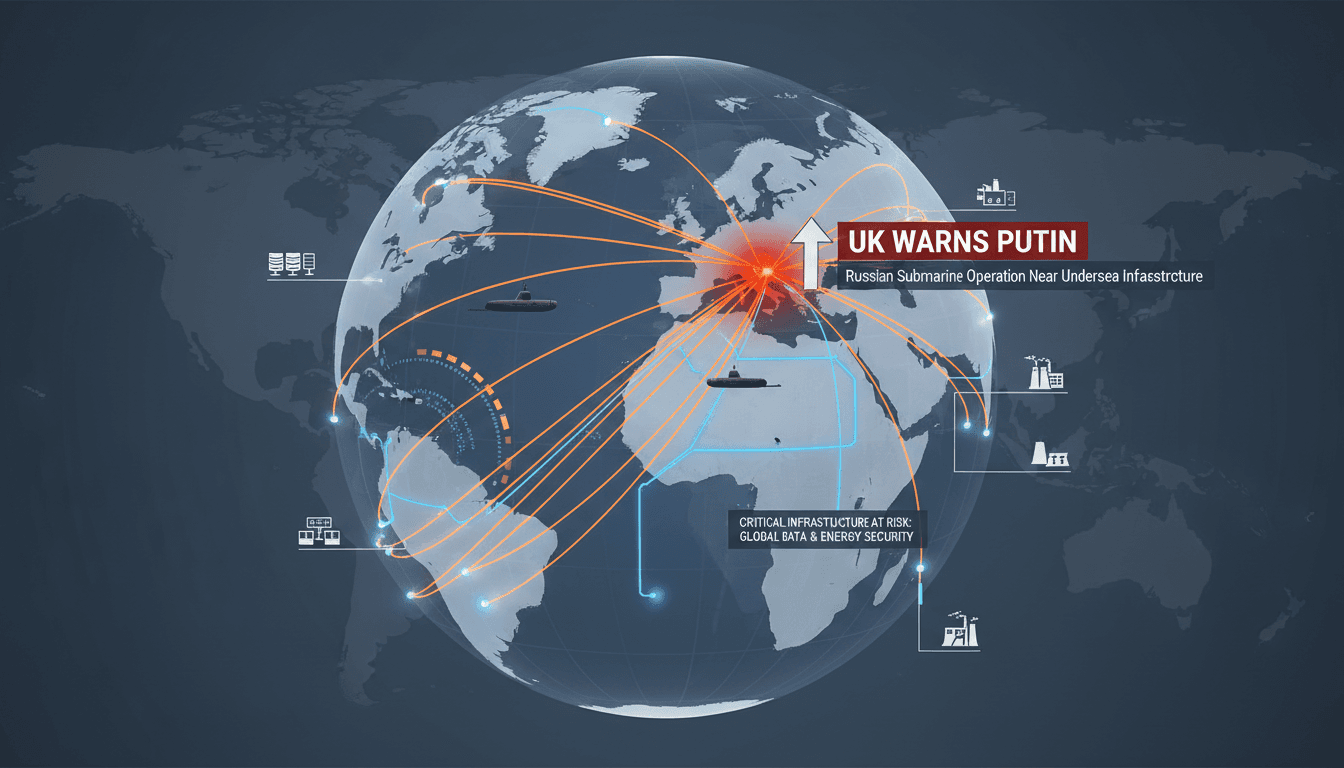
Here's what it means for you.
The recent military tensions in the North Atlantic could impact global data connectivity and energy security, affecting businesses and consumers alike.
Why it matters
This incident underscores the vulnerability of critical undersea infrastructure that supports global communications and energy supplies.
What happened (in 30 seconds)
- UK Defence Secretary John Healey warned of serious consequences for Russia after a covert submarine operation was detected near vital undersea infrastructure.
- Three Russian submarines were tracked by UK and Norwegian forces over a month, prompting a military deterrence operation that forced their retreat.
- No damage was reported to undersea cables or pipelines, but the UK remains vigilant amid ongoing geopolitical tensions.
The context you actually need
- Subsea cables carry 99% of international data traffic, making them critical for global communications and economic stability.
- Russia's GUGI specializes in reconnaissance and potential sabotage, raising concerns about hybrid threats to NATO allies.
- The ongoing Russo-Ukrainian War has heightened tensions, with Russia viewing undersea infrastructure as strategic leverage.
What's really happening
In early March 2026, UK surveillance detected a significant Russian naval presence in international waters north of the UK. An Akula-class attack submarine and two spy vessels from Russia's Main Directorate of Deep Sea Research (GUGI) were loitering over critical subsea infrastructure, including vital fibre optic cables and energy pipelines. This activity coincided with a broader pattern of Russian hybrid threats against NATO allies, including previous incursions by Russian vessels and suspected sabotage of Baltic Sea cables.
The UK, in coordination with Norway, initiated a robust military response. The Royal Navy deployed the Type 23 frigate HMS St Albans, along with a replenishment ship and anti-submarine helicopters, to monitor and deter the Russian submarines. This operation lasted for approximately one month, during which UK forces maintained a constant presence, utilizing advanced tracking technologies like sonobuoys. The overt military posture effectively exposed the covert nature of the Russian operation, compelling the submarines to retreat back to Russian waters by early April.
On April 9, 2026, Healey publicly addressed the situation, warning President Putin of "serious consequences" for any future attempts to damage undersea infrastructure. This statement not only served as a deterrent but also highlighted the UK's commitment to protecting its energy security and critical data networks. The incident has broader implications, as subsea cables are essential for global data traffic, carrying 99% of international communications. Any disruption to these cables could have cascading effects on businesses and consumers worldwide.
The geopolitical backdrop of this incident is critical. The ongoing Russo-Ukrainian War has intensified Russia's focus on undersea infrastructure as a potential target, viewing it as leverage in its broader strategic objectives. The UK and its allies are now more acutely aware of the vulnerabilities inherent in their critical infrastructure, prompting discussions on enhancing military readiness and investment in defense capabilities.
Who feels it first (and how)
- Telecommunications companies: Increased scrutiny on undersea cable security may lead to higher operational costs and investment in protective measures.
- Energy sectors: Any perceived threat to pipelines could drive up energy prices and affect supply chains.
- Government agencies: Heightened military readiness may divert resources and funding from other public services.
- International businesses: Companies relying on stable data connections may face disruptions or increased costs due to enhanced security measures.
What to watch next
- Increased military exercises: Watch for NATO's response in terms of joint military drills in the North Atlantic, which could signal a shift in defense posture.
- Investment in cybersecurity: Monitor how governments and private sectors ramp up investments in cybersecurity for critical infrastructure, as threats evolve.
- Geopolitical developments: Keep an eye on Russia's military movements and diplomatic engagements, as these could indicate future intentions regarding undersea operations.
The UK successfully deterred Russian submarines from damaging undersea infrastructure.
NATO will increase military readiness and surveillance in response to heightened threats from Russia.
The long-term impact on global data connectivity and energy prices remains to be seen.
Frequently Asked Questions
- Why it matters?
- This incident underscores the vulnerability of critical undersea infrastructure that supports global communications and energy supplies.
- What happened (in 30 seconds)?
- UK Defence Secretary John Healey warned of serious consequences for Russia after a covert submarine operation was detected near vital undersea infrastructure. Three Russian submarines were tracked by UK and Norwegian forces over a month, prompting a military deterrence operation that forced their retreat. No damage was reported to undersea cables or pipelines, but the UK remains vigilant amid ongoing geopolitical tensions.
- What's really happening?
- In early March 2026, UK surveillance detected a significant Russian naval presence in international waters north of the UK. An Akula-class attack submarine and two spy vessels from Russia's Main Directorate of Deep Sea Research (GUGI) were loitering over critical subsea infrastructure, including vital fibre optic cables and energy pipelines. This activity coincided with a broader pattern of Russian hybrid threats against NATO allies, including previous incursions by Russian vessels and suspected
- Who feels it first (and how)?
- Telecommunications companies: Increased scrutiny on undersea cable security may lead to higher operational costs and investment in protective measures. Energy sectors: Any perceived threat to pipelines could drive up energy prices and affect supply chains. Government agencies: Heightened military readiness may divert resources and funding from other public services. International businesses: Companies relying on stable data connections may face disruptions or increased costs due to enhance
- What to watch next?
- Increased military exercises: Watch for NATO's response in terms of joint military drills in the North Atlantic, which could signal a shift in defense posture. Investment in cybersecurity: Monitor how governments and private sectors ramp up investments in cybersecurity for critical infrastructure, as threats evolve. Geopolitical developments: Keep an eye on Russia's military movements and diplomatic engagements, as these could indicate future intentions regarding undersea operations.
Conservative-leaning coverage of current events.
"Fox News is a highly influential conservative news outlet known for right-leaning political commentary and coverage."
— A47 Editor
UK defense minister warns Putin of 'serious consequences' after covert underwater military operation
U.K. Defense Minister John Healey has announced a significant military operation involving the Royal Navy and Norway aimed at deterring Russian submarines in the North Sea, warning President Putin of 'serious consequences' for any aggressive actions.
UK and international business news, economics, and corporate coverage.
"The Guardian’s business section covers finance and markets with a progressive editorial tone."
— A47 Editor
UK navy foiled Russian submarines surveying undersea cables, defence minister says
The UK Defence Secretary John Healey announced that a British warship and aircraft successfully tracked and deterred three Russian submarines attempting to survey undersea cables in the North Atlantic during a month-long operation. This action forced...
International coverage from The Guardian's global desks.
"The Guardian is known for its progressive editorial stance and in-depth analysis."
— A47 Editor
UK navy foiled Russian submarines surveying undersea cables, defence minister says
The UK Defence Secretary John Healey announced that a British warship and aircraft successfully tracked and deterred three Russian submarines attempting to survey undersea cables in the North Atlantic during a month-long operation. This action forced...
Political developments, policy debates, elections, and government affairs in the UK.
"BBC News is widely regarded as a reputable international news organization, known for its impartial tone and public service mandate."
— A47 Editor
UK says Russia ran submarine operation over cables and pipelines
The UK Defence Secretary John Healey announced that Russian submarines were conducting covert operations over undersea cables and pipelines in the Atlantic, but there is currently no evidence of damage to UK infrastructure. The Royal Navy successfull...