
EU Foreign Ministers Reject Trump's Call to Secure Strait of Hormuz Amid Iran Conflict
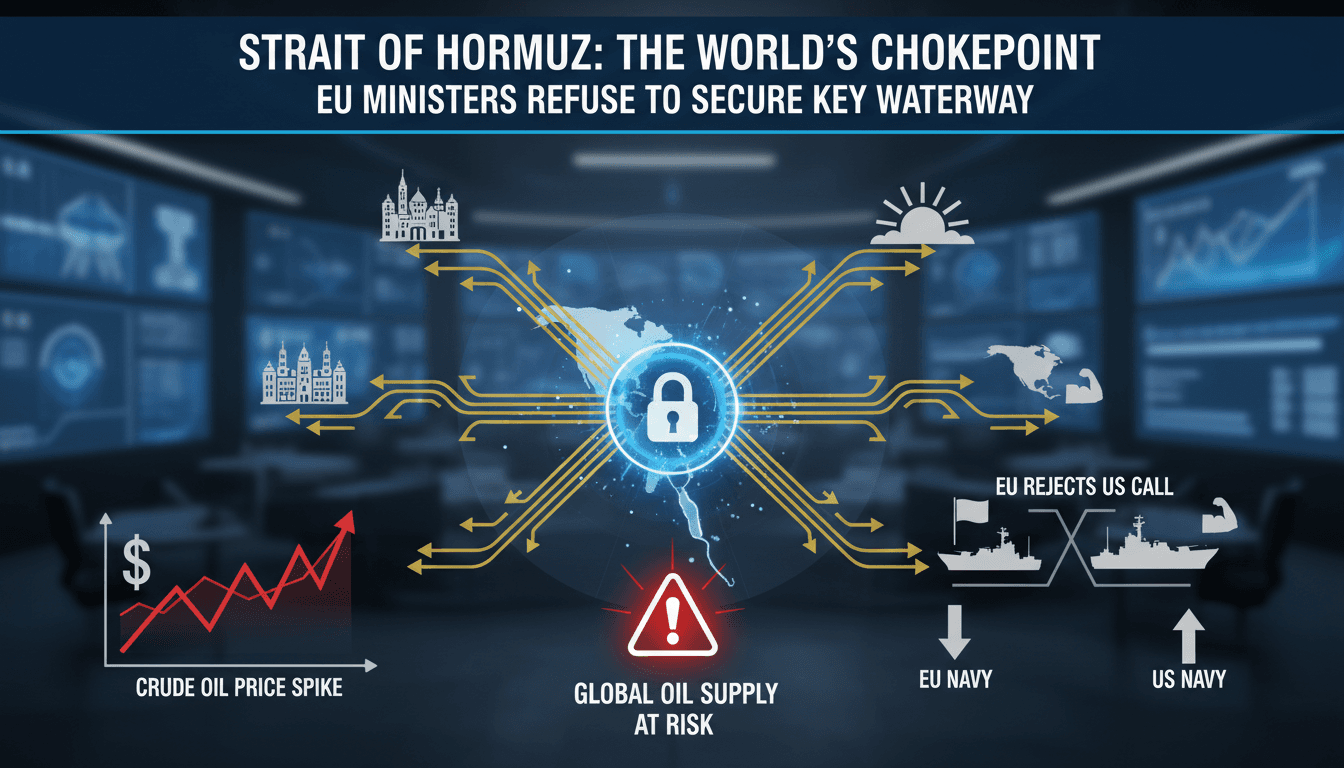
Here's what it means for you.
The ongoing tensions in the Strait of Hormuz could lead to increased oil prices and supply chain disruptions that impact global markets.
What happened
On March 16, 2026, European Union foreign ministers declined to expand their naval operations in the Strait of Hormuz despite a request from U.S. President Donald Trump.
The Context
- Strategic importance: The Strait of Hormuz is a critical chokepoint for approximately 20% of global oil supply and significant liquefied natural gas trade.
- Diplomatic tensions: The refusal highlights deepening transatlantic rifts, with the U.S. focused on Middle Eastern conflicts while Europe prioritizes the Russia-Ukraine war.
- Unilateral U.S. action: Following the rebuff, Trump expressed frustration but indicated the U.S. would pursue unilateral measures to secure the strait.
The Number
of global oil supply transits the Strait of Hormuz daily, equating to around 20 million barrels, underscoring the strait's crucial role in global energy markets.
Takeaway
As geopolitical tensions escalate, expect volatility in oil prices and potential ripple effects across global economies.
Arabic-language reporting on global and regional news.
"BBC Arabic is part of the BBC, generally regarded for editorial standards and broad international coverage."
— A47 Editor
ماتداعيات رفض حلفاء واشنطن تلبية دعوة ترامب لتأمين مضيق هرمز؟
European Union foreign ministers have rejected U.S. President Donald Trump's request for assistance in securing navigation in the Strait of Hormuz, following Iran's announcement of its closure amid ongoing tensions with Israel and the United States. ...
European coverage of Middle East politics and security issues.
"France 24 offers international reporting with a European editorial perspective."
— A47 Editor
'Near universal refusal' - European leaders reject Trump's demand for Strait of Hormuz mission
European leaders have largely rejected U.S. President Donald Trump's request for NATO allies to assist in reopening the Strait of Hormuz, a vital shipping route for crude oil that Iran has effectively blocked amid escalating tensions. This refusal hi...
24/7 international news from a French perspective in multiple languages.
"France 24 is viewed as a globally focused outlet with balanced coverage and a European perspective."
— A47 Editor
'Near universal refusal' - European leaders reject Trump's demand for Strait of Hormuz mission
European leaders have largely rejected U.S. President Donald Trump's request for NATO allies to assist in reopening the Strait of Hormuz, a vital shipping route for crude oil that Iran has effectively blocked amid escalating tensions. This refusal hi...
Global political, business, and cultural coverage from WSJ international desks.
"The Wall Street Journal offers extensive international reporting with a reputation for financial insight and a center-right editorial stance."
— A47 Editor
U.S. Allies Rebuff Trump’s Demand for Help Opening Strait of Hormuz
U.S. President Donald Trump has faced rejection from key allies, including Germany, Australia, and Japan, regarding his request for military assistance to secure the Strait of Hormuz amid rising tensions with Iran. While the U.K. and France have expr...
Political developments, policy debates, elections, and government affairs in the UK.
"BBC News is widely regarded as a reputable international news organization, known for its impartial tone and public service mandate."
— A47 Editor
Wary allies show there's no quick fix to Trump's Iran crisis
European leaders are showing reluctance to assist President Trump in securing the Strait of Hormuz amid escalating tensions with Iran, which has blocked this vital shipping route following U.S. and Israeli military actions. This situation reflects a ...