
IMF Downgrades MENA GDP Growth Forecast to 1.1% Due to Iran War Disruptions
Here's what it means for you.
If you operate in or trade with the Middle East and North Africa, expect rising costs and potential supply chain disruptions.
Why it matters
The IMF's downgrade signals significant economic instability in a region critical to global energy supplies.
What happened (in 30 seconds)
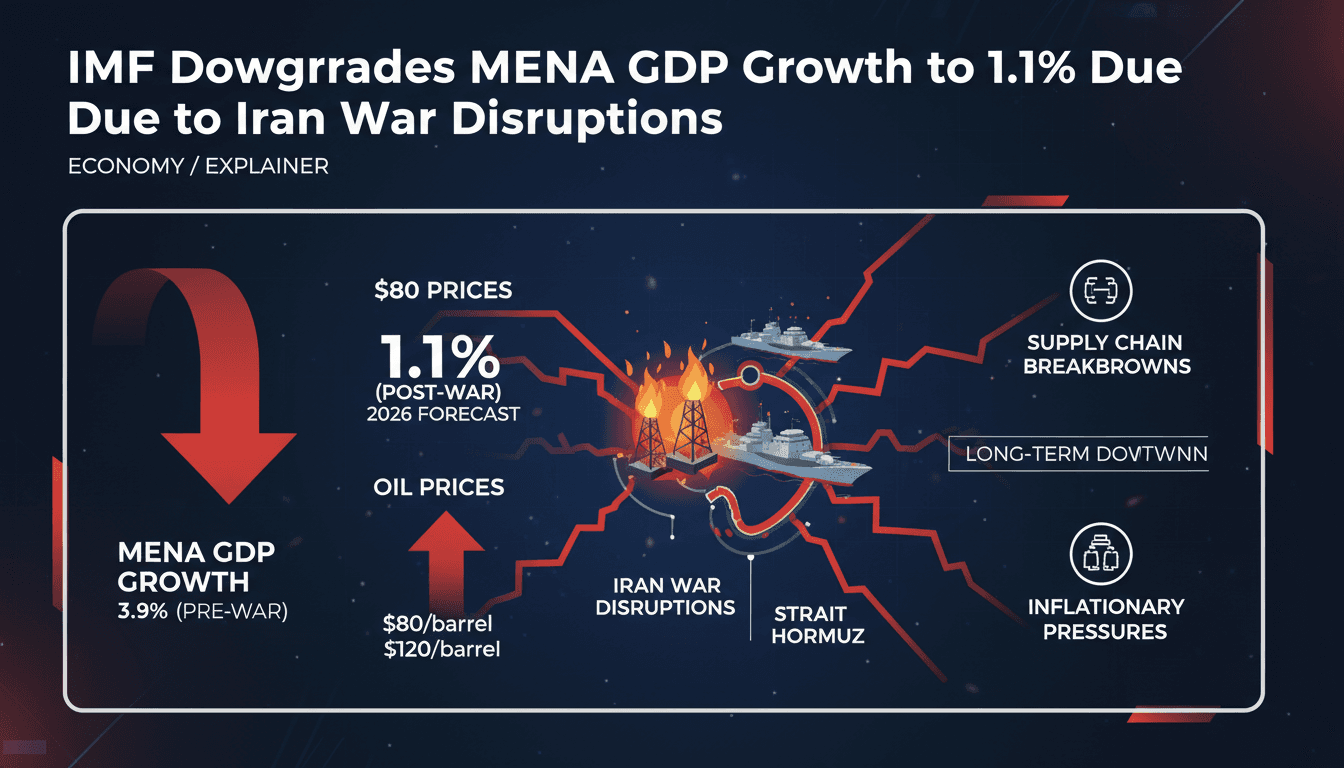
- On April 14, 2026, the IMF revised its GDP growth forecast for MENA to 1.1%, down from 3.9%.
- The downgrade is primarily due to the Iran war, which has disrupted oil production and shipping routes.
- Gulf oil exporters like Bahrain, Iraq, Kuwait, and Qatar are facing contractions, while Saudi Arabia and the UAE see milder slowdowns.
The context you actually need
- The Iran war escalated on February 28, 2026, following U.S.-Israeli airstrikes, leading to Iranian retaliatory attacks on Gulf energy infrastructure.
- The Strait of Hormuz, a vital shipping lane for 20% of global oil and LNG flows, has experienced significant disruptions, exacerbating supply shocks.
- Oil prices surged above $100 per barrel, contributing to inflationary pressures and economic uncertainty across the region.
What's really happening
The IMF's downgrade of the MENA GDP growth forecast to 1.1% reflects a complex interplay of geopolitical tensions and economic vulnerabilities. The Iran war, ignited by U.S.-Israeli strikes, has led to retaliatory actions from Iran that directly target Gulf energy infrastructure. This conflict has not only damaged oil production facilities but also disrupted shipping routes through the Strait of Hormuz, a critical artery for global energy supplies.
As a result, Gulf oil exporters are facing significant economic contractions. Countries like Bahrain, Iraq, Kuwait, and Qatar are particularly vulnerable, with their economies heavily reliant on oil revenues. The IMF's projections indicate that these nations will experience negative growth, while Saudi Arabia and the UAE, despite facing milder slowdowns, are still projected to grow at only 3.1%. This is a stark contrast to the earlier forecast of 3.9% growth for the region.
The immediate aftermath of the IMF's announcement saw oil prices fluctuating around $100 per barrel, reflecting ongoing supply risks. Gulf governments have emphasized their economic resilience, with Saudi Arabia positioning itself as a regional growth leader. However, the lack of immediate fiscal policy responses to the IMF update raises concerns about the long-term sustainability of these economies amid rising costs and inflation.
Moreover, the conflict has triggered a U.S. blockade of Iranian ports, further complicating the regional economic landscape. The IMF has warned of prolonged downside risks if the conflict persists, indicating that the economic fallout could extend beyond 2026. This situation creates a precarious environment for businesses and consumers alike, as rising fuel, grocery, and transportation costs begin to impact daily life in cities like Dubai.
Who feels it first (and how)
- Energy sector workers in Gulf states may face job insecurity due to production cuts.
- Consumers in Dubai will experience rising costs for fuel and groceries, impacting disposable income.
- Businesses reliant on imports will see increased prices and potential supply chain disruptions.
What to watch next
- Oil price trends: Continued fluctuations in oil prices will indicate the stability of energy supplies and inflationary pressures.
- Geopolitical developments: Any escalation or de-escalation in the Iran war will significantly impact regional economic forecasts.
- IMF updates: Future revisions to the IMF's growth forecasts will provide insights into the evolving economic landscape in MENA.
The IMF has downgraded the MENA GDP growth forecast to 1.1%.
Continued economic contractions in Gulf oil-exporting nations if the conflict persists.
The long-term impacts on global energy markets and inflation rates.
Frequently Asked Questions
- Why it matters?
- The IMF's downgrade signals significant economic instability in a region critical to global energy supplies.
- What happened (in 30 seconds)?
- On April 14, 2026, the IMF revised its GDP growth forecast for MENA to 1.1%, down from 3.9%. The downgrade is primarily due to the Iran war, which has disrupted oil production and shipping routes. Gulf oil exporters like Bahrain, Iraq, Kuwait, and Qatar are facing contractions, while Saudi Arabia and the UAE see milder slowdowns.
- What's really happening?
- The IMF's downgrade of the MENA GDP growth forecast to 1.1% reflects a complex interplay of geopolitical tensions and economic vulnerabilities. The Iran war, ignited by U.S.-Israeli strikes, has led to retaliatory actions from Iran that directly target Gulf energy infrastructure. This conflict has not only damaged oil production facilities but also disrupted shipping routes through the Strait of Hormuz, a critical artery for global energy supplies. As a result, Gulf oil exporters are facing sig
- Who feels it first (and how)?
- Energy sector workers in Gulf states may face job insecurity due to production cuts. Consumers in Dubai will experience rising costs for fuel and groceries, impacting disposable income. Businesses reliant on imports will see increased prices and potential supply chain disruptions.
- What to watch next?
- Oil price trends: Continued fluctuations in oil prices will indicate the stability of energy supplies and inflationary pressures. Geopolitical developments: Any escalation or de-escalation in the Iran war will significantly impact regional economic forecasts. IMF updates: Future revisions to the IMF's growth forecasts will provide insights into the evolving economic landscape in MENA.
Macro commentary, policy analysis, growth/inflation themes, and global outlooks.
"Contextual macro coverage that complements day-to-day market headlines."
— A47 Editor
IMF slashes growth forecast for Middle East as Gulf exporters reel from impact of war
The International Monetary Fund (IMF) has significantly reduced its growth forecast for the Middle East, attributing this downgrade to the ongoing conflict in the region, which has severely impacted Gulf exporters. The IMF's latest projection reflect...
Arabic-language UAE newspaper coverage focused on domestic affairs, public institutions, business, society, and regional developments.
"Al Khaleej coverage generally reflects a mainstream UAE editorial lens with strong attention to public affairs, institutions, and regional developments."
— A47 Editor
صندوق النقد يخفض توقعاته للنمو الاقتصادي في الشرق الأوسط بسبب الحرب
The International Monetary Fund (IMF) has revised its economic growth forecasts for the Middle East and Central Asia, lowering the projection from 3.6% in 2025 to 1.9% in 2026, primarily due to the impacts of ongoing conflicts in the region.
Pan-Arab news coverage spanning politics, business, sports, and regional affairs.
"Asharq Al-Awsat reflects a broad Arab editorial perspective with strong attention to regional geopolitics."
— A47 Editor
الحرب تدفع صندوق النقد الدولي لخفض توقعاته للشرق الأوسط بنسبة حادة
The International Monetary Fund (IMF) has sharply reduced its growth forecasts for the Middle East and North Africa region, citing the ongoing impacts of conflict as a significant factor. This adjustment reflects the economic challenges faced by thes...