
U.S. Southern Command Conducts Airstrikes on Drug-Trafficking Vessels in Eastern Pacific
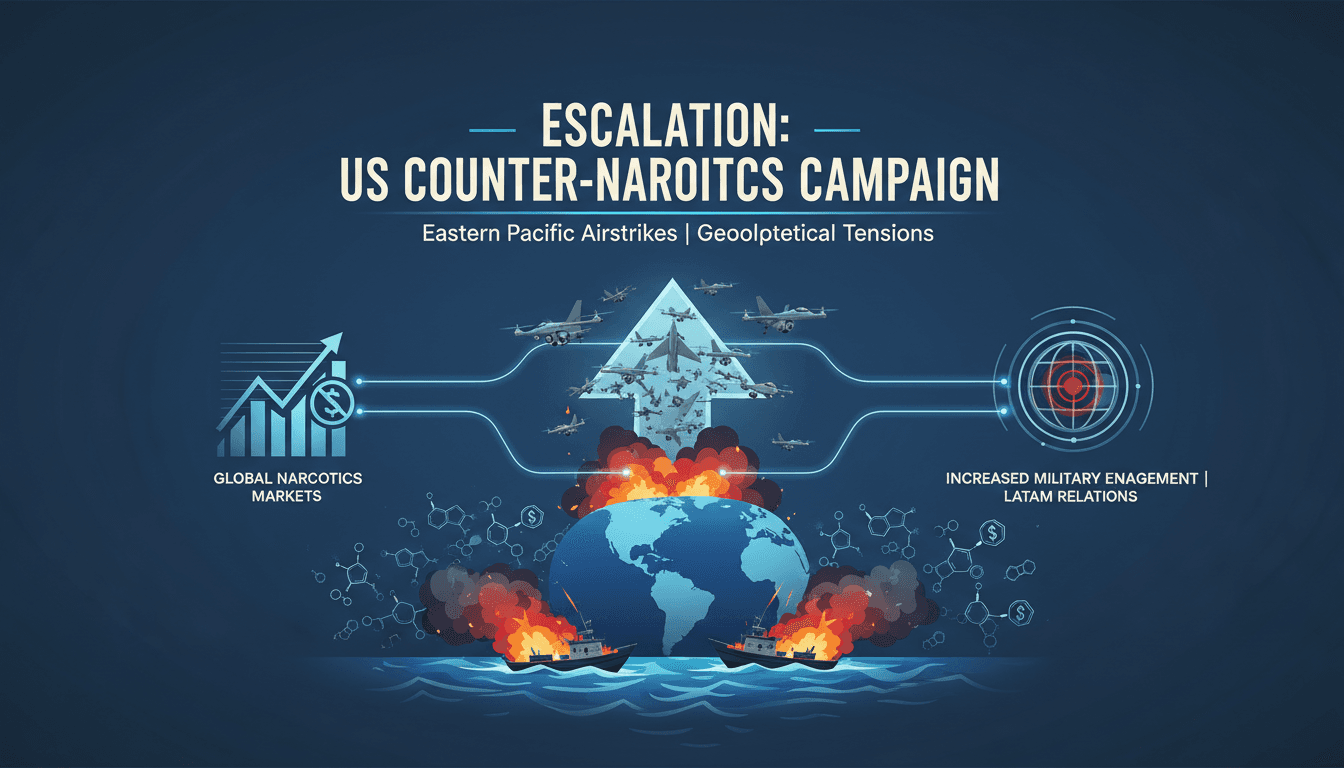
Here's what it means for you.
Increased U.S. military operations against drug trafficking may impact global narcotics markets and security dynamics.
Why it matters
The escalation of U.S. counter-narcotics operations could lead to heightened geopolitical tensions and shifts in drug trafficking routes.
What happened (in 30 seconds)
- On April 11, 2026, U.S. Southern Command conducted airstrikes on two suspected drug-trafficking vessels in the eastern Pacific Ocean, killing five alleged traffickers.
- The operation is part of a broader U.S. campaign, dubbed Operation Southern Spear, targeting narcotics routes and groups labeled as 'narco-terrorists.'
- One survivor was reported from the strikes, with ongoing operations and potential international scrutiny over the legality of these actions.
The context you actually need
- Operation Southern Spear was initiated in September 2025, focusing on narcoterrorist groups in the Caribbean and eastern Pacific, authorized under the second Trump administration.
- Prior operations have resulted in at least 168 fatalities across 47 engagements, raising concerns about extrajudicial killings and compliance with international law.
- The U.S. aims to curb fentanyl inflows, which have contributed to a domestic crisis, thus justifying military actions against drug trafficking.
What's really happening
The recent airstrikes by U.S. Southern Command are part of an intensified military strategy aimed at dismantling drug trafficking networks that are increasingly linked to organized crime and terrorism. The U.S. government has labeled individuals involved in these operations as 'narco-terrorists,' which allows for a more aggressive military response without the need for traditional law enforcement protocols. This shift reflects a broader trend in U.S. foreign policy, where military force is employed to address issues that have historically been managed through diplomatic or law enforcement channels.
The airstrikes targeted vessels identified through intelligence as operating in known narcotics corridors. The initial strike resulted in the deaths of two individuals, while a subsequent engagement eliminated three more. This approach not only aims to disrupt the supply chain of illegal drugs but also sends a clear message to other traffickers about the consequences of engaging in such activities. The U.S. military has released footage of the strikes, emphasizing transparency but also raising questions about the evidence supporting the designation of these individuals as traffickers.
Critics, including human rights organizations, have raised alarms about the potential for civilian casualties and the lack of due process in these operations. The absence of prior interdiction steps before launching airstrikes has drawn scrutiny regarding compliance with international law. The ongoing operations are set against a backdrop of increasing geopolitical tensions, particularly with countries like Venezuela, which have been accused of harboring drug trafficking networks.
As the U.S. continues its military campaign, the implications extend beyond the immediate context of drug trafficking. The potential for retaliatory actions from traffickers or their affiliates could destabilize regions involved in the drug trade. Furthermore, the U.S. strategy may inadvertently shift trafficking routes, leading to new challenges in monitoring and controlling drug inflows.
Who feels it first (and how)
- U.S. law enforcement agencies: Increased pressure to manage domestic drug crises exacerbated by trafficking.
- Narcotics traffickers: Potential for heightened risks and operational changes in response to U.S. military actions.
- Local communities in affected regions: Possible increases in violence or instability as traffickers adapt to military pressure.
- International relations experts: Need to reassess geopolitical dynamics in Latin America as U.S. military presence intensifies.
What to watch next
- International reactions: Monitor responses from Latin American countries regarding U.S. military operations and potential diplomatic fallout.
- Trafficking patterns: Watch for shifts in drug trafficking routes as organizations adapt to U.S. military pressure, which could affect global narcotics markets.
- Human rights advocacy: Keep an eye on developments from human rights organizations concerning the legality and ethical implications of U.S. military actions.
U.S. airstrikes have resulted in fatalities among suspected drug traffickers.
Increased military operations will lead to shifts in drug trafficking routes and potential retaliatory actions from traffickers.
The long-term impact on international relations and domestic drug crises remains uncertain.
Frequently Asked Questions
- Why it matters?
- The escalation of U.S. counter-narcotics operations could lead to heightened geopolitical tensions and shifts in drug trafficking routes.
- What happened (in 30 seconds)?
- On April 11, 2026, U.S. Southern Command conducted airstrikes on two suspected drug-trafficking vessels in the eastern Pacific Ocean, killing five alleged traffickers. The operation is part of a broader U.S. campaign, dubbed Operation Southern Spear, targeting narcotics routes and groups labeled as 'narco-terrorists.' One survivor was reported from the strikes, with ongoing operations and potential international scrutiny over the legality of these actions.
- What's really happening?
- The recent airstrikes by U.S. Southern Command are part of an intensified military strategy aimed at dismantling drug trafficking networks that are increasingly linked to organized crime and terrorism. The U.S. government has labeled individuals involved in these operations as 'narco-terrorists,' which allows for a more aggressive military response without the need for traditional law enforcement protocols. This shift reflects a broader trend in U.S. foreign policy, where military force is emplo
- Who feels it first (and how)?
- U.S. law enforcement agencies: Increased pressure to manage domestic drug crises exacerbated by trafficking. Narcotics traffickers: Potential for heightened risks and operational changes in response to U.S. military actions. Local communities in affected regions: Possible increases in violence or instability as traffickers adapt to military pressure. International relations experts: Need to reassess geopolitical dynamics in Latin America as U.S. military presence intensifies.
- What to watch next?
- International reactions: Monitor responses from Latin American countries regarding U.S. military operations and potential diplomatic fallout. Trafficking patterns: Watch for shifts in drug trafficking routes as organizations adapt to U.S. military pressure, which could affect global narcotics markets. Human rights advocacy: Keep an eye on developments from human rights organizations concerning the legality and ethical implications of U.S. military actions.
Pan-Arab political news and analysis.
"Al-Quds Al-Arabi is a London-based Arabic newspaper known for political coverage."
— A47 Editor
مقتل 5 في ضربات أمريكية على قوارب تهريب مخدرات بالمحيط الهادئ
The U.S. military announced that five individuals were killed in strikes targeting boats suspected of drug trafficking in the eastern Pacific Ocean, raising the total death toll from the American military campaign against drug traffickers in the Cari...
Capitol Hill news, legislation, and policy insight.
"The Hill specializes in U.S. politics and policy, with a focus on Capitol Hill developments and a reputation for insider reporting."
— A47 Editor
US military says 5 killed in Eastern Pacific boat strikes
The U.S. military reported that five individuals were killed in strikes against vessels in the Eastern Pacific, which were confirmed to be operating along known narco-trafficking routes. This operation was conducted by Joint Task Force Southern Spear...
Conservative-leaning political and national coverage.
"The Washington Times is a conservative-leaning newspaper known for its political coverage and advocacy of right-of-center viewpoints."
— A47 Editor
Strikes on 'drug boats' kill 5, leave 1 survivor in eastern Pacific, U.S. military says
The U.S. military conducted strikes on two boats in the eastern Pacific Ocean, resulting in the deaths of five individuals and leaving one survivor. These vessels were reportedly involved in drug trafficking, a focus of the Trump administration's ong...