
Iran Enforces IRGC-Controlled Maritime Routes in Strait of Hormuz Amid Ceasefire Violations
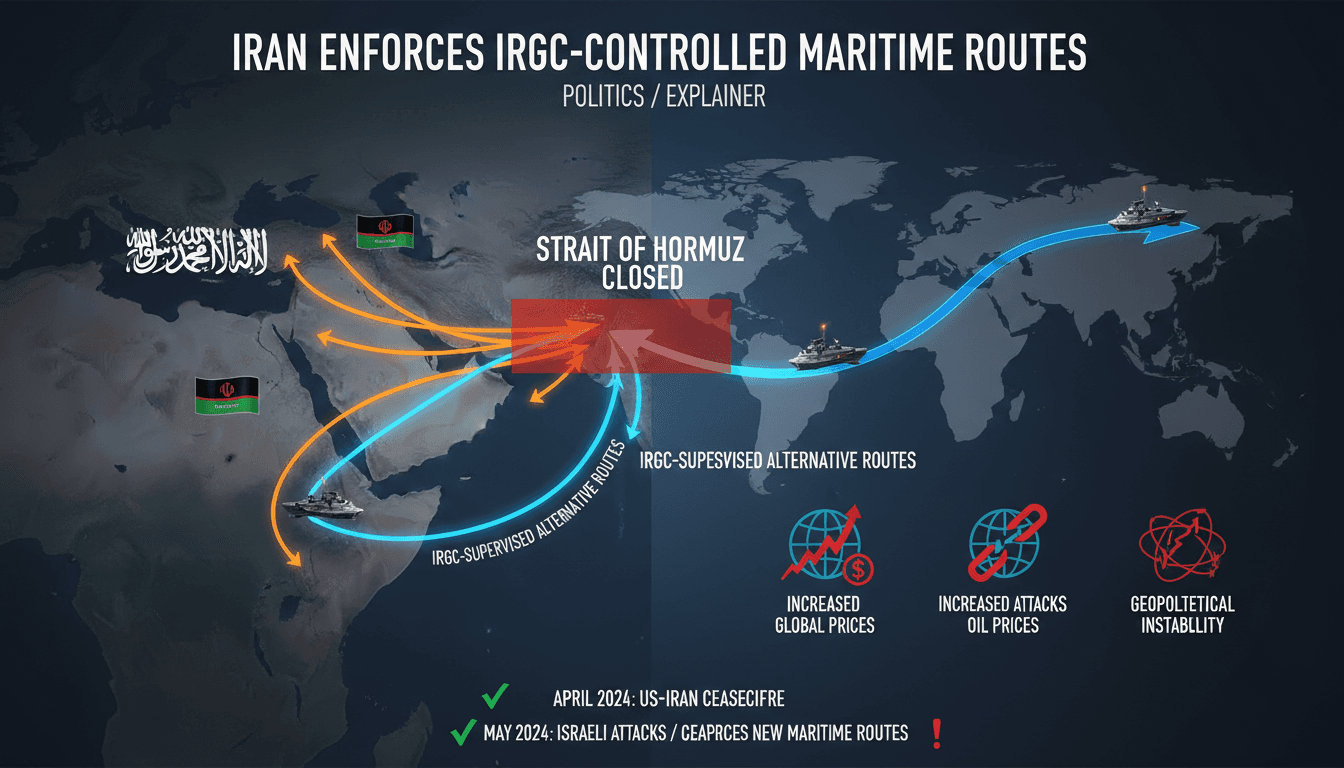
Here's what it means for you.
If you rely on global energy markets, this development could impact fuel prices and supply chains.
Why it matters
This maritime restriction threatens global oil supply, given that the Strait of Hormuz is a critical chokepoint for about 20% of the world's oil trade.
What happened (in 30 seconds)
- On April 9, 2026, Iran closed the Strait of Hormuz to 99% of vessels, citing security risks after ceasefire violations.
- The IRGC Navy announced alternative maritime routes under its supervision, requiring prior coordination and imposing fees.
- Global oil prices surged toward $140 per barrel as tensions escalated amid the ongoing U.S.-Israel-Iran conflict.
The context you actually need
- The Strait of Hormuz is a 21-mile-wide chokepoint that facilitates around 20% of global oil trade, making it a vital artery for energy supplies.
- Tensions escalated in early March 2026, leading to Iran's initial closure of the strait and subsequent selective blockades against U.S. and allied shipping.
- A fragile ceasefire was brokered by Pakistan but was quickly undermined by Israeli strikes on Lebanon, prompting Iran's retaliatory measures.
What's really happening
The recent closure of the Strait of Hormuz by Iran marks a significant escalation in the ongoing U.S.-Israel-Iran conflict, which has been intensifying since early March 2026. Following a series of Israeli airstrikes on Lebanon that violated a ceasefire agreement, Iran responded by enforcing strict maritime controls over the strait, a critical passage for global oil shipments. By mandating alternative routes under the supervision of the Islamic Revolutionary Guard Corps (IRGC), Iran is not only asserting its military presence but also leveraging its control over this vital chokepoint to impose transit fees—estimated at approximately $2 million per vessel.
This move transforms the Strait of Hormuz into a toll corridor, effectively allowing Iran to monetize its strategic position while simultaneously heightening geopolitical tensions. The IRGC's involvement indicates a militarization of maritime trade routes, which could deter shipping firms from transiting through the area without prior coordination, thereby increasing operational costs and logistical complexities. The requirement for vessels to navigate near Larak Island under IRGC supervision introduces an additional layer of uncertainty, as shipping firms must now weigh the risks of potential conflicts against the costs of rerouting.
The implications extend beyond immediate shipping concerns; they signal a broader shift in how maritime security is managed in the region. With the U.S. demanding a full reopening of the strait and threatening military action against Iranian infrastructure, the situation remains volatile. The potential for further escalation could lead to increased military presence in the region, affecting not only oil prices but also global supply chains reliant on stable maritime routes.
As Iran continues to assert its influence, the strategic calculus for neighboring countries, particularly those like Saudi Arabia and the UAE, is shifting. These nations are ramping up alternative pipeline usage, such as the East-West Pipeline and Habshan-Fujairah, to sustain oil exports while mitigating the impact of the strait's restrictions. However, this pivot comes with its own set of challenges, including increased logistics costs and the need for enhanced infrastructure to handle the redirected oil flows.
Who feels it first (and how)
- Shipping companies: Facing increased costs and logistical challenges due to new routing requirements.
- Energy consumers: Individuals and businesses may see higher fuel prices as oil markets react to supply disruptions.
- Middle Eastern nations: Countries reliant on oil exports, like Saudi Arabia and the UAE, must adapt to new export routes and potential revenue impacts.
What to watch next
- Global oil prices: Watch for fluctuations as markets react to ongoing tensions and potential supply disruptions.
- Shipping routes: Monitor how shipping companies adapt to the new IRGC-supervised routes and any resulting delays or changes in transit times.
- Geopolitical developments: Keep an eye on diplomatic negotiations in Islamabad and any military responses from the U.S. or Israel.
The Strait of Hormuz is a critical route for global oil trade, and its closure impacts supply.
Increased oil prices and logistical costs as shipping firms adapt to new regulations.
The long-term implications of Iran's maritime control on regional stability and international relations.
Frequently Asked Questions
- Why it matters?
- This maritime restriction threatens global oil supply, given that the Strait of Hormuz is a critical chokepoint for about 20% of the world's oil trade.
- What happened (in 30 seconds)?
- On April 9, 2026, Iran closed the Strait of Hormuz to 99% of vessels, citing security risks after ceasefire violations. The IRGC Navy announced alternative maritime routes under its supervision, requiring prior coordination and imposing fees. Global oil prices surged toward $140 per barrel as tensions escalated amid the ongoing U.S.-Israel-Iran conflict.
- What's really happening?
- The recent closure of the Strait of Hormuz by Iran marks a significant escalation in the ongoing U.S.-Israel-Iran conflict, which has been intensifying since early March 2026. Following a series of Israeli airstrikes on Lebanon that violated a ceasefire agreement, Iran responded by enforcing strict maritime controls over the strait, a critical passage for global oil shipments. By mandating alternative routes under the supervision of the Islamic Revolutionary Guard Corps (IRGC), Iran is not only
- Who feels it first (and how)?
- Shipping companies: Facing increased costs and logistical challenges due to new routing requirements. Energy consumers: Individuals and businesses may see higher fuel prices as oil markets react to supply disruptions. Middle Eastern nations: Countries reliant on oil exports, like Saudi Arabia and the UAE, must adapt to new export routes and potential revenue impacts.
- What to watch next?
- Global oil prices: Watch for fluctuations as markets react to ongoing tensions and potential supply disruptions. Shipping routes: Monitor how shipping companies adapt to the new IRGC-supervised routes and any resulting delays or changes in transit times. Geopolitical developments: Keep an eye on diplomatic negotiations in Islamabad and any military responses from the U.S. or Israel.
Arabic-language coverage of international news and geopolitics.
"RT Arabic is a Russian state-funded outlet often criticized for promoting Kremlin-aligned narratives."
— A47 Editor
مضيق هرمز بين الإغلاق والفتح المشروط.. إيران تفرض مسارات بحرية بديلة تحت إشراف الحرس الثوري
The Strait of Hormuz is experiencing significant instability, oscillating between complete closure and conditional reopening, following a fragile ceasefire announcement between Washington and Tehran. Iran has imposed alternative maritime routes under...
Arabic-language political and world news coverage for UAE readers.
"Emarat Al Youm world coverage usually presents international developments through a UAE and Arab audience lens."
— A47 Editor
مضيق هرمز وخطر الألغام.. إيران تعلن مسارَين بديلين مضيق هرمز وخطر الألغام.. إيران تعلن مسارَين بديلين
The Iranian Revolutionary Guard Corps announced that vessels passing through the Strait of Hormuz must now follow two alternative routes near the coast due to concerns over mines in the area. This announcement was made on Thursday, April 9, 2026, hig...