
Microsoft to Revise Copilot Terms of Service Following Social Media Backlash
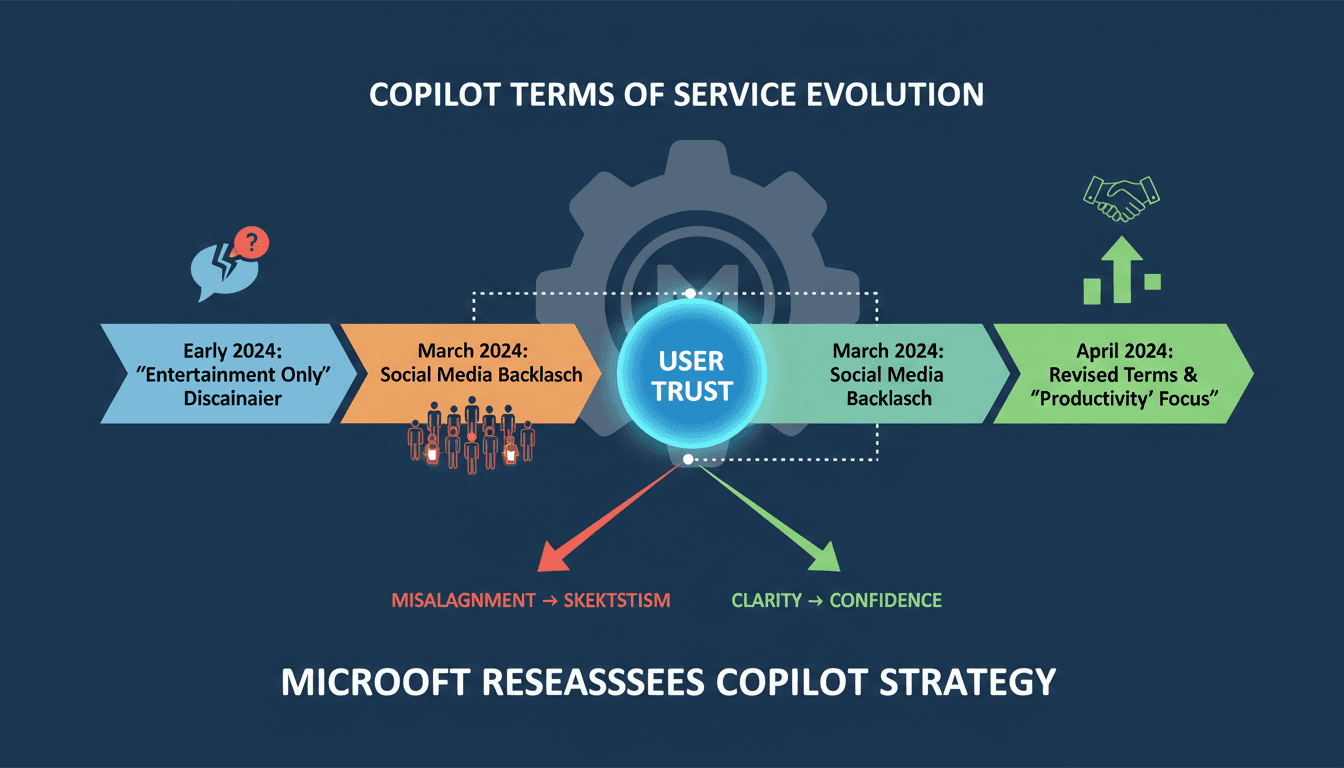
Here's what it means for you.
If you rely on AI tools like Microsoft Copilot for professional tasks, this update could reshape your understanding of their reliability.
Why it matters
The revision signals a shift in how AI tools are marketed and perceived in professional environments.
What happened (in 30 seconds)
- On April 6, 2026, Microsoft announced plans to update the terms of service for its Copilot AI tool.
- The change follows viral criticism on social media regarding the outdated "for entertainment purposes only" disclaimer.
- Microsoft confirmed the language was legacy and would be removed in the next update.
The context you actually need
- Microsoft Copilot was initially launched as Bing Chat in February 2023 and rebranded to enhance its integration within Microsoft 365.
- The "entertainment purposes only" clause persisted despite the tool's marketing as a serious productivity solution, raising questions about its reliability.
- Ongoing scrutiny in the AI industry includes multiple lawsuits against companies like OpenAI, highlighting the need for clear disclaimers and responsibilities.
What's really happening
The recent announcement from Microsoft to revise the terms of service for Copilot reflects a broader trend in the AI industry, where companies are grappling with the implications of their products' capabilities and the legal responsibilities that come with them. The original disclaimer, which stated that Copilot was "for entertainment purposes only," was a remnant from its early days as a Bing search companion. This language became increasingly incongruent with Microsoft's aggressive marketing strategy that positioned Copilot as an essential tool for productivity and enterprise use.
The backlash on social media, particularly on platforms like X (formerly Twitter), highlighted the irony of promoting an AI tool for serious business applications while simultaneously warning users to treat it as a source of entertainment. This contradiction not only undermined user trust but also raised questions about the legal liabilities associated with AI-generated content. As AI technologies evolve, companies are under pressure to clarify the capabilities and limitations of their tools to avoid potential lawsuits and reputational damage.
In the wake of this criticism, Microsoft’s spokesperson described the outdated disclaimer as "legacy language" that no longer reflected the product's evolution. The commitment to revise the terms indicates an awareness of the need to align product messaging with user expectations and market realities. This move is not just about updating language; it’s about reinforcing the credibility of AI tools in professional settings.
As the AI landscape continues to develop, companies must navigate the delicate balance between innovation and accountability. The revision of Copilot's terms is a signal that Microsoft is taking steps to address these challenges, but it also raises questions about how other companies will respond. The broader implications of this shift could influence how AI tools are perceived and adopted across various sectors, particularly in industries that rely heavily on accurate and reliable information.
Who feels it first (and how)
- Business professionals: Increased scrutiny on AI tools may lead to hesitance in relying on them for critical tasks.
- Tech developers: A shift in terms may prompt developers to reassess how they communicate capabilities and limitations of AI products.
- Legal teams: Companies may need to prepare for more rigorous compliance and liability assessments related to AI outputs.
What to watch next
- Future updates from Microsoft: Keep an eye on how the revised terms impact user trust and adoption rates of Copilot.
- Legal developments in AI: Monitor ongoing lawsuits and regulatory changes that could shape the landscape for AI tools.
- Market responses: Watch how competitors adjust their messaging and terms in light of Microsoft’s changes.
Microsoft will revise the terms of service for Copilot.
Other companies will follow suit in clarifying their AI product disclaimers.
The long-term impact on user trust and AI adoption in professional settings remains to be seen.
Frequently Asked Questions
- Why it matters?
- The revision signals a shift in how AI tools are marketed and perceived in professional environments.
- What happened (in 30 seconds)?
- On April 6, 2026, Microsoft announced plans to update the terms of service for its Copilot AI tool. The change follows viral criticism on social media regarding the outdated "for entertainment purposes only" disclaimer. Microsoft confirmed the language was legacy and would be removed in the next update.
- What's really happening?
- The recent announcement from Microsoft to revise the terms of service for Copilot reflects a broader trend in the AI industry, where companies are grappling with the implications of their products' capabilities and the legal responsibilities that come with them. The original disclaimer, which stated that Copilot was "for entertainment purposes only," was a remnant from its early days as a Bing search companion. This language became increasingly incongruent with Microsoft's aggressive marketing s
- Who feels it first (and how)?
- Business professionals: Increased scrutiny on AI tools may lead to hesitance in relying on them for critical tasks. Tech developers: A shift in terms may prompt developers to reassess how they communicate capabilities and limitations of AI products. Legal teams: Companies may need to prepare for more rigorous compliance and liability assessments related to AI outputs.
- What to watch next?
- Future updates from Microsoft: Keep an eye on how the revised terms impact user trust and adoption rates of Copilot. Legal developments in AI: Monitor ongoing lawsuits and regulatory changes that could shape the landscape for AI tools. Market responses: Watch how competitors adjust their messaging and terms in light of Microsoft’s changes.
Business and tech news excluding paywalled content.
"High-volume business/tech outlet with frequent AI coverage."
— A47 Editor
Microsoft says Copilot isn't just 'for entertainment purposes' after its terms of service language goes viral
Microsoft has announced plans to update the terms of use for its Copilot service after controversial language stating it is intended for 'entertainment purposes only' went viral. This statement has raised concerns about the reliability and functional...
Startup news with frequent AI coverage.
"Covers launches, funding, and product updates in AI."
— A47 Editor
Copilot is ‘for entertainment purposes only,’ according to Microsoft’s terms of use
Microsoft has updated the terms of use for its Copilot service, stating that it is intended for entertainment purposes only and may not function as expected, urging users to proceed at their own risk. This cautionary stance highlights the potential f...
Tech news, hardware, and AI tools coverage.
"PC/tech site increasingly covering AI hardware and apps."
— A47 Editor
Microsoft's AI in its own terms: "use Copilot at your own risk"
Microsoft has updated the terms of use for its Copilot service, stating that it is intended for entertainment purposes only and may not function as expected, urging users to proceed at their own risk. This cautionary stance highlights the potential f...