
Trump Issues Ultimatum to Iran Over Strait of Hormuz Reopening
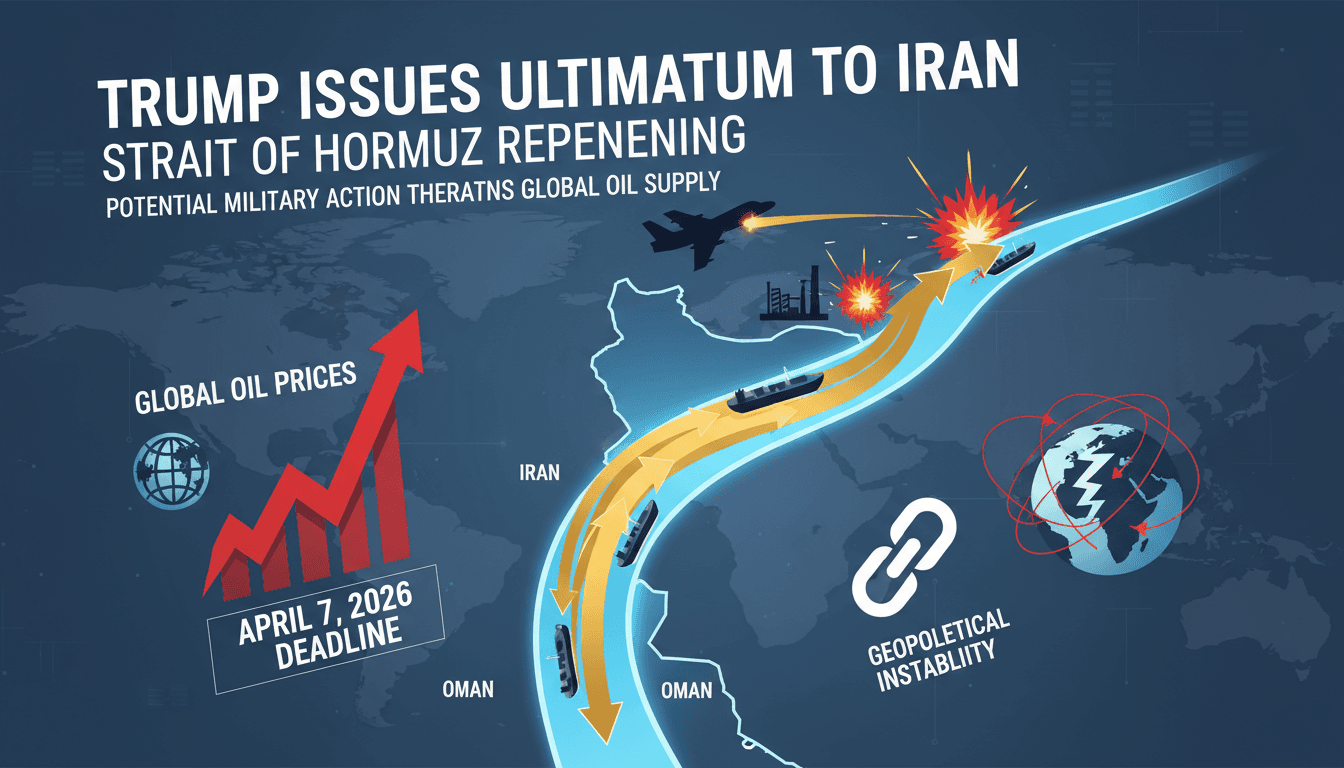
Here's what it means for you.
If you rely on global oil markets, brace for potential price spikes and supply chain disruptions.
Why it matters
This escalation could destabilize global oil prices, impacting economies and consumers worldwide.
What happened (in 30 seconds)
- April 7, 2026: President Trump issued a final ultimatum to Iran to reopen the Strait of Hormuz by 8 p.m. ET, threatening severe military action.
- Crisis Trigger: The ultimatum follows Iran's blockade of the Strait in response to U.S.-Israeli airstrikes on February 28, 2026.
- Ongoing Negotiations: Indirect talks via Pakistan are underway, but tensions remain high with oil prices surging.
The context you actually need
- February 28, 2026: U.S. and Israeli forces launched airstrikes against Iranian targets, marking a significant escalation in regional tensions.
- March 4, 2026: Iran responded by blocking the Strait of Hormuz, a critical chokepoint for global oil transport, leading to immediate market disruptions.
- Negotiation Stalemate: Despite ongoing indirect negotiations, Iran's demands for a permanent ceasefire and sanctions relief have not been met, prolonging the crisis.
What's really happening
The ultimatum issued by President Trump is a culmination of escalating tensions that began with the U.S.-Israeli airstrikes on Iranian targets under Operation Epic Fury. This military action was intended to curb Iran's influence in the region but instead provoked a swift and severe reaction from Tehran. By blocking the Strait of Hormuz, Iran has effectively threatened a vital artery for global oil transport, which carries approximately 20% of the world's oil supply.
The geopolitical stakes are high, as the Strait is not only crucial for oil transit but also for the economic stability of many nations, particularly those in the Gulf region and beyond. The blockade has already led to a significant spike in oil prices, with Brent crude futures reaching $112 per barrel following Trump's threats. This price increase is not just a statistic; it translates into higher fuel costs for consumers and businesses, potentially leading to inflationary pressures across various sectors.
Trump's ultimatum, set for April 7, 2026, at 8 p.m. ET, is seen as a last-ditch effort to force Iran's hand. The initial 48-hour deadline set on March 21 has been extended multiple times amid ongoing indirect negotiations, primarily facilitated through Pakistan. However, Iran's rejection of a temporary ceasefire proposal and its demands for a permanent end to hostilities and sanctions relief indicate a deepening stalemate.
The international community is closely monitoring the situation, with the UN Secretary-General warning that strikes on civilian infrastructure would violate international law. European media has criticized Trump's approach, labeling him as erratic, while the U.S. stock market has reacted negatively to the uncertainty, with significant declines observed.
As the deadline approaches, the potential for military action looms large, raising concerns about a broader conflict in the region. The implications of such an escalation could reverberate globally, affecting not only oil prices but also international relations and trade dynamics.
Who feels it first (and how)
- Consumers: Higher fuel prices will directly impact household budgets and transportation costs.
- Businesses: Industries reliant on oil, such as transportation and manufacturing, may face increased operational costs.
- Investors: Stock market volatility is likely as investors react to geopolitical tensions and oil price fluctuations.
- Middle Eastern Countries: Nations dependent on oil exports may experience economic instability due to disrupted supply chains and price volatility.
What to watch next
- Oil Price Trends: Monitor Brent crude prices for signs of volatility, as they will reflect market reactions to the ultimatum and any military actions.
- Diplomatic Developments: Keep an eye on the outcomes of indirect negotiations via Pakistan, as any breakthrough could alter the trajectory of the crisis.
- Military Movements: Watch for any signs of U.S. military mobilization or Iranian responses, which could escalate tensions further.
- The Strait of Hormuz is critical for global oil transport, and its blockade has already caused price spikes.
- Continued volatility in oil prices as the deadline approaches and negotiations unfold.
- The potential for military action and its immediate consequences on regional stability and global markets.
Frequently Asked Questions
- Why it matters?
- This escalation could destabilize global oil prices, impacting economies and consumers worldwide.
- What happened (in 30 seconds)?
- April 7, 2026: President Trump issued a final ultimatum to Iran to reopen the Strait of Hormuz by 8 p.m. ET, threatening severe military action. Crisis Trigger: The ultimatum follows Iran's blockade of the Strait in response to U.S.-Israeli airstrikes on February 28, 2026. Ongoing Negotiations: Indirect talks via Pakistan are underway, but tensions remain high with oil prices surging.
- What's really happening?
- The ultimatum issued by President Trump is a culmination of escalating tensions that began with the U.S.-Israeli airstrikes on Iranian targets under Operation Epic Fury. This military action was intended to curb Iran's influence in the region but instead provoked a swift and severe reaction from Tehran. By blocking the Strait of Hormuz, Iran has effectively threatened a vital artery for global oil transport, which carries approximately 20% of the world's oil supply. The geopolitical stakes are
- Who feels it first (and how)?
- Consumers: Higher fuel prices will directly impact household budgets and transportation costs. Businesses: Industries reliant on oil, such as transportation and manufacturing, may face increased operational costs. Investors: Stock market volatility is likely as investors react to geopolitical tensions and oil price fluctuations. Middle Eastern Countries: Nations dependent on oil exports may experience economic instability due to disrupted supply chains and price volatility.
- What to watch next?
- Oil Price Trends: Monitor Brent crude prices for signs of volatility, as they will reflect market reactions to the ultimatum and any military actions. Diplomatic Developments: Keep an eye on the outcomes of indirect negotiations via Pakistan, as any breakthrough could alter the trajectory of the crisis. Military Movements: Watch for any signs of U.S. military mobilization or Iranian responses, which could escalate tensions further.
International coverage from The Guardian's global desks.
"The Guardian is known for its progressive editorial stance and in-depth analysis."
— A47 Editor
Donald Trump says ‘a whole civilisation will die’ if Iran ignores demands
U.S. President Donald Trump has issued a stark ultimatum to Iran, warning that a 'whole civilization will die tonight' if Tehran fails to comply with demands to reopen the Strait of Hormuz by a specified deadline. This threat includes potential milit...
24/7 international news from a French perspective in multiple languages.
"France 24 is viewed as a globally focused outlet with balanced coverage and a European perspective."
— A47 Editor
Trump's Tuesday deadline: Will he really ‘bomb Iran into the Stone Age’?
U.S. President Donald Trump has issued a stark ultimatum to Iran, threatening military action against its critical infrastructure, including power plants and bridges, if a deal is not reached by the deadline of April 7. This warning follows Iran's re...