
Retired U.S. Military Officers Accuse Trump of War Crimes Over Iran Threats
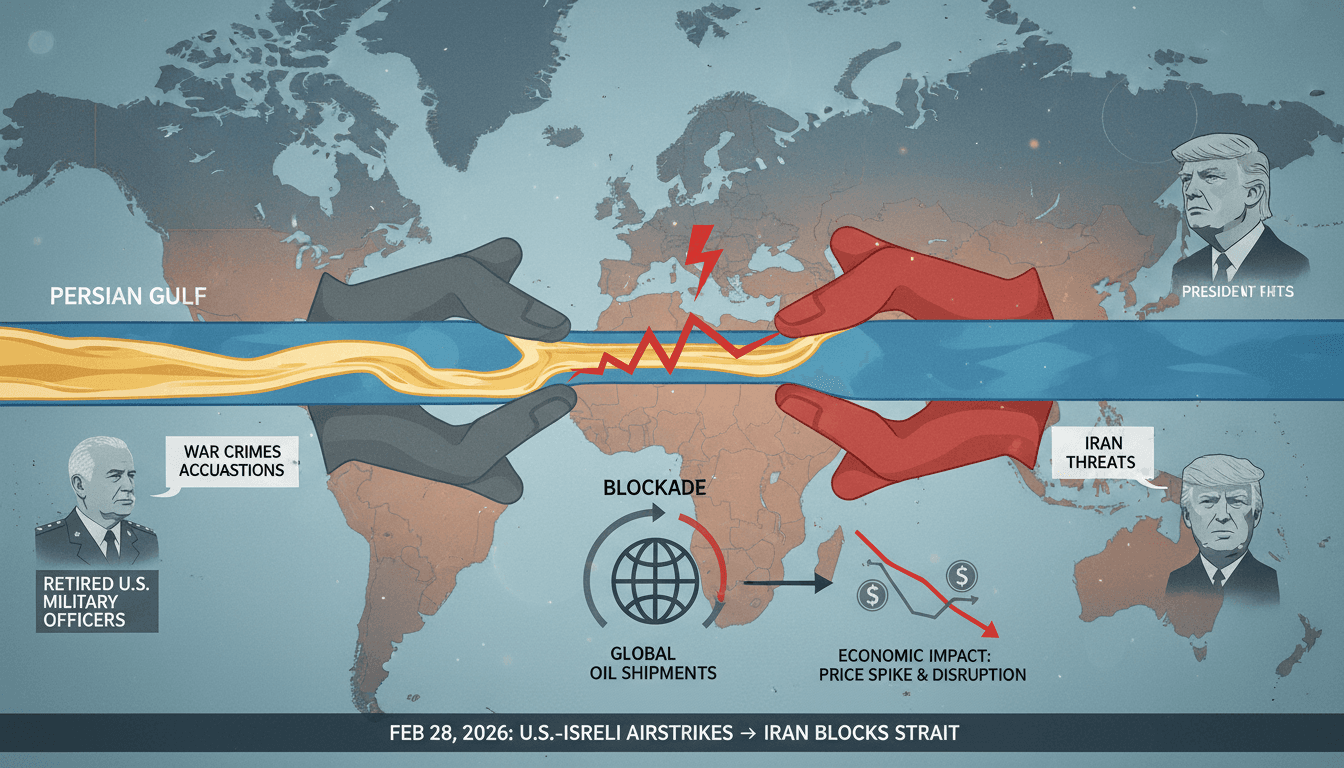
Here's what it means for you.
Global oil markets are on edge, and your business could feel the ripple effects.
Why it matters
The escalating U.S.-Iran conflict threatens global oil supply chains and economic stability.
What happened (in 30 seconds)
- Retired U.S. military officers labeled President Trump's threats to destroy Iranian infrastructure as likely war crimes.
- Iran's blockade of the Strait of Hormuz has disrupted 20% of global oil shipments, causing prices to surge.
- Trump announced a conditional two-week ceasefire on April 7, 2026, amid rising tensions and international condemnation.
The context you actually need
- The conflict escalated after U.S.-Israeli airstrikes on Iranian targets began on February 28, 2026, prompting Iran's retaliatory blockade.
- Oil prices skyrocketed beyond $110 per barrel due to the blockade, impacting global economies and trade routes.
- International reactions included condemnation from the UN and calls for Trump's accountability, highlighting the geopolitical stakes involved.
What's really happening
The recent tensions between the U.S. and Iran have roots in a complex geopolitical landscape, where military actions and threats can have far-reaching consequences. The U.S. and Israel initiated airstrikes on Iranian targets on February 28, 2026, which Iran perceived as an existential threat. In response, Iran effectively blocked the Strait of Hormuz, a critical chokepoint for global oil shipments, leading to a significant disruption in oil supply. This blockade has resulted in a surge in oil prices, peaking at $126 per barrel, which has immediate implications for global markets and economies.
President Trump's threats to obliterate Iranian infrastructure, including bridges and power plants, were met with severe backlash from retired military officials who labeled these threats as likely war crimes. This accusation underscores the legal and ethical implications of military threats in international relations. The rhetoric escalated further with Trump's profane social media posts, which not only heightened tensions but also drew international condemnation, including from the UN Secretary-General.
The situation is exacerbated by the economic pressures felt in regions like Dubai, where residents face rising costs due to oil price surges and a severed trade lifeline with Iran. The Gulf Cooperation Council (GCC) countries are bracing for a potential recession, with GDP growth projected to slow to 2.6%. The UAE has already deployed a $270 million relief package to mitigate the economic fallout.
As the situation evolves, the stakes are high for all parties involved. The potential for military escalation remains, and the international community is closely monitoring developments. The conditional ceasefire announced by Trump may provide temporary relief, but the underlying tensions and economic implications are far from resolved.
Who feels it first (and how)
- Oil traders: Fluctuating prices directly impact trading strategies and profit margins.
- Global businesses: Increased transportation costs affect supply chains and pricing strategies.
- Consumers: Rising fuel prices lead to higher costs for goods and services.
- Tourism sectors: Destinations reliant on stable oil prices and regional stability may see declines in visitors.
- Gulf residents: Economic pressures from rising oil prices and regional instability impact daily life and spending power.
What to watch next
- Oil price fluctuations: Continued volatility in oil prices will indicate the ongoing impact of geopolitical tensions on global markets.
- International diplomatic efforts: Watch for any negotiations or interventions aimed at de-escalating the conflict, which could stabilize the situation.
- Economic indicators in the GCC: Monitor GDP growth and relief measures as Gulf states respond to the economic fallout from the conflict.
The Strait of Hormuz is a vital chokepoint for global oil shipments, and its blockade has significant economic implications.
Continued tensions between the U.S. and Iran will affect global oil prices and economic stability in the region.
The long-term consequences of Trump's threats and the potential for military escalation remain uncertain.
Frequently Asked Questions
- Why it matters?
- The escalating U.S.-Iran conflict threatens global oil supply chains and economic stability.
- What happened (in 30 seconds)?
- Retired U.S. military officers labeled President Trump's threats to destroy Iranian infrastructure as likely war crimes. Iran's blockade of the Strait of Hormuz has disrupted 20% of global oil shipments, causing prices to surge. Trump announced a conditional two-week ceasefire on April 7, 2026, amid rising tensions and international condemnation.
- What's really happening?
- The recent tensions between the U.S. and Iran have roots in a complex geopolitical landscape, where military actions and threats can have far-reaching consequences. The U.S. and Israel initiated airstrikes on Iranian targets on February 28, 2026, which Iran perceived as an existential threat. In response, Iran effectively blocked the Strait of Hormuz, a critical chokepoint for global oil shipments, leading to a significant disruption in oil supply. This blockade has resulted in a surge in oil pr
- Who feels it first (and how)?
- Oil traders: Fluctuating prices directly impact trading strategies and profit margins. Global businesses: Increased transportation costs affect supply chains and pricing strategies. Consumers: Rising fuel prices lead to higher costs for goods and services. Tourism sectors: Destinations reliant on stable oil prices and regional stability may see declines in visitors. Gulf residents: Economic pressures from rising oil prices and regional instability impact daily life and spending power.
- What to watch next?
- Oil price fluctuations: Continued volatility in oil prices will indicate the ongoing impact of geopolitical tensions on global markets. International diplomatic efforts: Watch for any negotiations or interventions aimed at de-escalating the conflict, which could stabilize the situation. Economic indicators in the GCC: Monitor GDP growth and relief measures as Gulf states respond to the economic fallout from the conflict.
News from the United States including domestic politics, society, and culture.
"The Guardian is known for its progressive editorial stance and in-depth analysis, often advocating for social justice, environmental issues, and liberal values."
— A47 Editor
Retired military officers call Trump’s threats against Iran ‘likely war crimes’
President Donald Trump issued a stark ultimatum to Iran, threatening that 'a whole civilization will die tonight' if the country does not comply with U.S. demands by an 8 PM ET deadline. This warning has alarmed military observers and retired officer...
International coverage from The Guardian's global desks.
"The Guardian is known for its progressive editorial stance and in-depth analysis."
— A47 Editor
Retired military officers call Trump’s threats against Iran ‘likely war crimes’
President Donald Trump issued a stark ultimatum to Iran, threatening that 'a whole civilization will die tonight' if the country does not comply with U.S. demands by an 8 PM ET deadline. This warning has alarmed military observers and retired officer...
Business, investment, entrepreneurship, leadership, and innovation.
"Forbes is known for its coverage of business leaders, market trends, and entrepreneurial ventures with a pro-business editorial stance."
— A47 Editor
Bipartisan Calls To Remove Trump From Office Grow As He Threatens Iranian ‘Genocide’
President Donald Trump has escalated his threats against Iran, warning that if Iranian leadership does not comply with his demands, 'a whole civilization will die tonight.' This ultimatum is tied to the reopening of the Strait of Hormuz, a critical w...
Regional coverage and analysis focused on politics, diplomacy, and business across the Middle East.
"Al-Monitor is known for analytical reporting on Middle East politics and policy developments."
— A47 Editor
Trump branded 'crazy' over apocalyptic Iran threats
U.S. President Donald Trump has escalated his rhetoric regarding Iran, threatening to annihilate Iranian civilization if Tehran does not comply with U.S. demands concerning military action and the reopening of the strategically vital Strait of Hormuz...