
Saudi Arabia's Domestic Liquidity Reaches SR3.289 Trillion by February 2026
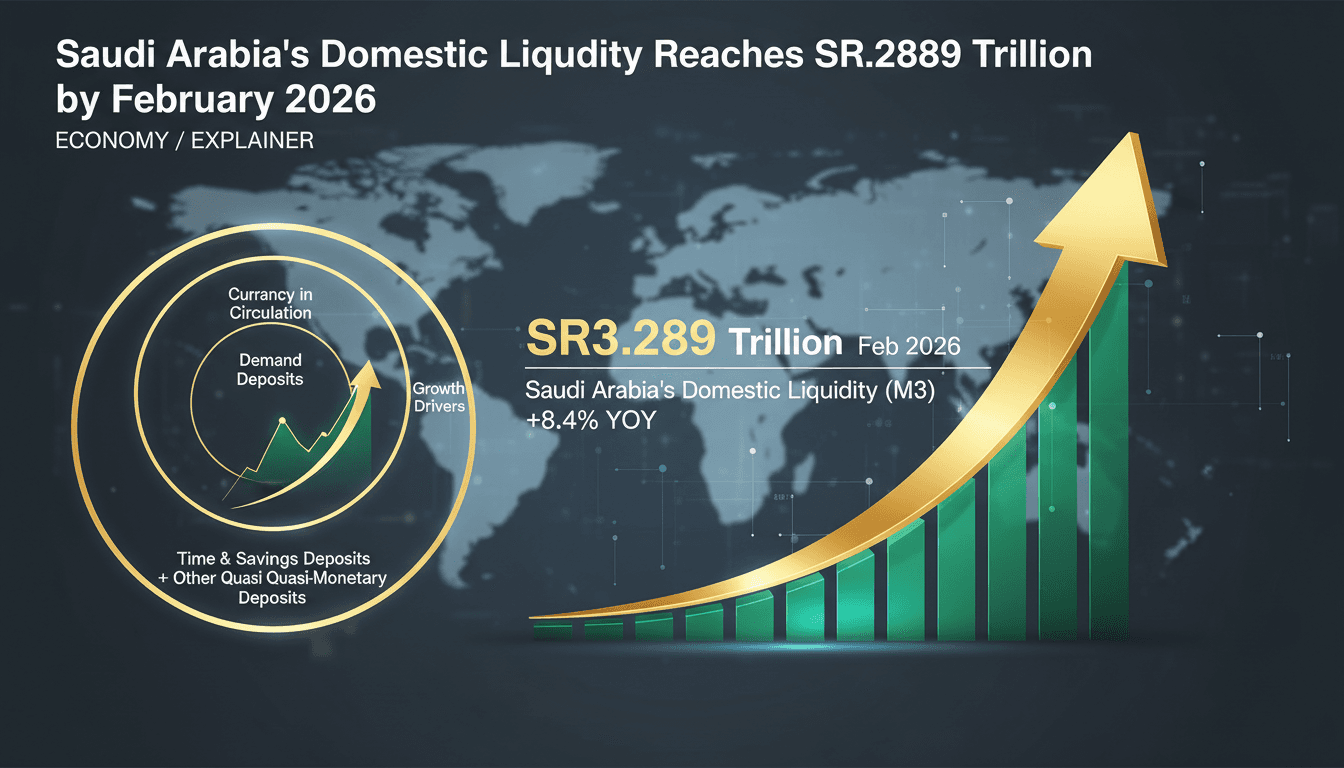
Here's what it means for you.
Increased liquidity in Saudi Arabia could lead to more investment opportunities across the GCC, impacting your financial landscape.
Why it matters
This surge in domestic liquidity signals a robust economic environment, potentially influencing regional financial stability and investment flows.
What happened (in 30 seconds)
- Saudi Arabia's domestic liquidity (M3 money supply) surged 8.4% year-on-year to SR3.289 trillion by the end of February 2026.
- The Saudi Central Bank (SAMA) reported an annual increase of SR255.7 billion, driven by growth in time and savings deposits.
- Monthly growth also rose by 2.2% or SR71.5 billion from January 2026, indicating strong banking sector absorption.
The context you actually need
- Sustained growth: Saudi Arabia's liquidity has consistently grown at rates of 6-8% throughout 2025, reflecting ongoing economic diversification efforts under Vision 2030.
- Government and private sector contributions: Elevated oil revenues and increased government expenditures have bolstered liquidity, alongside significant private sector deposit inflows.
- Banking sector resilience: The banking sector's ability to absorb funds has been crucial, with deposits exceeding SR3 trillion in February 2026.
What's really happening
The recent surge in Saudi Arabia's domestic liquidity to SR3.289 trillion by the end of February 2026 is a clear indicator of the Kingdom's economic vitality. This growth, quantified at 8.4% year-on-year, translates to an increase of SR255.7 billion from the previous year. The monthly rise of 2.2% or SR71.5 billion from January 2026 further underscores the momentum within the financial system.
The components of this liquidity expansion reveal critical insights into the underlying economic dynamics. Demand deposits account for SR1.488 trillion (45.2%), while time and savings deposits contribute SR1.198 trillion (36.4%). Other quasi-monetary deposits stand at SR354.3 billion (10.8%), and currency outside banks is at SR248.0 billion (7.5%). This distribution indicates a healthy mix of liquid assets and savings, suggesting that consumers and businesses are both confident in the economy and willing to invest in longer-term savings.
The growth in liquidity is largely driven by the Saudi government's strategic initiatives under Vision 2030, aimed at diversifying the economy away from oil dependency. This includes increased government spending and investments in infrastructure, which have stimulated private sector activity and encouraged deposit inflows. The banking sector's ability to absorb these funds has been robust, reflecting a stable financial environment that can support further economic growth.
Moreover, the liquidity expansion is not occurring in isolation. It is part of a broader trend of increasing financial stability across the Gulf Cooperation Council (GCC) region. As Saudi Arabia's liquidity grows, it enhances the overall financial ecosystem, potentially leading to increased cross-border investments and trade flows. This interconnectedness means that changes in Saudi Arabia's financial landscape can have ripple effects throughout the GCC, including in the UAE, where banking and real estate sectors may benefit from increased investment opportunities.
SAMA's ongoing monitoring of monetary aggregates without immediate policy changes indicates a cautious yet optimistic approach to managing this liquidity growth. The positive reception of banking stocks on the Tadawul exchange in Q1 2026, despite regional tensions, further illustrates market confidence in the liquidity trends.
Who feels it first (and how)
- Investors: Increased liquidity may lead to more investment opportunities in the GCC, particularly in real estate and banking sectors.
- Businesses: Companies may benefit from easier access to financing and capital, enabling expansion and innovation.
- Consumers: Individuals may see better savings options and potentially higher interest rates on deposits as banks compete for funds.
What to watch next
- Banking sector performance: Monitor the performance of banking stocks on the Tadawul, as they reflect market confidence in liquidity trends.
- Cross-border investments: Watch for increased investment flows between Saudi Arabia and the UAE, which could indicate a strengthening of economic ties.
- Government policy announcements: Keep an eye on any new fiscal policies or spending initiatives from the Saudi government that could further influence liquidity.
Saudi Arabia's liquidity has surged to SR3.289 trillion, indicating strong economic growth.
Increased liquidity will lead to more investment opportunities across the GCC.
The long-term effects of this liquidity growth on inflation and interest rates remain uncertain.
Frequently Asked Questions
- Why it matters?
- This surge in domestic liquidity signals a robust economic environment, potentially influencing regional financial stability and investment flows.
- What happened (in 30 seconds)?
- Saudi Arabia's domestic liquidity (M3 money supply) surged 8.4% year-on-year to SR3.289 trillion by the end of February 2026. The Saudi Central Bank (SAMA) reported an annual increase of SR255.7 billion, driven by growth in time and savings deposits. Monthly growth also rose by 2.2% or SR71.5 billion from January 2026, indicating strong banking sector absorption.
- What's really happening?
- The recent surge in Saudi Arabia's domestic liquidity to SR3.289 trillion by the end of February 2026 is a clear indicator of the Kingdom's economic vitality. This growth, quantified at 8.4% year-on-year, translates to an increase of SR255.7 billion from the previous year. The monthly rise of 2.2% or SR71.5 billion from January 2026 further underscores the momentum within the financial system. The components of this liquidity expansion reveal critical insights into the underlying economic dynam
- Who feels it first (and how)?
- Investors: Increased liquidity may lead to more investment opportunities in the GCC, particularly in real estate and banking sectors. Businesses: Companies may benefit from easier access to financing and capital, enabling expansion and innovation. Consumers: Individuals may see better savings options and potentially higher interest rates on deposits as banks compete for funds.
- What to watch next?
- Banking sector performance: Monitor the performance of banking stocks on the Tadawul, as they reflect market confidence in liquidity trends. Cross-border investments: Watch for increased investment flows between Saudi Arabia and the UAE, which could indicate a strengthening of economic ties. Government policy announcements: Keep an eye on any new fiscal policies or spending initiatives from the Saudi government that could further influence liquidity.
English-language reporting on Saudi politics, policy, and society.
"Saudi Gazette reflects mainstream Saudi institutional perspectives."
— A47 Editor
Saudi liquidity surges 8.4% to SR3.28 trillion by end of February 2026
Saudi Arabia's domestic liquidity surged by 8.4% to reach SR3.289 trillion by the end of February 2026, according to the Saudi Central Bank (SAMA). This increase of SR255.7 billion from the previous year reflects a consistent monthly rise of SR71.5 b...
English-language reporting focused on Saudi Arabia and regional affairs.
"Saudi Gazette provides English-language coverage that often aligns with mainstream Saudi news priorities."
— A47 Editor
Saudi liquidity surges 8.4% to SR3.28 trillion by end of February 2026
Saudi Arabia's domestic liquidity surged by 8.4% to reach SR3.289 trillion by the end of February 2026, according to the Saudi Central Bank (SAMA). This increase of SR255.7 billion from the previous year reflects a consistent monthly rise of SR71.5 b...
Sports reporting with a focus on Saudi and regional competitions.
"Okaz sports coverage is broad and audience-friendly, with strong attention to Saudi teams and leagues."
— A47 Editor
بارتفاع 8.4%.. 3.3 تريليون ريال السيولة في الاقتصاد السعودي
The Saudi Arabian Monetary Authority (SAMA) reported a significant annual growth of 8.4% in the country's money supply, reaching approximately 3.3 trillion riyals by the end of February 2026. This increase, amounting to around 255.7 billion riyals, r...