
Pacific Island Nations Declare Emergencies Amid Fuel and Food Crises from Iran War Disruptions
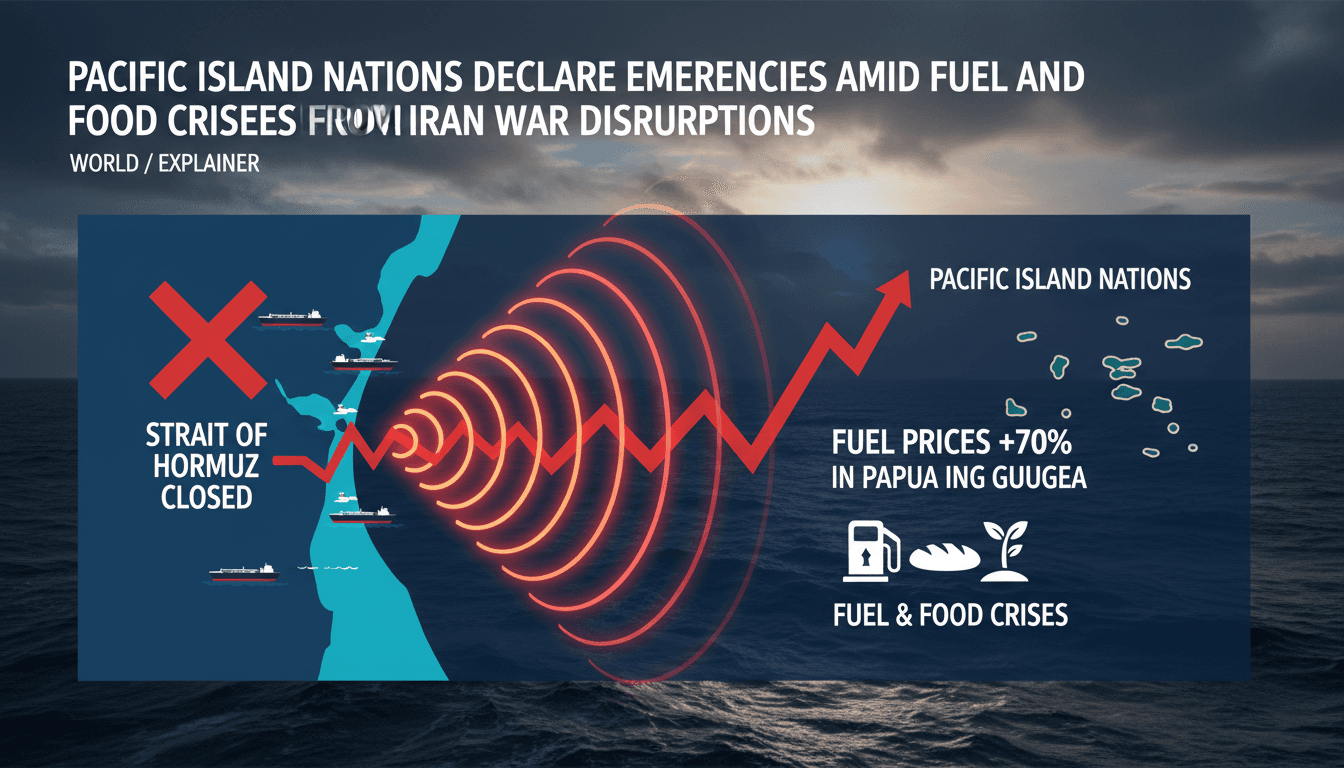
Here's what it means for you.
The escalating conflict in the Middle East is driving up fuel prices and food insecurity, impacting global supply chains and consumer costs.
Why it matters
The fuel crisis in Pacific Island nations highlights vulnerabilities in global energy supply chains and food security, affecting economies worldwide.
What happened (in 30 seconds)
- April 2026: Tiny Pacific Island nations face severe fuel shortages and food access challenges due to the U.S.-Israeli war with Iran.
- Fuel imports: Drop to just 25% of March levels, with prices soaring up to 70% in Papua New Guinea.
- Emergency measures: Governments declare emergencies and impose subsidies to manage the crisis.
The context you actually need
- Geopolitical tensions: The war began in early March 2026, leading to disruptions in the Strait of Hormuz, a critical route for global oil transport.
- Economic dependency: Pacific Island nations import 2.2 million metric tons of fuel annually, with diesel accounting for over 50% of their electricity generation.
- Vulnerability: Fuel imports represent a significant portion of GDP, with Tuvalu relying on fuel for 27% of its economic activity, making these nations particularly susceptible to supply shocks.
What's really happening
The ongoing U.S.-Israeli conflict with Iran has triggered a series of disruptions in the Strait of Hormuz, a vital passage for approximately 20% of the world's oil and liquefied natural gas. As Iran retaliated by closing this strategic route, global oil supplies dwindled, leading to a sharp increase in prices. For Pacific Island nations, which import the majority of their fuel from Singapore and South Korea, this situation has become dire. By mid-April 2026, fuel imports had plummeted to just 25% of the volumes seen in March, according to Kpler shiptracking data.
The economic implications are profound. In Papua New Guinea, diesel prices surged by 70%, forcing households to ration food, medicine, and transport. The Pacific Islands Forum, a regional body, activated emergency measures for the first time since the COVID-19 pandemic, reflecting the severity of the crisis. Governments across the region, including Tuvalu and the Marshall Islands, declared states of emergency and implemented fuel subsidies or price caps to mitigate the impact on their populations.
The reliance on diesel for electricity generation exacerbates the situation, as over 50% of electricity output in most Pacific Island nations depends on this fuel source. With fuel imports constituting 8-11% of GDP in most countries and a staggering 27% in Tuvalu, the economic vulnerability is stark. The crisis has prompted regional leaders to seek assistance from larger nations, with New Zealand and Australia prioritizing domestic supplies while exploring aid options.
Aid organizations like World Vision and Save the Children are documenting the disruptions to livelihoods, emphasizing the humanitarian aspect of this crisis. The situation is further complicated by rising global food prices, as the war's ripple effects extend beyond fuel to impact food security, particularly in regions heavily reliant on imports.
Who feels it first (and how)
- Households: Families in Pacific Island nations face increased costs for fuel and food, leading to rationing and hardship.
- Governments: National leaders must navigate emergency declarations and subsidy measures to stabilize their economies.
- Aid organizations: Groups like World Vision and Save the Children are mobilizing resources to address the humanitarian crisis.
- Tourism sector: Destinations in the Pacific may see reduced tourist numbers due to rising costs and perceived instability.
What to watch next
- Fuel price trends: Monitor global oil prices and their impact on local economies, as sustained high prices could lead to further economic strain.
- Government responses: Watch for additional emergency measures or international aid packages from larger nations to support Pacific Island economies.
- Food security indicators: Keep an eye on food prices and availability in the region, as rising costs could lead to increased social unrest.
Fuel imports have dropped to 25% of March levels, significantly impacting local economies.
Continued geopolitical tensions will keep fuel prices elevated, exacerbating food insecurity.
The long-term effects on regional stability and economic recovery remain uncertain.
Frequently Asked Questions
- Why it matters?
- The fuel crisis in Pacific Island nations highlights vulnerabilities in global energy supply chains and food security, affecting economies worldwide.
- What happened (in 30 seconds)?
- April 2026: Tiny Pacific Island nations face severe fuel shortages and food access challenges due to the U.S.-Israeli war with Iran. Fuel imports: Drop to just 25% of March levels, with prices soaring up to 70% in Papua New Guinea. Emergency measures: Governments declare emergencies and impose subsidies to manage the crisis.
- What's really happening?
- The ongoing U.S.-Israeli conflict with Iran has triggered a series of disruptions in the Strait of Hormuz, a vital passage for approximately 20% of the world's oil and liquefied natural gas. As Iran retaliated by closing this strategic route, global oil supplies dwindled, leading to a sharp increase in prices. For Pacific Island nations, which import the majority of their fuel from Singapore and South Korea, this situation has become dire. By mid-April 2026, fuel imports had plummeted to just 25
- Who feels it first (and how)?
- Households: Families in Pacific Island nations face increased costs for fuel and food, leading to rationing and hardship. Governments: National leaders must navigate emergency declarations and subsidy measures to stabilize their economies. Aid organizations: Groups like World Vision and Save the Children are mobilizing resources to address the humanitarian crisis. Tourism sector: Destinations in the Pacific may see reduced tourist numbers due to rising costs and perceived instability.
- What to watch next?
- Fuel price trends: Monitor global oil prices and their impact on local economies, as sustained high prices could lead to further economic strain. Government responses: Watch for additional emergency measures or international aid packages from larger nations to support Pacific Island economies. Food security indicators: Keep an eye on food prices and availability in the region, as rising costs could lead to increased social unrest.
Regional coverage and analysis focused on politics, diplomacy, and business across the Middle East.
"Al-Monitor is known for analytical reporting on Middle East politics and policy developments."
— A47 Editor
Tiny Pacific nations face tough choices on food, fuel posed by Iran war
The ongoing conflict involving Iran has led to a significant global fuel crisis, impacting far-flung Pacific nations as they struggle to manage energy supplies amid rising costs for food and healthcare. Authorities are implementing fuel curbs to cope...
Comprehensive coverage of Middle Eastern and global issues.
"Al Jazeera is a prominent voice from the Global South, especially the Middle East, with an emphasis on underreported stories."
— A47 Editor
EU eyes options as Iran conflict threatens jet fuel shortages
The ongoing conflict in Iran has led to the closure of the Strait of Hormuz, a critical maritime route for global oil transport, raising concerns in Europe about potential jet fuel shortages. The European Union is exploring options to mitigate the im...
Global news coverage with extensive reporting on Middle Eastern conflicts and geopolitics.
"Al Jazeera is a Qatar-based broadcaster known for wide regional coverage and alternative perspectives."
— A47 Editor
EU eyes options as Iran conflict threatens jet fuel shortages
The ongoing conflict in Iran has led to the closure of the Strait of Hormuz, a critical maritime route for global oil transport, raising concerns in Europe about potential jet fuel shortages. The European Union is exploring options to mitigate the im...
24/7 international news from a French perspective in multiple languages.
"France 24 is viewed as a globally focused outlet with balanced coverage and a European perspective."
— A47 Editor
Jet fuel prices flying sky high
The ongoing conflict in Iran has led to a significant surge in jet fuel prices, creating pressure on airlines and raising concerns about potential shortages in the aviation sector. This situation has prompted France and other European nations to seek...
Pan-Arab news coverage spanning politics, business, sports, and regional affairs.
"Asharq Al-Awsat reflects a broad Arab editorial perspective with strong attention to regional geopolitics."
— A47 Editor
بعد تعطّل هرمز... ما خيارات تصدير النفط والغاز في الشرق الأوسط؟
The ongoing U.S.-Israeli conflict with Iran has disrupted navigation through the Strait of Hormuz, highlighting the limited options available for Middle Eastern countries to export their hydrocarbon resources. This situation poses significant challen...
Sports reporting with a focus on Saudi and regional competitions.
"Okaz sports coverage is broad and audience-friendly, with strong attention to Saudi teams and leagues."
— A47 Editor
تحذيرات من صيف مليء بالتحديات.. توقعات بنقص وقود الطائرات في أوروبا
European Energy Commissioner Dan Jørgensen warned that Europe is facing a challenging summer due to a shortage of aviation fuel caused by the war in Iran and the closure of the Strait of Hormuz. He stated that this critical situation will impact the ...
Pan-Arab news coverage spanning politics, business, sports, and regional affairs.
"Asharq Al-Awsat reflects a broad Arab editorial perspective with strong attention to regional geopolitics."
— A47 Editor
تحذيرات من صيف «صعب» ينتظر أوروبا بسبب نقص الوقود وإغلاق «هرمز»
European Union Energy Commissioner, Dan Jørgensen, warned on Tuesday that the upcoming summer will be challenging for Europe due to fuel shortages stemming from the ongoing conflict in Iran. The situation is exacerbated by the closure of the Strait o...
Business and economy coverage focused on Dubai, the UAE, Saudi Arabia, and the wider Middle East.
"Arabian Business is a well-known regional business outlet with strong focus on Gulf markets, leadership, and investment stories."
— A47 Editor
War in Iran is causing biggest energy crisis in history, IEA says
The ongoing war in Iran has led to a significant energy crisis, as reported by the International Energy Agency (IEA), which highlights the impact of disrupted maritime traffic in the Strait of Hormuz, a critical passage for global oil and liquefied n...
Regional coverage and analysis focused on politics, diplomacy, and business across the Middle East.
"Al-Monitor is known for analytical reporting on Middle East politics and policy developments."
— A47 Editor
EU to widen Iran sanctions to those who block Hormuz
The European Union has announced plans to expand its sanctions against Iran to include individuals and entities responsible for blocking the Strait of Hormuz, a critical maritime route for global oil and gas supplies, which has been largely shut for ...
Business and economy coverage focused on Dubai, the UAE, Saudi Arabia, and the wider Middle East.
"Arabian Business is a well-known regional business outlet with strong focus on Gulf markets, leadership, and investment stories."
— A47 Editor
Airlines on alert as Strait of Hormuz fears drive jet fuel costs higher
Airlines are adjusting their schedules as fears surrounding the Strait of Hormuz escalate, leading to increased jet fuel costs. The ongoing geopolitical tensions in the region have prompted several carriers to respond proactively to ensure operationa...