
MOIA America and Uber Launch Testing of Autonomous ID. Buzz Vehicles in Los Angeles
Here's what it means for you.
As autonomous vehicle technology advances, your commuting options may soon expand, potentially reshaping urban transport dynamics.
Why it matters
This initiative marks a significant step toward integrating autonomous vehicles into mainstream ride-hailing services, influencing urban mobility and transportation policies.
What happened (in 30 seconds)
- Testing commenced: MOIA America and Uber began on-road testing of self-driving ID. Buzz minibuses in Los Angeles on April 8, 2026.
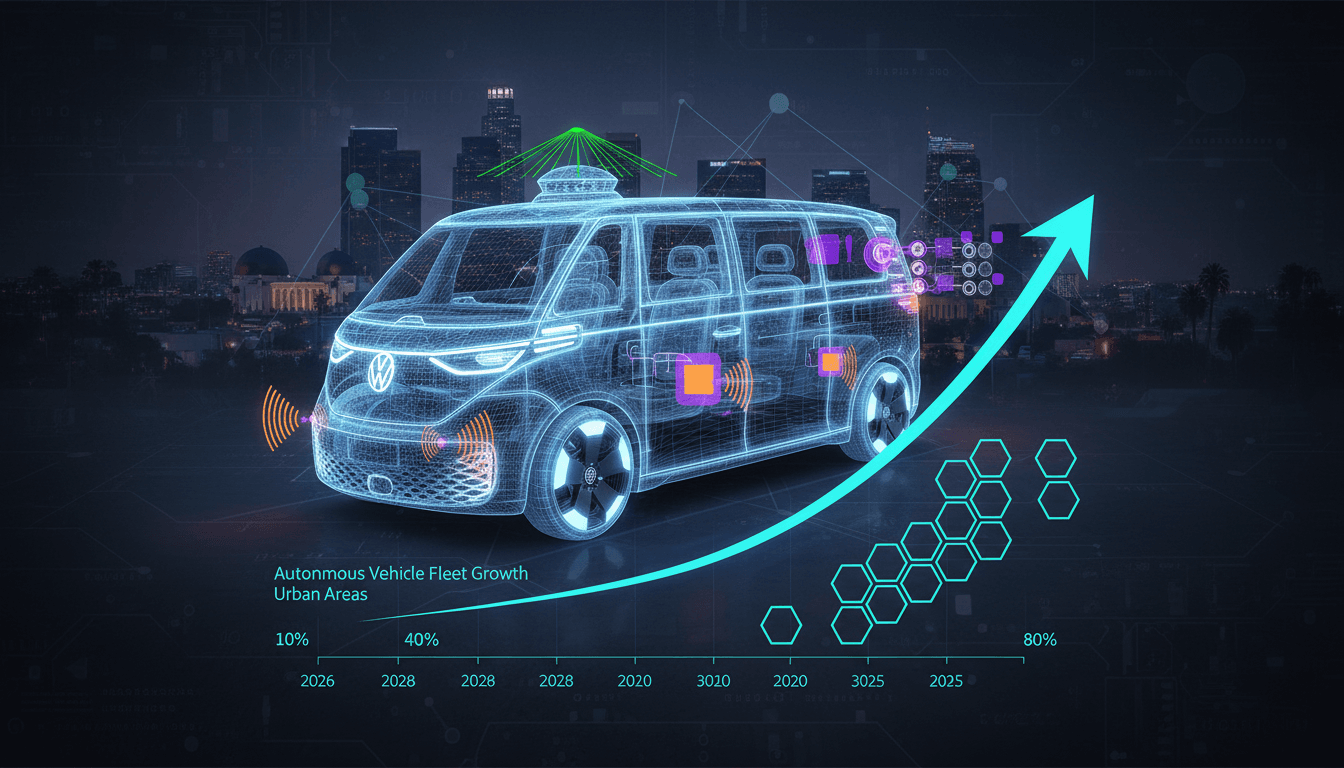
- Fleet details: The initial fleet consists of approximately 10 autonomous-ready vehicles equipped with a comprehensive sensor suite, operating under human safety operators.
- Future plans: Commercial robotaxi services are expected to launch by late 2026, with fully driverless operations anticipated in 2027.
The context you actually need
- MOIA's experience: MOIA, Volkswagen's autonomous mobility subsidiary, has successfully operated ride-pooling services in Hamburg since 2019, transporting over 10 million passengers.
- Partnership evolution: Following the termination of the Argo AI partnership in 2022, MOIA adopted Mobileye's Drive platform for Level 4 autonomy and formalized a strategic alliance with Uber in April 2025.
- Vehicle specifications: The ID. Buzz AD variant features autonomous adaptations, including powered sliding doors and seating for six passengers, designed for urban environments.
What's really happening
The collaboration between MOIA America and Uber signifies a pivotal moment in the evolution of autonomous mobility. With the testing phase now underway in Los Angeles, the initiative aims to validate the technology and operational logistics of self-driving vehicles in a real-world environment. The ID. Buzz minibuses are equipped with a sophisticated 27-sensor suite, which includes 13 cameras, nine LiDAR units, and five radars, all powered by Mobileye's Drive platform. This extensive sensor array is crucial for navigating complex urban landscapes, ensuring safety and reliability during the testing phase.
The partnership leverages MOIA's experience in ride-pooling services, which has seen considerable success in Hamburg, to inform the deployment strategy in Los Angeles. By utilizing Uber's established platform for distribution, the initiative is positioned to scale rapidly. The plan includes expanding the fleet to over 100 vehicles by the end of 2026, with the goal of providing paid rides under human supervision before transitioning to fully driverless operations in 2027.
This transition reflects broader trends in the transportation sector, where cities are increasingly looking to reduce congestion and emissions. Autonomous vehicles promise to optimize traffic flow and enhance mobility options, particularly in densely populated urban areas. The strategic choice of Los Angeles as the testing ground is significant; the city is known for its traffic challenges, making it an ideal location to demonstrate the potential benefits of autonomous ride-hailing services.
Moreover, the initiative is likely to influence regulatory frameworks surrounding autonomous vehicles. As testing progresses, local governments will need to address safety, liability, and operational guidelines, which could set precedents for other cities considering similar technologies. The positive reception from industry leaders, including remarks from MOIA America President Paul DeLong and Uber CEO Dara Khosrowshahi, underscores the optimism surrounding this project and its implications for the future of urban mobility.
Who feels it first (and how)
- Commuters: Urban residents seeking convenient and cost-effective transportation options will benefit from expanded mobility choices.
- Local businesses: Companies reliant on transportation services may see changes in logistics and delivery methods, impacting operational costs.
- Regulators: Local and state government agencies will need to adapt to new regulations and safety standards for autonomous vehicles.
What to watch next
- Regulatory developments: Keep an eye on California's Public Utilities Commission (CPUC) for updates on ride-hailing approvals, as this will impact commercial operations.
- Fleet expansion: Watch for announcements regarding the scaling of the fleet beyond 100 vehicles, as this will indicate the project's momentum and public acceptance.
- Public response: Monitor consumer sentiment towards autonomous vehicles, as public perception will play a crucial role in the adoption of these technologies.
- Testing of autonomous vehicles is currently underway in Los Angeles.
- The fleet will expand to over 100 vehicles by the end of 2026, with paid rides offered under human supervision.
- The long-term public acceptance and regulatory landscape for fully driverless operations remain uncertain.
Frequently Asked Questions
- Why it matters?
- This initiative marks a significant step toward integrating autonomous vehicles into mainstream ride-hailing services, influencing urban mobility and transportation policies.
- What happened (in 30 seconds)?
- Testing commenced: MOIA America and Uber began on-road testing of self-driving ID. Buzz minibuses in Los Angeles on April 8, 2026. Fleet details: The initial fleet consists of approximately 10 autonomous-ready vehicles equipped with a comprehensive sensor suite, operating under human safety operators. Future plans: Commercial robotaxi services are expected to launch by late 2026, with fully driverless operations anticipated in 2027.
- What's really happening?
- The collaboration between MOIA America and Uber signifies a pivotal moment in the evolution of autonomous mobility. With the testing phase now underway in Los Angeles, the initiative aims to validate the technology and operational logistics of self-driving vehicles in a real-world environment. The ID. Buzz minibuses are equipped with a sophisticated 27-sensor suite, which includes 13 cameras, nine LiDAR units, and five radars, all powered by Mobileye's Drive platform. This extensive sensor array
- Who feels it first (and how)?
- Commuters: Urban residents seeking convenient and cost-effective transportation options will benefit from expanded mobility choices. Local businesses: Companies reliant on transportation services may see changes in logistics and delivery methods, impacting operational costs. Regulators: Local and state government agencies will need to adapt to new regulations and safety standards for autonomous vehicles.
- What to watch next?
- Regulatory developments: Keep an eye on California's Public Utilities Commission (CPUC) for updates on ride-hailing approvals, as this will impact commercial operations. Fleet expansion: Watch for announcements regarding the scaling of the fleet beyond 100 vehicles, as this will indicate the project's momentum and public acceptance. Public response: Monitor consumer sentiment towards autonomous vehicles, as public perception will play a crucial role in the adoption of these technologies.
Opinionated AI coverage for general audiences.
"TNW’s AI vertical covering tools, ethics, and trends."
— A47 Editor
Volkswagen’s MOIA and Uber begin testing self-driving ID. Buzz minibuses in Los Angeles
Volkswagen’s autonomous mobility subsidiary MOIA America and Uber have initiated on-road testing of approximately 10 self-driving ID. Buzz minibuses in Los Angeles, marking the beginning of a deployment that aims to offer commercial rides with human ...
Startup news with frequent AI coverage.
"Covers launches, funding, and product updates in AI."
— A47 Editor
Volkswagen begins testing its self-driving microbuses in Los Angeles ahead of launch with Uber
Volkswagen's subsidiary, MOIA America, has initiated testing of its self-driving microbuses in Los Angeles, a crucial step towards launching a commercial robotaxi service in collaboration with Uber. This testing phase is part of a broader strategy to...
Latest tech news, product reviews, and analysis for consumers and professionals.
"CNET delivers accessible and detailed technology reporting, including trusted product reviews and how-to guides."
— A47 Editor
Uber and Volkswagen's Self-Driving Vans Are Hitting the Streets. Here's When You Can Ride
Uber and Volkswagen have initiated on-road testing of their autonomous ID Buzz vehicles in Los Angeles, marking a significant milestone in their strategic partnership. This testing phase includes the presence of a safety driver to ensure compliance a...
Consumer technology news with AI coverage.
"Gadget and tech site reporting on AI in products."
— A47 Editor
Uber begins testing its Volkswagen ID. Buzz robotaxi fleet in LA
Uber has commenced testing its Volkswagen ID. Buzz robotaxi fleet in Los Angeles, marking a significant step in its multi-year strategic partnership with Volkswagen. The testing phase includes vehicles equipped with technology from MOIA America and i...