
Bank of Italy study reveals stablecoin remittances lack cost advantages over traditional methods
Here's what it means for you.
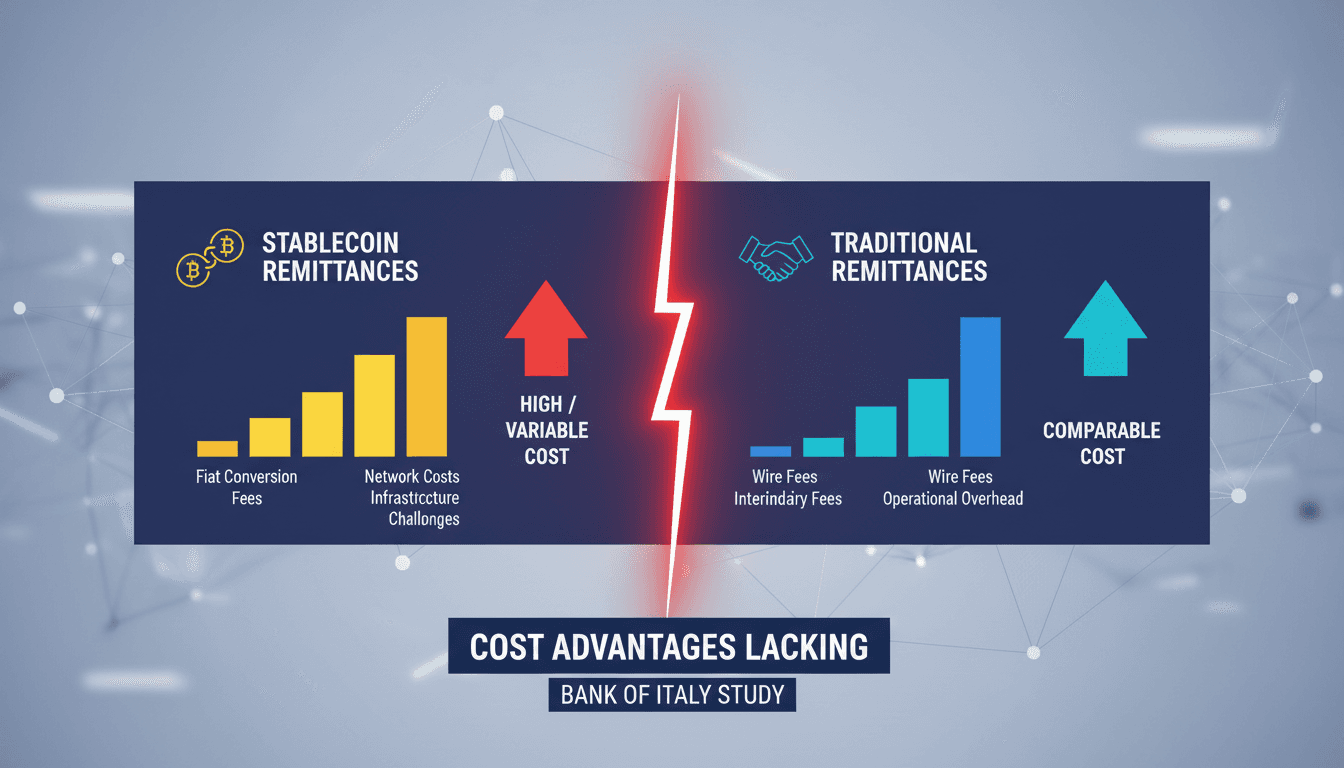
The Bank of Italy's recent findings challenge the assumption that stablecoins provide a cheaper alternative for remittances. As the study indicates comparable costs to traditional methods, consumers and businesses may need to reassess their payment strategies. This could lead to increased scrutiny from regulators, impacting the future landscape of cryptocurrency usage in remittances.
What happened
The Bank of Italy has conducted a study revealing that stablecoin remittances often incur costs similar to those of traditional remittance methods. The research highlights significant fiat conversion costs and payment infrastructure challenges as key factors influencing these expenses. In certain scenarios, stablecoin remittances were found to cost up to 9%, raising concerns about their financial viability for users.
The study involved a mystery-shopping experiment across ten remittance corridors, providing a comprehensive analysis of the current landscape. The findings suggest that the anticipated cost advantages of stablecoins may not be as pronounced as previously thought.
The Context
The research conducted by the Bank of Italy is particularly relevant as the remittance landscape continues to evolve. Stakeholders, including consumers and regulators, are increasingly interested in the implications of cryptocurrency on traditional financial systems. The study's timing coincides with a growing interest in stablecoins, which are often perceived as a more efficient alternative for cross-border transactions.
By identifying fiat on- and off-ramps as primary drivers of fees, the study sheds light on the complexities that remain in the remittance process. This insight is crucial for understanding the competitive dynamics between stablecoins and traditional remittance methods.
Takeaway
As the findings from the Bank of Italy circulate, further research may be necessary to evaluate the long-term viability of stablecoins as a cost-effective remittance solution. Potential regulatory changes could emerge in response to these insights, influencing how stablecoins are utilized in the market. Additionally, emerging technologies may play a role in reducing remittance costs, warranting close attention from industry participants.
The implications of this study could reshape consumer behavior and regulatory approaches in the cryptocurrency sector, making it a pivotal moment for stakeholders involved in remittances.
Covers blockchain, cryptocurrency news, project analysis, and market insights.
"CoinDesk is a well-established cryptocurrency and blockchain news provider, offering comprehensive insights, market data, and industry research."
— A47 Editor
Bank of Italy research suggests stablecoins aren't necessarily cheaper for remittances
Research from the Bank of Italy indicates that stablecoin remittances do not consistently offer a cost advantage over traditional transfer methods, with a mystery-shopping experiment revealing that exchange fees and banking infrastructure often negat...
Covers blockchain, cryptocurrency news, project analysis, and market insights.
"Cointelegraph is a leading crypto-focused media outlet known for timely news, analysis, and educational content related to blockchain and digital assets."
— A47 Editor
Bank of Italy finds no consistent cost advantage for stablecoin remittances
The Bank of Italy's recent research indicates that stablecoin remittances do not consistently offer a cost advantage over traditional methods, with fiat conversion costs and payment infrastructure being the primary factors influencing remittance cost...
Real-time updates, analysis, and reports on the blockchain and cryptocurrency sectors.
"Crypto News delivers real-time updates, analysis, and reports on the blockchain and cryptocurrency sectors."
— A47 Editor
Stablecoin remittances hit 9% in Bank of Italy test
A recent test conducted by the Bank of Italy revealed that stablecoin remittances can incur costs of up to 9%, primarily driven by fiat on- and off-ramps across ten different corridors. This finding highlights the financial implications of using stab...