
Visa Integrates Settlement Data with Blockchain Lending for Stablecoin Programs
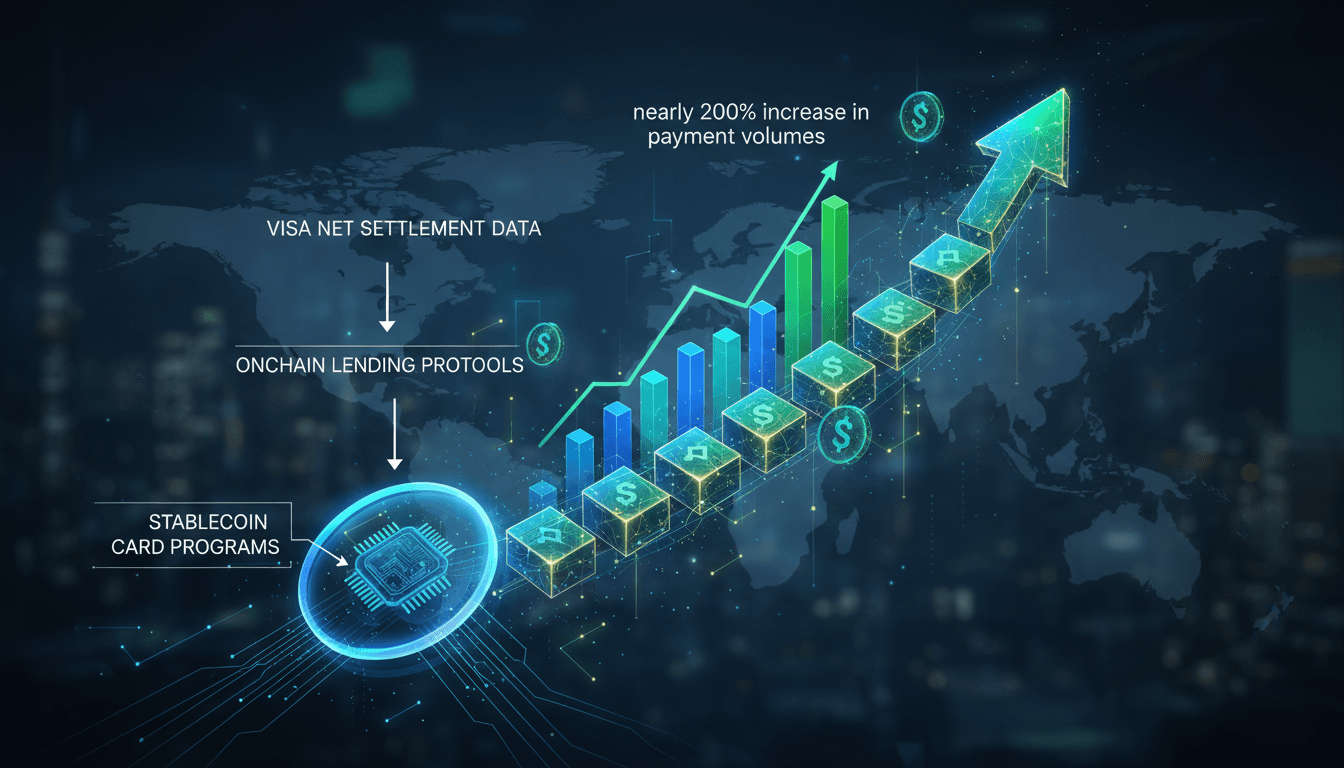
Here's what it means for you.
If you use stablecoin-linked payment cards, this integration could streamline your borrowing and payment processes.
Why it matters
This initiative enhances the efficiency of stablecoin transactions, potentially lowering costs and increasing access for users globally.
What happened (in 30 seconds)
- Visa announced the integration of VisaNet settlement data with blockchain lending on September 8, 2026.
- Credit Coop is the first to utilize this integration, financing over $2.5 billion in settlement volume since 2023.
- Stablecoin card programs have surged, with Visa reporting a $20 billion annualized settlement run rate.
The context you actually need
- Visa's stablecoin strategy has expanded significantly, with over 160 card programs and a nearly 200% increase in payment volumes year over year.
- The integration allows lenders to assess creditworthiness using both Visa's settlement data and onchain transaction data, addressing liquidity challenges.
- Credit Coop's Spigot protocol automates funding and repayment processes, showcasing the potential for smart contracts in financial transactions.
What's really happening
On September 8, 2026, Visa unveiled a strategic integration of its VisaNet settlement data with blockchain-based lending systems, marking a significant step in the evolution of stablecoin payment infrastructures. This initiative allows lenders to leverage Visa's extensive settlement records alongside onchain transaction data to evaluate creditworthiness and provide necessary working capital for payment obligations.
The move is particularly relevant as Visa has been actively expanding its stablecoin ecosystem, which now encompasses over 160 card programs. The company reported a staggering $20 billion annualized run rate in stablecoin settlements, reflecting more than 15 times year-over-year growth. This growth trajectory is indicative of a broader acceptance and utilization of stablecoins in everyday transactions, positioning Visa at the forefront of this financial evolution.
Credit Coop, a key participant in this initiative, has already demonstrated the effectiveness of this model. Utilizing smart contracts through its Spigot protocol, Credit Coop has financed over $2.5 billion in cumulative settlement volume since 2023, achieving zero defaults across more than 3,000 borrowing events. This success highlights the potential for blockchain technology to address liquidity challenges faced by emerging payment programs, providing real-time visibility into receivables and enhancing the overall efficiency of payment processing.
The integration of VisaNet data with onchain lending is not just a technological advancement; it represents a fundamental shift in how financial transactions are conducted. By combining traditional settlement data with innovative blockchain solutions, Visa is paving the way for a more interconnected and efficient payment ecosystem. This approach not only reduces borrowing costs for participating programs but also enhances the overall user experience for consumers utilizing stablecoin-linked payment cards.
As the stablecoin market continues to grow, Visa's initiative is likely to attract more fintech companies and lenders, further expanding the reach and utility of stablecoin payment solutions. This could lead to increased competition in the market, driving innovation and potentially lowering costs for consumers.
Who feels it first (and how)
- Fintech companies: They can leverage the integration to enhance their lending capabilities and offer better services to customers.
- Consumers using stablecoin cards: They may experience improved transaction efficiency and lower borrowing costs.
- Lenders and investors: They gain access to more reliable data for assessing creditworthiness, reducing risk in lending.
What to watch next
- Adoption rates of stablecoin cards: Increased usage could signal growing consumer confidence in stablecoin payments.
- Regulatory responses: Watch for any governmental actions or guidelines that may emerge as stablecoin usage expands.
- Market competition: Monitor how other payment networks respond to Visa's integration, which could lead to new innovations in the space.
Visa's integration of settlement data with blockchain lending is officially announced and in pilot phase.
Increased adoption of stablecoin payment solutions and potential market expansion for fintech companies.
The long-term regulatory landscape surrounding stablecoins and blockchain lending.
Frequently Asked Questions
- Why it matters?
- This initiative enhances the efficiency of stablecoin transactions, potentially lowering costs and increasing access for users globally.
- What happened (in 30 seconds)?
- Visa announced the integration of VisaNet settlement data with blockchain lending on September 8, 2026. Credit Coop is the first to utilize this integration, financing over $2.5 billion in settlement volume since 2023. Stablecoin card programs have surged, with Visa reporting a $20 billion annualized settlement run rate.
- What's really happening?
- On September 8, 2026, Visa unveiled a strategic integration of its VisaNet settlement data with blockchain-based lending systems, marking a significant step in the evolution of stablecoin payment infrastructures. This initiative allows lenders to leverage Visa's extensive settlement records alongside onchain transaction data to evaluate creditworthiness and provide necessary working capital for payment obligations. The move is particularly relevant as Visa has been actively expanding its stabl
- Who feels it first (and how)?
- Fintech companies: They can leverage the integration to enhance their lending capabilities and offer better services to customers. Consumers using stablecoin cards: They may experience improved transaction efficiency and lower borrowing costs. Lenders and investors: They gain access to more reliable data for assessing creditworthiness, reducing risk in lending.
- What to watch next?
- Adoption rates of stablecoin cards: Increased usage could signal growing consumer confidence in stablecoin payments. Regulatory responses: Watch for any governmental actions or guidelines that may emerge as stablecoin usage expands. Market competition: Monitor how other payment networks respond to Visa's integration, which could lead to new innovations in the space.
Covers blockchain, cryptocurrency news, project analysis, and market insights.
"Cointelegraph is a leading crypto-focused media outlet known for timely news, analysis, and educational content related to blockchain and digital assets."
— A47 Editor
Visa brings onchain credit to its growing stablecoin card business
Visa has announced the integration of onchain credit into its stablecoin card business, leveraging VisaNet settlement data as stablecoin payment volume on its network has surged nearly 200% year over year. This move signifies a strategic enhancement ...
Covers blockchain, cryptocurrency news, project analysis, and market insights.
"CoinDesk is a well-established cryptocurrency and blockchain news provider, offering comprehensive insights, market data, and industry research."
— A47 Editor
Visa combines VisaNet data with onchain lending to power stablecoin card working capital
Visa has reported that its stablecoin settlement volume has exceeded a $20 billion annualized run rate, reflecting a 15-fold increase year over year. The company is now encouraging blockchain lenders to utilize VisaNet data to extend credit to stable...
Real-time updates, analysis, and reports on the blockchain and cryptocurrency sectors.
"Crypto News delivers real-time updates, analysis, and reports on the blockchain and cryptocurrency sectors."
— A47 Editor
Visa expands stablecoin card network to 160 programs
Visa has announced the expansion of its stablecoin card network to 160 programs, reporting a nearly 200% growth in payment volume and a $20 billion annualized settlement rate. This significant increase reflects the growing adoption of stablecoins wit...