
Sepolia Testnet Fork Scheduled for Ethereum's Glamsterdam Upgrade
Why it matters
The Glamsterdam upgrade is a critical step in Ethereum's evolution, enhancing its scalability and efficiency, which could reshape the decentralized finance landscape.
What happened (in 30 seconds)
- The Sepolia testnet fork for the Glamsterdam upgrade is set for October 6, 2026, transitioning from private testing to public validation.
- Core developers confirmed the fork date after extensive private devnet testing, aiming for a full mainnet deployment by Q4 2026.
- Transaction efficiency improvements are expected, with a target block gas limit of 200 million, significantly higher than the previous limit of 60 million.
The context you actually need
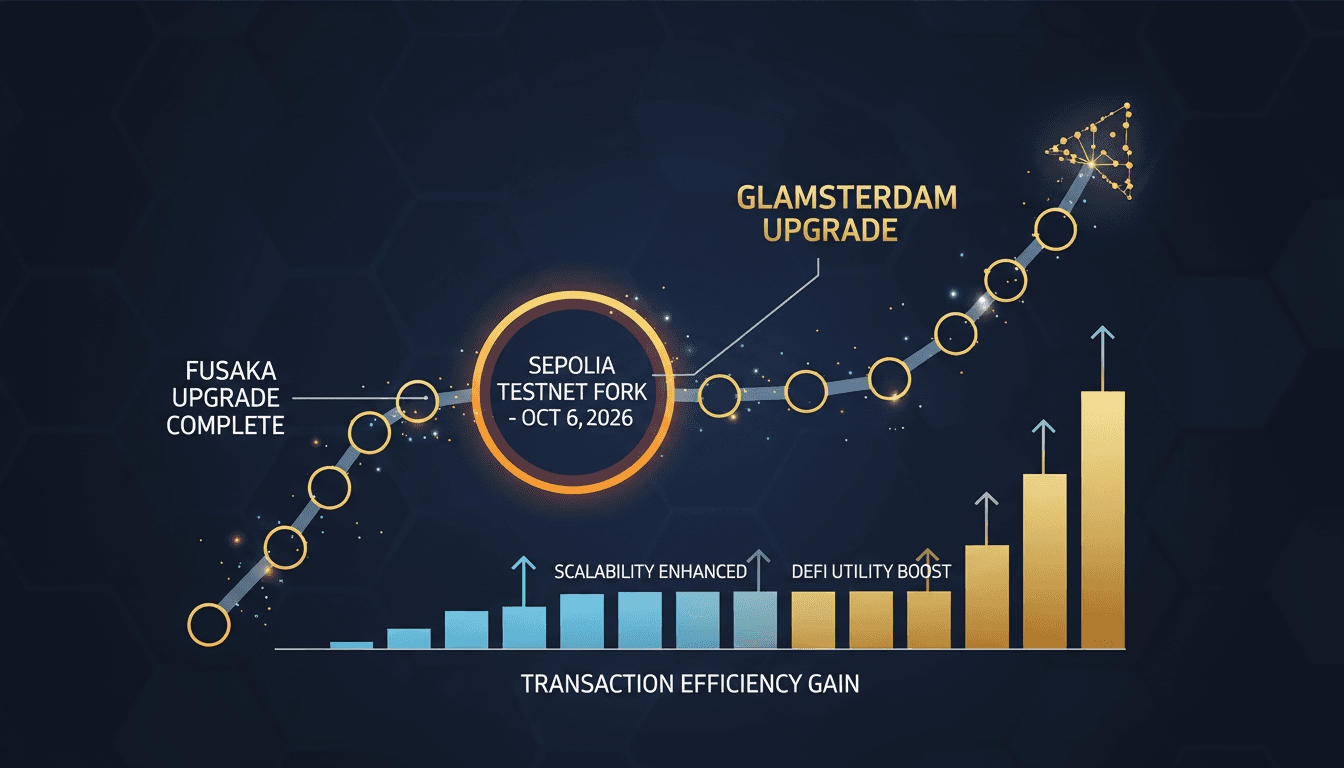
- Glamsterdam follows the Fusaka upgrade, which was completed in December 2025, and continues Ethereum's roadmap for scaling Layer 1 execution.
- Key changes include enshrined proposer-builder separation and block-level access lists, which aim to streamline transaction processing and reduce reliance on external middleware.
- The upgrade's success hinges on the stability of the Sepolia testnet, with potential impacts on transaction volumes and network utility if mainnet activation occurs as planned.
What's really happening
The upcoming Sepolia testnet fork for the Glamsterdam upgrade represents a pivotal moment in Ethereum's ongoing development. This upgrade is designed to enhance the network's transaction processing capabilities, aiming to support a significantly higher throughput on the Ethereum mainnet. The target block gas limit post-upgrade is set at 200 million, which is approximately 3.3 times the previous limit of around 60 million. This increase is crucial for accommodating the growing demand for decentralized applications and services that rely on Ethereum's infrastructure.
The Glamsterdam upgrade integrates both execution-layer changes (Amsterdam) and consensus-layer modifications (Gloas). This dual approach is intended to reorganize transaction processing, thereby improving efficiency and reducing the need for external middleware solutions. By streamlining these processes, Ethereum aims to manage database growth effectively while maintaining decentralization and the viability of home nodes.
The transition from private devnet testing to public testnet validation is a significant step. The private testing phase, which included the Glamsterdam-Devnet series, has been ongoing throughout 2026. It has involved the integration of key Ethereum Improvement Proposals (EIPs) that are essential for the upgrade's functionality. The confirmation of the October 6, 2026, fork date by the All Core Developers Consensus call indicates a readiness to move forward, albeit with caution to ensure stability.
Market participants are closely monitoring the implications of this upgrade. The anticipation of enhanced scalability has already influenced ETH price movements, which hovered around $2,586 at the time of the announcement. The expectation is that improved network efficiency will not only reduce transaction fees but also increase the overall utility of Ethereum, potentially attracting more users and developers to the platform.
However, there are risks associated with the testnet phase. Discussions among developers have highlighted the potential for disruptions caused by malicious actors, although these risks are somewhat mitigated by the isolation of testnet assets from the mainnet. The successful execution of the Sepolia fork is critical for maintaining confidence in Ethereum's roadmap and its ability to scale effectively.
Who feels it first (and how)
- Developers: They will benefit from improved tools and capabilities for building decentralized applications.
- DeFi users: Individuals engaging in decentralized finance will likely see reduced transaction costs and faster processing times.
- Investors: Those holding ETH may experience price fluctuations based on the perceived success of the upgrade and its impact on network utility.
- Businesses: Companies utilizing Ethereum for transactions or smart contracts could gain from enhanced efficiency and lower operational costs.
- Residents of Dubai: Users in Dubai leveraging Ethereum for token transfers or NFTs may notice immediate benefits in transaction efficiency post-upgrade.
What to watch next
- Mainnet activation timeline: Keep an eye on the confirmed date for the mainnet deployment, as it will determine the broader impact of the upgrade.
- Market response: Monitor ETH price movements and trading volumes as the testnet progresses, which could indicate market confidence in the upgrade.
- Developer feedback: Watch for insights from developers regarding the stability and performance of the Sepolia testnet, which will inform future upgrades.
The Sepolia testnet fork is scheduled for October 6, 2026.
Enhanced transaction efficiency and reduced fees will follow the successful mainnet deployment.
The long-term impact on ETH price and network utility remains uncertain until after the upgrade is fully implemented.
Frequently Asked Questions
- Why it matters?
- The Glamsterdam upgrade is a critical step in Ethereum's evolution, enhancing its scalability and efficiency, which could reshape the decentralized finance landscape.
- What happened (in 30 seconds)?
- The Sepolia testnet fork for the Glamsterdam upgrade is set for October 6, 2026, transitioning from private testing to public validation. Core developers confirmed the fork date after extensive private devnet testing, aiming for a full mainnet deployment by Q4 2026. Transaction efficiency improvements are expected, with a target block gas limit of 200 million, significantly higher than the previous limit of 60 million.
- What's really happening?
- The upcoming Sepolia testnet fork for the Glamsterdam upgrade represents a pivotal moment in Ethereum's ongoing development. This upgrade is designed to enhance the network's transaction processing capabilities, aiming to support a significantly higher throughput on the Ethereum mainnet. The target block gas limit post-upgrade is set at 200 million, which is approximately 3.3 times the previous limit of around 60 million. This increase is crucial for accommodating the growing demand for decentra
- Who feels it first (and how)?
- Developers: They will benefit from improved tools and capabilities for building decentralized applications. DeFi users: Individuals engaging in decentralized finance will likely see reduced transaction costs and faster processing times. Investors: Those holding ETH may experience price fluctuations based on the perceived success of the upgrade and its impact on network utility. Businesses: Companies utilizing Ethereum for transactions or smart contracts could gain from enhanced efficiency
- What to watch next?
- Mainnet activation timeline: Keep an eye on the confirmed date for the mainnet deployment, as it will determine the broader impact of the upgrade. Market response: Monitor ETH price movements and trading volumes as the testnet progresses, which could indicate market confidence in the upgrade. Developer feedback: Watch for insights from developers regarding the stability and performance of the Sepolia testnet, which will inform future upgrades.
Beginner-friendly crypto tutorials, guides, and news.
"99Bitcoins is a crypto education and news site known for easy-to-understand content and comprehensive guides."
— A47 Editor
Sepolia Sets the Stage for Ethereum’s Glamsterdam Upgrade
Ethereum's Glamsterdam upgrade is set to launch on the Sepolia testnet on October 6, 2026, following successful rehearsals that increased the work limit per block to 200 million gas. This upgrade aims to enhance the network's capacity and efficiency.
Real-time updates, analysis, and reports on the blockchain and cryptocurrency sectors.
"Crypto News delivers real-time updates, analysis, and reports on the blockchain and cryptocurrency sectors."
— A47 Editor
Ethereum warns Glamsterdam testnet faces builder abuse
Ethereum has issued a warning regarding potential builder abuse on the Glamsterdam testnet, set to launch on October 6 on Sepolia. Developers have expressed concerns that the availability of free test ether could allow disposable builders to disrupt ...
Covers blockchain, cryptocurrency news, project analysis, and market insights.
"CoinDesk is a well-established cryptocurrency and blockchain news provider, offering comprehensive insights, market data, and industry research."
— A47 Editor
Ethereum confirms Glamsterdam dates, but warns 'fake' builders could stall the chain
Ethereum has confirmed the dates for its upcoming Glamsterdam upgrade, scheduled for October 6 on the Sepolia testnet, while cautioning that 'fake' builders could potentially disrupt the chain by outbidding legitimate developers and withholding trans...
Covers blockchain, cryptocurrency news, project analysis, and market insights.
"CoinDesk is a well-established cryptocurrency and blockchain news provider, offering comprehensive insights, market data, and industry research."
— A47 Editor
Ethereum’s upcoming Glamsterdam upgrade clears rehearsal for a big jump in capacity
Ethereum's upcoming Glamsterdam upgrade has successfully completed its rehearsal, raising the limit on work per block to 200 million gas in preparation for a public test scheduled for October 6. This upgrade is part of ongoing efforts to enhance the ...