
Qivalis Secures Dutch EMI License for Euro Electronic Money Token Under MiCA
Why it matters
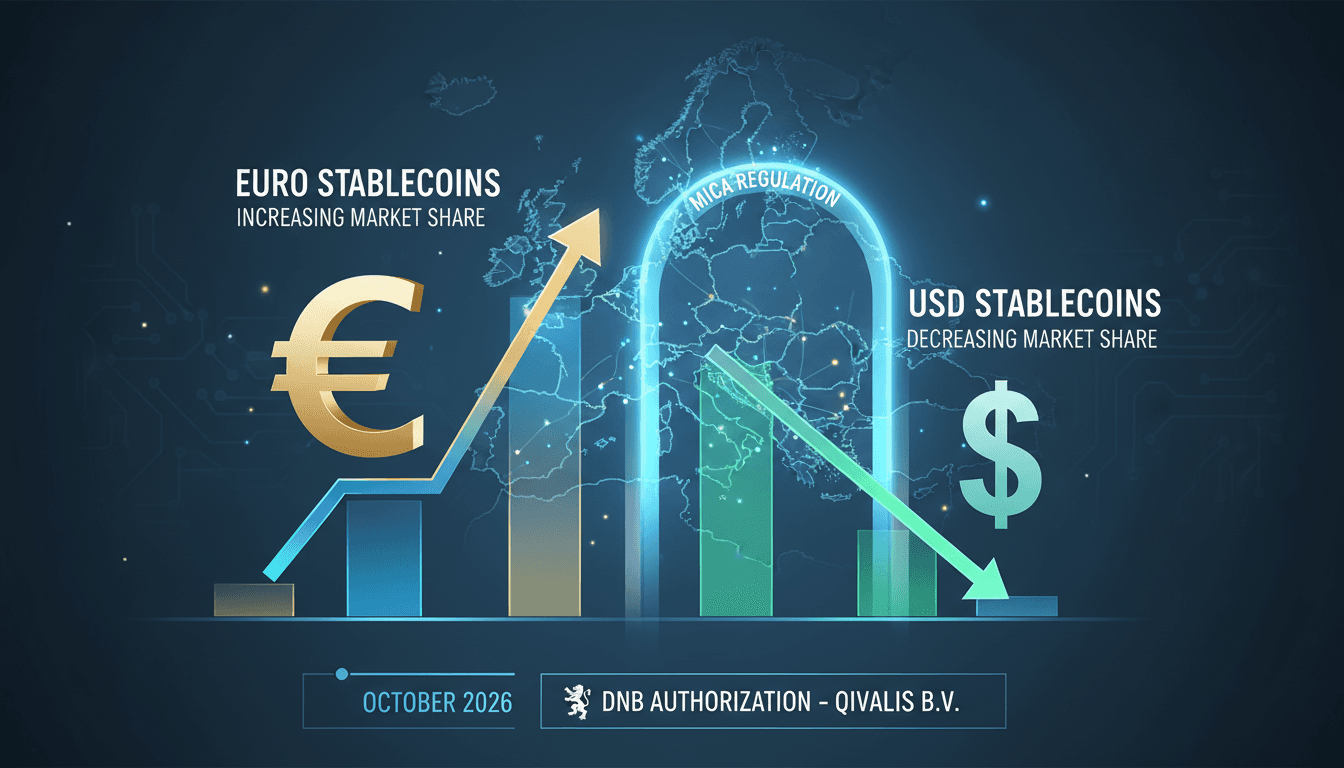
The authorization of Qivalis as an electronic money institution marks a significant step in establishing a competitive euro stablecoin market, challenging the USD's dominance.
What happened (in 30 seconds)
- Qivalis B.V. received authorization from De Nederlandsche Bank on October 14, 2026, to issue a euro-denominated electronic money token (EMT).
- 37 European banks are backing Qivalis, aiming to fill the euro stablecoin supply gap amid USD token dominance.
- Issuance is pending the publication of a MiCA white paper, with plans for a B2B2X distribution model through banks and payment providers.
The context you actually need
- MiCA regulation: The EU's Markets in Crypto-Assets regulation requires electronic money institutions to issue tokens pegged to official currencies, ensuring holders can redeem them at par.
- Stablecoin landscape: As of November 2025, USD tokens accounted for approximately 99% of stablecoin capitalization, with euro-denominated tokens representing a mere fraction.
- Strategic autonomy: European banks formed the Qivalis consortium to develop a euro alternative, addressing concerns over reliance on USD stablecoins for crypto trading and cross-border transactions.
What's really happening
The authorization of Qivalis as an electronic money institution by De Nederlandsche Bank is a pivotal moment in the European financial landscape. This move is part of a broader strategy under the EU's MiCA regulation, which aims to create a structured framework for crypto-asset service providers. By allowing Qivalis to issue a euro-denominated electronic money token (EMT), the EU is not only fostering competition against USD stablecoins but also addressing the significant supply gap in the euro stablecoin market.
Historically, euro-denominated stablecoins have struggled to gain traction, with the overwhelming majority of the market dominated by USD tokens. As of late 2025, USD stablecoins represented 99% of the total stablecoin capitalization, leaving the euro with a mere EUR 395 million in circulation. The Qivalis consortium, which began with just ten banks in September 2025 and expanded to 37 by May 2026, aims to change this dynamic. The consortium includes major players like BBVA, BNP Paribas, and ING, indicating a strong institutional backing that could enhance credibility and trust in the euro EMT.
However, the path to successful issuance is not without challenges. The issuance of the euro EMT is contingent upon the publication of a MiCA white paper, which will outline the operational framework and compliance measures necessary for the token's launch. This white paper will detail critical aspects such as redemption mechanisms, reserve attestations, and integration with existing financial infrastructures. Until these details are disclosed, the market remains cautious, and the actual adoption of the euro EMT will depend on how effectively Qivalis can integrate with banks, exchanges, and payment providers.
Moreover, while the backing of 37 banks provides a robust foundation, it does not guarantee immediate user adoption or liquidity. Market participants are aware that bank sponsorship alone does not translate into widespread distribution or usage. Existing euro EMTs, such as those from Circle and Société Générale, already operate in the market, creating a competitive landscape that Qivalis must navigate carefully.
In summary, the authorization of Qivalis is a significant step towards establishing a viable euro stablecoin alternative. However, the success of this initiative will hinge on the details of the forthcoming white paper and the consortium's ability to effectively engage with the broader financial ecosystem.
Who feels it first (and how)
- Financial institutions: Banks and payment providers will need to adapt their services to integrate the new euro EMT.
- Businesses engaged in cross-border transactions: Companies relying on stablecoins for international payments may benefit from increased options and potentially lower costs.
- Investors in crypto assets: Those holding or trading stablecoins will see changes in liquidity dynamics and competitive offerings in the euro market.
What to watch next
- White paper publication: The details outlined in the MiCA white paper will be crucial for understanding the operational framework and compliance requirements for the euro EMT.
- Market adoption rates: Monitor how quickly businesses and financial institutions begin to adopt the euro EMT once it is issued, as this will indicate its acceptance in the market.
- Competitive responses: Watch for reactions from existing euro stablecoin issuers and how they adjust their strategies in light of Qivalis' entry into the market.
Qivalis has received authorization from De Nederlandsche Bank to issue a euro EMT.
The euro EMT will launch within months following the publication of the MiCA white paper.
The extent of user adoption and liquidity for the euro EMT once it is issued remains uncertain.
Frequently Asked Questions
- Why it matters?
- The authorization of Qivalis as an electronic money institution marks a significant step in establishing a competitive euro stablecoin market, challenging the USD's dominance.
- What happened (in 30 seconds)?
- Qivalis B.V. received authorization from De Nederlandsche Bank on October 14, 2026, to issue a euro-denominated electronic money token (EMT). 37 European banks are backing Qivalis, aiming to fill the euro stablecoin supply gap amid USD token dominance. Issuance is pending the publication of a MiCA white paper, with plans for a B2B2X distribution model through banks and payment providers.
- What's really happening?
- The authorization of Qivalis as an electronic money institution by De Nederlandsche Bank is a pivotal moment in the European financial landscape. This move is part of a broader strategy under the EU's MiCA regulation, which aims to create a structured framework for crypto-asset service providers. By allowing Qivalis to issue a euro-denominated electronic money token (EMT), the EU is not only fostering competition against USD stablecoins but also addressing the significant supply gap in the euro
- Who feels it first (and how)?
- Financial institutions: Banks and payment providers will need to adapt their services to integrate the new euro EMT. Businesses engaged in cross-border transactions: Companies relying on stablecoins for international payments may benefit from increased options and potentially lower costs. Investors in crypto assets: Those holding or trading stablecoins will see changes in liquidity dynamics and competitive offerings in the euro market.
- What to watch next?
- White paper publication: The details outlined in the MiCA white paper will be crucial for understanding the operational framework and compliance requirements for the euro EMT. Market adoption rates: Monitor how quickly businesses and financial institutions begin to adopt the euro EMT once it is issued, as this will indicate its acceptance in the market. Competitive responses: Watch for reactions from existing euro stablecoin issuers and how they adjust their strategies in light of Qivalis' e
Real-time updates, analysis, and reports on the blockchain and cryptocurrency sectors.
"Crypto News delivers real-time updates, analysis, and reports on the blockchain and cryptocurrency sectors."
— A47 Editor
Europe’s banks have a euro stablecoin license. Can they win users?
Qivalis has received an electronic money institution license from the Dutch central bank, allowing it to issue a euro-denominated stablecoin compliant with the Markets in Crypto-Assets (MiCA) regulation. This license is a crucial step for Qivalis as ...
Covers blockchain, cryptocurrency news, project analysis, and market insights.
"Cointelegraph is a leading crypto-focused media outlet known for timely news, analysis, and educational content related to blockchain and digital assets."
— A47 Editor
Qivalis wins Dutch e-money license for euro stablecoin
Qivalis has secured an Electronic Money Institution authorization from the Dutch authorities, allowing it to launch a euro-denominated stablecoin in the upcoming months, contingent upon meeting additional requirements under the Markets in Crypto-Asse...
Covers blockchain, cryptocurrency news, project analysis, and market insights.
"CoinDesk is a well-established cryptocurrency and blockchain news provider, offering comprehensive insights, market data, and industry research."
— A47 Editor
Dutch central bank grants Qivalis e-money license for MiCA-compliant euro token
The Dutch central bank has granted Qivalis an e-money license, enabling the company to offer a euro-denominated stablecoin compliant with the Markets in Crypto-Assets (MiCA) regulation. This authorization marks a significant step for Qivalis in estab...