
Circle to Expand USDC into 40 Developing Markets
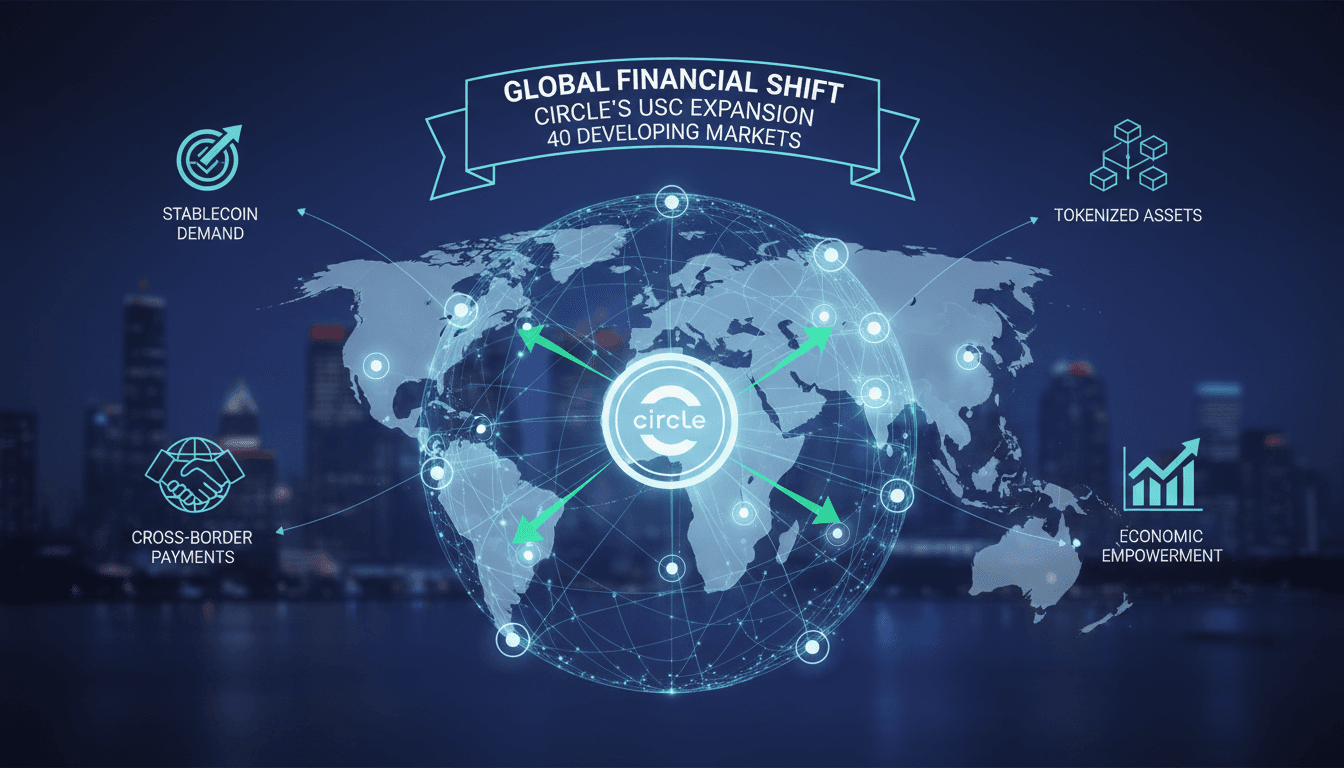
Why it matters
Circle's move signifies a pivotal shift in the global financial landscape, enhancing access to digital currencies in regions with limited banking infrastructure.
What happened (in 30 seconds)
- On October 16, 2026, Circle CEO Jeremy Allaire announced plans to expand into approximately 40 developing markets during the IMF and World Bank meetings in Bangkok.
- Circle aims to target Southeast Asia, Latin America, Africa, and the Middle East, driven by rising demand for stablecoins among businesses and individuals.
- USDC's market share in adjusted transaction volume surged from 40% in 2025 to over 60% in 2026, indicating strong adoption and competitive positioning against Tether.
The context you actually need
- Stablecoin adoption is accelerating globally, with USDC leading in transaction volume, reflecting a shift towards mainstream blockchain usage.
- Circle's recent strategic moves, including a $400 million acquisition of Tazapay and a $100 million investment from Binance, bolster its infrastructure for cross-border payments.
- Improving regulatory clarity in the U.S. and growing demand in emerging economies position Circle favorably for expansion.
What's really happening
Circle's announcement marks a significant inflection point in the stablecoin sector, as the company seeks to capitalize on the burgeoning demand for digital currencies in developing markets. The global landscape for financial transactions is evolving, with stablecoins like USDC becoming increasingly relevant for individuals and businesses in regions where traditional banking services are limited or unreliable.
The decision to expand into approximately 40 developing markets is driven by a combination of factors. First, there is a clear demand for dollar-pegged stablecoins in areas where local currencies may be volatile or subject to inflation. By providing a stable digital currency, Circle aims to facilitate internet-based commerce, enabling users to transact with confidence and security.
Circle's recent strategic acquisitions and investments have laid the groundwork for this expansion. The acquisition of Tazapay, which adds over 60 banking partners and 100+ payout markets, enhances Circle's ability to offer localized services in these new markets. This infrastructure is crucial for ensuring that users can easily access and utilize USDC for various transactions, from remittances to everyday purchases.
Moreover, the competitive landscape is shifting. With USDC capturing over 60% of the adjusted stablecoin transaction volume in 2026, Circle is positioning itself as a leader in the space, surpassing Tether in key metrics. This growth is not just a reflection of market dynamics but also of Circle's proactive approach to regulatory compliance and partnerships, which are essential for gaining trust in new markets.
As Circle moves forward, the implications for users in developing regions are profound. Access to USDC could mean lower transaction costs, faster payments, and a more stable means of conducting business. This is particularly relevant in areas where traditional banking infrastructure is lacking, as it opens up new avenues for economic participation and financial inclusion.
Who feels it first (and how)
- Small business owners in developing markets may benefit from lower transaction fees and faster payment processing.
- Freelancers and gig economy workers could gain access to stable payment methods, reducing currency risk.
- Consumers in regions with unstable currencies will find a reliable alternative for transactions and savings.
What to watch next
- Partnership announcements: Keep an eye on Circle's collaborations with local financial institutions, which will be crucial for successful market entry.
- Regulatory developments: Changes in regulations regarding stablecoins in target markets could impact Circle's expansion strategy.
- Adoption metrics: Monitor USDC's transaction volume growth in these new markets to gauge the success of Circle's initiatives.
Circle's intent to expand into 40 developing markets.
Increased adoption of USDC in regions with limited banking access.
The specific timeline for market entry and the regulatory landscape in each targeted region.
Frequently Asked Questions
- Why it matters?
- Circle's move signifies a pivotal shift in the global financial landscape, enhancing access to digital currencies in regions with limited banking infrastructure.
- What happened (in 30 seconds)?
- On October 16, 2026, Circle CEO Jeremy Allaire announced plans to expand into approximately 40 developing markets during the IMF and World Bank meetings in Bangkok. Circle aims to target Southeast Asia, Latin America, Africa, and the Middle East, driven by rising demand for stablecoins among businesses and individuals. USDC's market share in adjusted transaction volume surged from 40% in 2025 to over 60% in 2026, indicating strong adoption and competitive positioning against Tether.
- What's really happening?
- Circle's announcement marks a significant inflection point in the stablecoin sector, as the company seeks to capitalize on the burgeoning demand for digital currencies in developing markets. The global landscape for financial transactions is evolving, with stablecoins like USDC becoming increasingly relevant for individuals and businesses in regions where traditional banking services are limited or unreliable. The decision to expand into approximately 40 developing markets is driven by a combin
- Who feels it first (and how)?
- Small business owners in developing markets may benefit from lower transaction fees and faster payment processing. Freelancers and gig economy workers could gain access to stable payment methods, reducing currency risk. Consumers in regions with unstable currencies will find a reliable alternative for transactions and savings.
- What to watch next?
- Partnership announcements: Keep an eye on Circle's collaborations with local financial institutions, which will be crucial for successful market entry. Regulatory developments: Changes in regulations regarding stablecoins in target markets could impact Circle's expansion strategy. Adoption metrics: Monitor USDC's transaction volume growth in these new markets to gauge the success of Circle's initiatives.
Covers blockchain, cryptocurrency news, project analysis, and market insights.
"Cointelegraph is a leading crypto-focused media outlet known for timely news, analysis, and educational content related to blockchain and digital assets."
— A47 Editor
Circle’s Allaire says stablecoin issuer looking to enter 40 developing markets: Report
Circle, a prominent stablecoin issuer, is planning to expand its operations into approximately 40 developing markets, including regions in Southeast Asia, Latin America, Africa, and the Middle East, driven by a growing demand for stablecoins. CEO Jer...
English-language digital publication covering business, politics, technology, and current affairs.
"The Arabian Post mixes original and syndicated-style coverage with a broad regional and global business-news orientation."
— A47 Editor
Circle targets expansion across 40 developing economies
Circle is set to expand into approximately 40 emerging and developing markets, as announced by CEO Jeremy Allaire. This expansion targets regions in Southeast Asia, Latin America, Africa, and the Middle East, where there is a growing demand for dolla...
Real-time updates, analysis, and reports on the blockchain and cryptocurrency sectors.
"Crypto News delivers real-time updates, analysis, and reports on the blockchain and cryptocurrency sectors."
— A47 Editor
Circle wants to enter 40 more markets. Where can USDC actually be used?
Circle is planning to expand its presence into approximately 40 emerging and developing markets, raising questions about the current usability of its stablecoin, USDC, in these regions. The company seeks to understand where businesses can accept USDC...
Corporate finance news, M&A, deals, and executive interviews.
"Finance Monthly serves a professional readership with corporate finance coverage."
— A47 Editor
Circle Targets 40 New Markets as Stablecoin Expansion Accelerates
Circle is expanding its reach into approximately 40 emerging and developing markets, aiming to establish its USDC stablecoin as a prominent payment and settlement mechanism beyond cryptocurrency trading. This strategic move is part of the company's b...
Covers blockchain, cryptocurrency news, project analysis, and market insights.
"CoinDesk is a well-established cryptocurrency and blockchain news provider, offering comprehensive insights, market data, and industry research."
— A47 Editor
Circle targets 40 new markets as stablecoin demand grows globally
Circle, a leading stablecoin issuer, is targeting 40 new markets globally, driven by increasing demand for digital dollars in regions such as Asia, Africa, and Latin America, as stated by CEO Jeremy Allaire.