
Deutsche Bank to Launch Institutional Bitcoin Custody Services in Germany
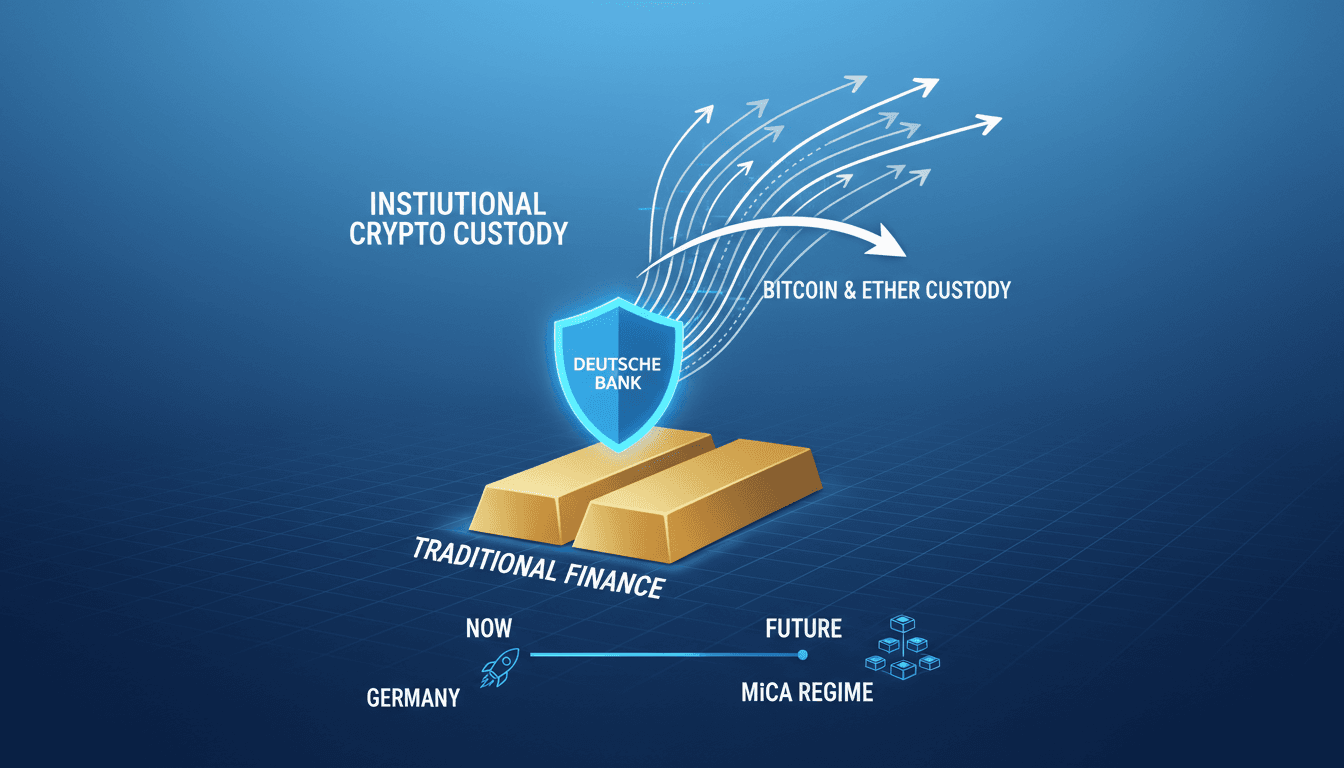
As institutional interest in cryptocurrencies grows, Deutsche Bank's new custody service could reshape how corporations manage digital assets.
Why it matters
This move signals a significant shift in the financial landscape, as traditional banks increasingly embrace digital assets amid evolving regulatory frameworks.
What happened (in 30 seconds)
- Deutsche Bank is set to launch institutional custody services for Bitcoin and Ether in Germany, targeting professional clients.
- Taurus, a Swiss technology partner, is collaborating with Deutsche Bank to provide secure custody solutions.
- Regulatory approvals are pending, but the launch is expected imminently, with plans for expansion into Asia by 2027.
The context you actually need
- Institutional demand for regulated cryptocurrency custody solutions is rising, driven by the need for secure asset management.
- Europe's MiCA regulation is paving the way for banks to offer digital asset services, enhancing compliance and security.
- Deutsche Bank's strategy positions digital assets as complementary to traditional banking, rather than a disruptive force.
What's really happening
Deutsche Bank's impending launch of institutional Bitcoin and Ether custody services marks a pivotal moment in the integration of digital assets into mainstream finance. As of mid-October 2026, the bank is finalizing its preparations to serve professional clients in Germany, with a phased rollout expected to begin shortly. This initiative is not merely a response to market trends; it reflects a broader strategic shift among traditional financial institutions that are increasingly recognizing the potential of digital assets.
The collaboration with Taurus, a Swiss firm specializing in digital asset technology, underscores the importance of secure and compliant custody solutions. By leveraging Taurus's expertise, Deutsche Bank aims to provide a robust infrastructure that meets the stringent regulatory requirements of the European market. This is particularly relevant in light of the Markets in Crypto-Assets (MiCA) regulation, which offers a clear framework for the custody of digital assets, thereby reducing the risks associated with unregulated crypto firms.
The bank's custody service will initially support Bitcoin, Ether, and select stablecoins, catering specifically to institutional and corporate clients rather than retail investors. This focus on professional clients highlights the growing demand for regulated custody solutions, as institutions seek to manage their digital assets securely and in compliance with existing financial regulations. The service will manage wallets and private keys, ensuring that clients can safely store their digital assets while maintaining access to traditional banking services.
As Deutsche Bank prepares for its launch, the implications extend beyond Germany. The bank has plans to expand its services to Asian financial centers in 2027, indicating a strategic vision that aligns with global trends in digital asset adoption. This expansion could further enhance the bank's position in the rapidly evolving cryptocurrency landscape, potentially attracting a broader client base across different regions.
In summary, Deutsche Bank's entry into the cryptocurrency custody space is a significant development that reflects the increasing convergence of traditional finance and digital assets. By providing a regulated and secure custody solution, the bank is not only addressing the needs of institutional clients but also positioning itself as a leader in the evolving financial ecosystem.
Who feels it first (and how)
- Institutional investors: They will benefit from secure and regulated custody solutions for their digital assets.
- Corporate clients: Companies looking to manage cryptocurrencies will find a reliable partner in Deutsche Bank.
- Financial regulators: They will observe how traditional banks adapt to digital asset regulations and compliance.
What to watch next
- Regulatory approvals: The timeline for final regulatory clearance will indicate how quickly Deutsche Bank can launch its services.
- Market response: Watch for reactions from institutional clients regarding the adoption of Deutsche Bank's custody services.
- Expansion plans: The success of the German launch will influence Deutsche Bank's strategy for entering Asian markets in 2027.
Deutsche Bank is preparing to launch custody services for Bitcoin and Ether.
The service will attract institutional clients seeking regulated custody solutions.
The specific impact on Dubai residents and the timing of the Asian expansion remain speculative.
Frequently Asked Questions
- Why it matters?
- This move signals a significant shift in the financial landscape, as traditional banks increasingly embrace digital assets amid evolving regulatory frameworks.
- What happened (in 30 seconds)?
- Deutsche Bank is set to launch institutional custody services for Bitcoin and Ether in Germany, targeting professional clients. Taurus, a Swiss technology partner, is collaborating with Deutsche Bank to provide secure custody solutions. Regulatory approvals are pending, but the launch is expected imminently, with plans for expansion into Asia by 2027.
- What's really happening?
- Deutsche Bank's impending launch of institutional Bitcoin and Ether custody services marks a pivotal moment in the integration of digital assets into mainstream finance. As of mid-October 2026, the bank is finalizing its preparations to serve professional clients in Germany, with a phased rollout expected to begin shortly. This initiative is not merely a response to market trends; it reflects a broader strategic shift among traditional financial institutions that are increasingly recognizing the
- Who feels it first (and how)?
- Institutional investors: They will benefit from secure and regulated custody solutions for their digital assets. Corporate clients: Companies looking to manage cryptocurrencies will find a reliable partner in Deutsche Bank. Financial regulators: They will observe how traditional banks adapt to digital asset regulations and compliance.
- What to watch next?
- Regulatory approvals: The timeline for final regulatory clearance will indicate how quickly Deutsche Bank can launch its services. Market response: Watch for reactions from institutional clients regarding the adoption of Deutsche Bank's custody services. Expansion plans: The success of the German launch will influence Deutsche Bank's strategy for entering Asian markets in 2027.
Bitcoin news, technical analysis, and forecasts across crypto markets.
"NewsBTC covers Bitcoin news, technical analysis, and forecasts across crypto markets and major blockchain projects."
— A47 Editor
Deutsche Bank Nears Bitcoin Custody Launch As Crypto Push Expands Beyond Europe
Deutsche Bank is on the verge of launching its institutional digital asset custody services, focusing initially on major cryptocurrencies like Bitcoin and Ethereum, with an expected rollout for professional clients in Germany within weeks. This initi...
Covers Bitcoin plus altcoin news, market updates, and educational resources.
"Bitcoin.com provides news, market data, and guides focused on Bitcoin and the wider crypto industry."
— A47 Editor
Deutsche Bank Nears Launch of Institutional Bitcoin, Ether Custody
Deutsche Bank is nearing the launch of its institutional custody services for cryptocurrencies, including Bitcoin and Ether, as it awaits necessary regulatory approvals. This move is part of the bank's strategy to expand its offerings in the digital ...
Covers blockchain, cryptocurrency news, project analysis, and market insights.
"Cointelegraph is a leading crypto-focused media outlet known for timely news, analysis, and educational content related to blockchain and digital assets."
— A47 Editor
Deutsche Bank prepares German crypto custody launch, eyes Asia: Report
Deutsche Bank is reportedly preparing to launch its digital asset custody services in Germany, with plans to expand into Asian financial markets, reflecting the growing demand for cryptocurrency services.
Real-time updates, analysis, and reports on the blockchain and cryptocurrency sectors.
"Crypto News delivers real-time updates, analysis, and reports on the blockchain and cryptocurrency sectors."
— A47 Editor
Deutsche Bank is weeks from crypto custody. What will clients get on day one?
Deutsche Bank is set to launch its first institutional digital asset custody service within weeks, focusing initially on major cryptocurrencies such as Bitcoin and Ether, with plans to expand its offerings over time.