
U.S. Issuers Object to Tokenized Stock Trading on OKX-ICE Platform
Why it matters
This resistance from major issuers signals a potential slowdown in the adoption of tokenized equities, impacting market innovation.
What happened (in 30 seconds)
- On October 18, 2026, multiple U.S. issuers formally objected to their shares being tokenized on the OKX-ICE platform.
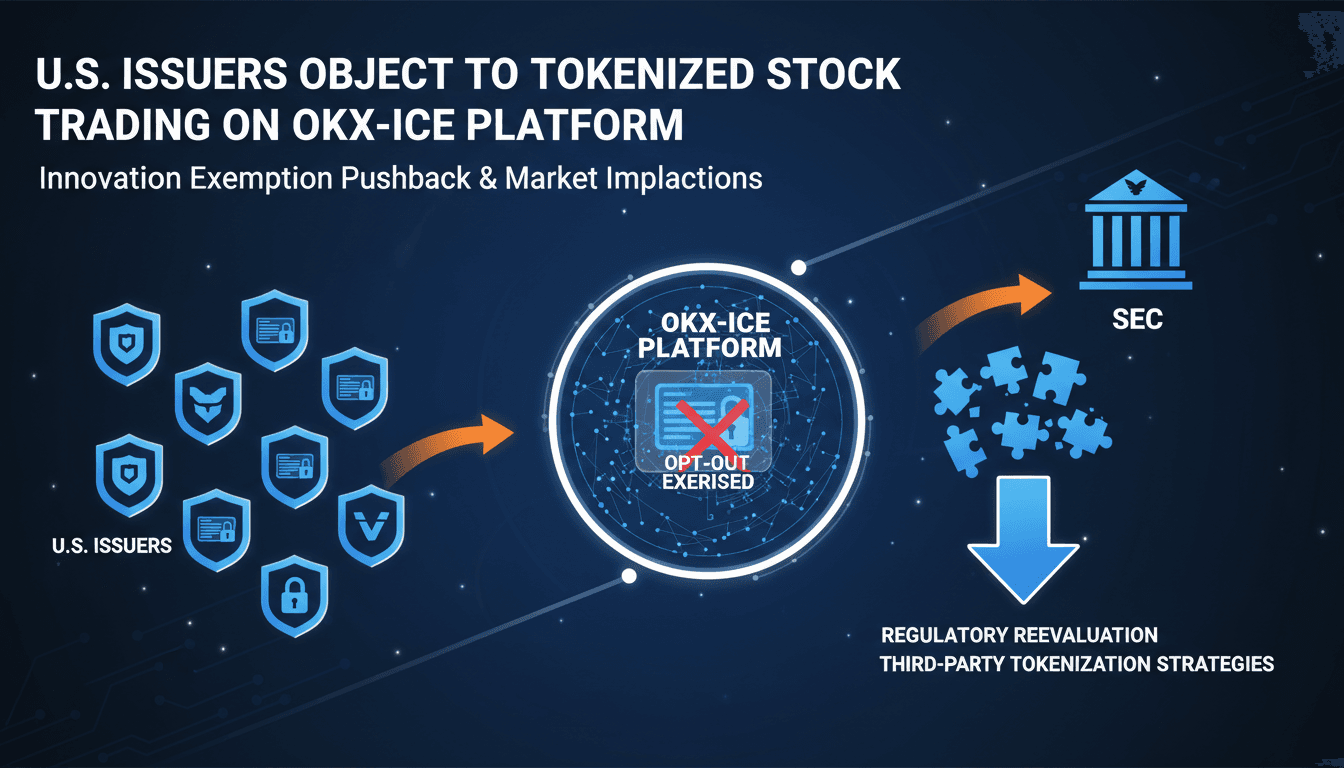
- Nine companies, including Broadcom and Verizon, exercised an opt-out provision under the SEC's Innovation Exemption framework.
- Approximately 14% of the 63 stocks proposed for tokenization are now blocked from trading on this venue.
The context you actually need
- The SEC's Innovation Exemption, adopted on September 17, 2026, allows for tokenized stocks to be traded without full exchange registration, provided issuers are notified and can opt out.
- OKXICE, a joint venture between crypto exchange OKX and Intercontinental Exchange (ICE), aimed to offer 24/7 trading of tokenized stocks backed by underlying shares.
- Concerns raised by issuers include issues around price discovery, liquidity, volatility, and investor confusion regarding unaffiliated tokenized products.
What's really happening
The objections from nine U.S. issuers to the tokenization of their stocks on the OKX-ICE platform reveal a significant tension between innovation in financial markets and the control that companies wish to maintain over their equity representations. The SEC's Innovation Exemption, which was designed to facilitate the introduction of tokenized equities, has inadvertently highlighted the hesitance of established companies to embrace this new trading paradigm.
The opt-out mechanism allows issuers to block the tokenization of their shares, and this has been exercised by companies like Broadcom, Verizon, and UnitedHealth Group. These firms are concerned that tokenized versions of their stocks could lead to complications in price discovery and liquidity, potentially creating a market where their shares trade at different values across platforms. This fragmentation could confuse investors, especially those unfamiliar with the nuances of tokenized assets.
The objections also reflect broader apprehensions about volatility in the crypto markets, which could spill over into traditional equity markets if tokenized stocks are not managed properly. Companies fear that the introduction of third-party tokenized products could lead to increased volatility and investor confusion, undermining the integrity of their stock prices.
Despite these objections, OKXICE has indicated that it will proceed with the tokenization of other stocks that have not opted out. This decision underscores a critical point: while some companies are resistant to change, others may see the potential benefits of tokenized trading, such as increased liquidity and access to a broader investor base.
The ongoing situation illustrates a pivotal moment in the evolution of equity trading. As the market grapples with the implications of tokenization, the balance between innovation and issuer control will be crucial. The outcome of this tension could shape the future landscape of stock trading, influencing how companies approach their equity offerings and how investors engage with the market.
Who feels it first (and how)
- Investors: Those looking for new trading options may find fewer opportunities if major companies opt out.
- Tech firms: Companies involved in blockchain and tokenization may see reduced demand for their services.
- Market analysts: Professionals analyzing market trends will need to adjust their forecasts based on issuer resistance.
What to watch next
- Future issuer objections: Keep an eye on whether more companies will opt out, which could indicate broader industry reluctance.
- Regulatory responses: Watch for any statements or actions from the SEC regarding the Innovation Exemption and its implications for tokenization.
- Market performance of approved stocks: Monitor how stocks that proceed with tokenization perform compared to those that opted out, as this could influence future decisions.
Nine companies have formally objected to tokenized trading of their shares.
Other companies may follow suit, expressing similar concerns about tokenization.
The long-term impact of these objections on the overall adoption of tokenized equities remains uncertain.
Frequently Asked Questions
- Why it matters?
- This resistance from major issuers signals a potential slowdown in the adoption of tokenized equities, impacting market innovation.
- What happened (in 30 seconds)?
- On October 18, 2026, multiple U.S. issuers formally objected to their shares being tokenized on the OKX-ICE platform. Nine companies, including Broadcom and Verizon, exercised an opt-out provision under the SEC's Innovation Exemption framework. Approximately 14% of the 63 stocks proposed for tokenization are now blocked from trading on this venue.
- What's really happening?
- The objections from nine U.S. issuers to the tokenization of their stocks on the OKX-ICE platform reveal a significant tension between innovation in financial markets and the control that companies wish to maintain over their equity representations. The SEC's Innovation Exemption, which was designed to facilitate the introduction of tokenized equities, has inadvertently highlighted the hesitance of established companies to embrace this new trading paradigm. The opt-out mechanism allows issuers
- Who feels it first (and how)?
- Investors: Those looking for new trading options may find fewer opportunities if major companies opt out. Tech firms: Companies involved in blockchain and tokenization may see reduced demand for their services. Market analysts: Professionals analyzing market trends will need to adjust their forecasts based on issuer resistance.
- What to watch next?
- Future issuer objections: Keep an eye on whether more companies will opt out, which could indicate broader industry reluctance. Regulatory responses: Watch for any statements or actions from the SEC regarding the Innovation Exemption and its implications for tokenization. Market performance of approved stocks: Monitor how stocks that proceed with tokenization perform compared to those that opted out, as this could influence future decisions.
Covers blockchain, cryptocurrency news, project analysis, and market insights.
"CoinDesk is a well-established cryptocurrency and blockchain news provider, offering comprehensive insights, market data, and industry research."
— A47 Editor
SEC tokenized stock framework faces issuer pushback as Broadcom, Verizon object to OKX-ICE listing
The SEC's framework for tokenized stock trading is facing significant pushback as eight companies, including Broadcom and Verizon, have formally objected to the planned listing on the OKX-ICE venue. Nasdaq has also announced its decision to opt out o...
Real-time updates, analysis, and reports on the blockchain and cryptocurrency sectors.
"Crypto News delivers real-time updates, analysis, and reports on the blockchain and cryptocurrency sectors."
— A47 Editor
OKXICE faces objections from 9 companies over stock tokens
OKXICE is facing objections from nine companies, including Broadcom and CoreWeave, regarding the trading of tokenized shares under the SEC's new regulations for blockchain stocks. This pushback highlights concerns about the compliance and viability o...
Markets desk coverage, trading insights, and investor updates.
"WSJ’s markets reporting provides in-depth analysis and context for investors."
— A47 Editor
From Verizon to UnitedHealth, Corporate America Is Balking at ‘Tokenized’ Stocks
Corporate America, including major firms like Verizon and UnitedHealth, is expressing significant resistance to the concept of 'tokenized' stocks under a new regulatory framework, with Broadcom also voicing objections. This pushback highlights concer...