
SEC Designates Tokenization Super Intelligence and Quantum Computing as FY2027 Examination Priorities
Why it matters
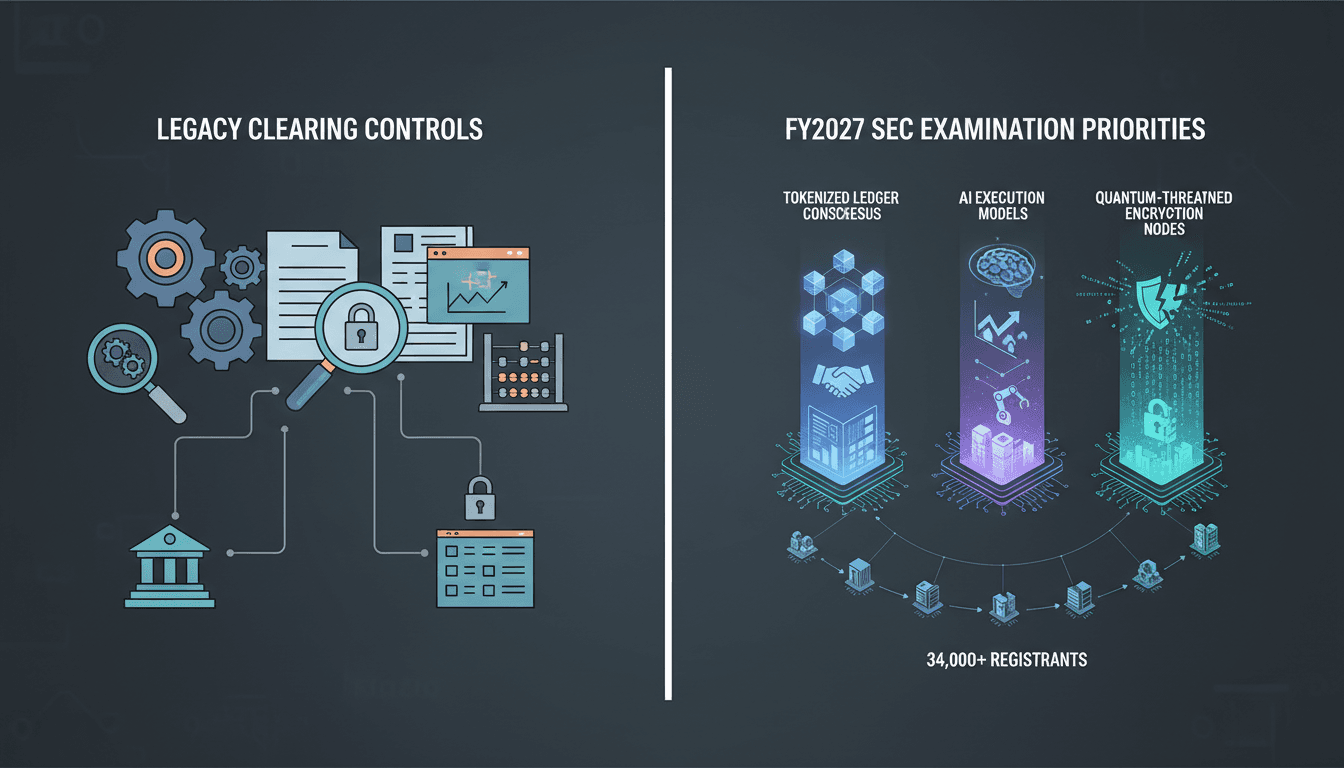
The regulatory perimeter has shifted from policing speculative crypto retail products to auditing the core technical architecture of institutional market plumbing across more than 34,000 registrants.
What happened (in 30 seconds)
- The SEC released its FY2027 examination priorities: On October 23, 2026, the Division of Examinations published its annual blueprint, formalizing operational focus areas across cleared markets, broker-dealers, and registered advisers.
- Three frontier technologies took center stage: Tokenized securities, advanced artificial intelligence ("super intelligence"), and quantum computing were designated as critical inspection vectors under operational resilience standards like Regulation SCI.
- Crypto was omitted as a standalone silo: For the second consecutive year, the SEC excluded dedicated cryptocurrency and decentralized finance headings, choosing instead to fold distributed ledger technology straight into clearing agency infrastructure reviews.
The context you actually need
- Tokenization is moving into core settlement: Rather than remaining an experimental sandbox, institutional adoption of blockchain settlement, collateral optimization, and securities lending prompted regulators to assess whether ledger downtime or smart contract failures trigger settlement default.
- Algorithmic reliance reached systemic weight: The integration of autonomous trading algorithms, predictive compliance systems, and client-facing generative tools introduced specific operational vulnerabilities, including deepfakes and algorithmic bias, directly into broker-dealer risk profiles.
- Cryptographic horizons entered the audit schedule: While functional quantum commercialization remains prospective, the SEC brought quantum computing into Regulation SCI assessments to review whether market utilities are actively planning for post-quantum cryptographic transitions.
What's really happening
The SEC Division of Examinations is executing a deliberate pivot in how it treats market technology. By prioritizing tokenized securities, advanced AI, and quantum computing within mainstream examination tracks, the regulator is acknowledging that high-performance computing is no longer peripheral to financial stability—it is the financial system itself.
The underlying mechanism here is supervisory, not statutory. The release of examination priorities does not create new legal statutes, nor does it establish sudden administrative rules. Instead, it directs how SEC inspection staff deploy resources when auditing over 34,000 registered entities. When examiners evaluate a registered clearing agency, broker-dealer, or investment adviser, they will audit operational workflows through the lens of Regulation SCI (Systems Compliance and Integrity) and established fiduciary obligations.
For tokenization, the structural incentive is clear: traditional financial institutions have accelerated pilots to move securities settlement, margin management, and repo markets onto distributed ledgers. The SEC’s response targets the exact points where distributed architecture interfaces with systemic clearing: default management waterfalls, securities lending operations, and operational controls. Regulators are inspecting whether a smart contract glitch, consensus failure, or validator outage could freeze a clearing firm's settlement obligations during peak volatility.
Simultaneously, the framing of AI scrutiny reflects institutional exposure. Regulators are looking at model risk management across two frontiers: predictive trading models and retail-facing advice systems. If a firm deploys advanced AI models to execute orders or automate portfolio rebalancing, examiners are evaluating the firm's supervisory controls, model audit trails, and data hygiene. The added focus on deepfakes and automated cybersecurity breaches underscores that operational resiliency now includes mitigating adversarial attacks generated by external machine learning systems.
Crucially, the absence of an isolated "crypto" or "DeFi" header for the second consecutive year confirms an institutional posture: regulators are largely treating tokenized assets as securities subject to standard securities plumbing. Financial institutions that hoped distributed ledger technology would exist outside traditional clearing oversight are finding the opposite. The operational surface of blockchain systems is being integrated directly into the compliance frameworks that govern legacy exchanges and depositories.
Who feels it first (and how)
- Clearing agencies and custodians: Operational risk teams must immediately formalize stress-testing and default-waterfall procedures for tokenized assets, ensuring distributed ledgers satisfy existing settlement finality requirements.
- Broker-dealers using algorithmic execution: Engineering and compliance leads must document model explainability, risk limits, and anti-fraud safeguards around AI-driven trading systems and customer verification tools.
- Enterprise asset managers: Investment advisers deploying automated advisory platforms or alternative data ingestion face immediate documentation audits verifying that AI recommendations adhere strictly to client fiduciary mandates.
- Cross-border financial hubs (including Dubai): Institutional desks in Dubai, Abu Dhabi, and global centers dealing with U.S.-registered counterparties face indirect exposure; U.S. clearing brokers will require cross-border tokenized workflows and automated interfaces to clear heightened SEC audit controls.
What to watch next
- Pilot deployment velocity: Watch whether global Tier-1 investment banks pause, restructure, or proceed with public blockchain settlement pilots in response to explicit clearing agency scrutiny.
- Regulation SCI audit scopes: Monitor whether the SEC issues risk alerts detailing specific deficiencies in how clearing houses manage tokenized securities default management.
- Post-quantum timeline disclosures: Observe whether systemically important market utilities begin publishing explicit migration roadmaps toward post-quantum encryption standards to satisfy Reg SCI reviews.
The SEC Division of Examinations has officially prioritized tokenization, advanced artificial intelligence, and quantum computing for its FY2027 cycle, overseeing more than 34,000 registrants without issuing new standalone regulations.
Traditional finance firms running tokenization pilots will face slower rollout cycles as legal and risk divisions expand audit trails and operational failover protocols to satisfy examiner inquiries.
It remains undetermined how examiners will measure compliance benchmarks for quantum computing readiness, given the absence of formal commercial deadlines or explicit cryptographic mandates in the priority brief.
Frequently Asked Questions
- Why it matters?
- The regulatory perimeter has shifted from policing speculative crypto retail products to auditing the core technical architecture of institutional market plumbing across more than 34,000 registrants.
- What happened (in 30 seconds)?
- The SEC released its FY2027 examination priorities: On October 23, 2026, the Division of Examinations published its annual blueprint, formalizing operational focus areas across cleared markets, broker-dealers, and registered advisers. Three frontier technologies took center stage: Tokenized securities, advanced artificial intelligence ("super intelligence"), and quantum computing were designated as critical inspection vectors under operational resilience standards like Regulation SCI. Crypto was
- What's really happening?
- The SEC Division of Examinations is executing a deliberate pivot in how it treats market technology. By prioritizing tokenized securities, advanced AI, and quantum computing within mainstream examination tracks, the regulator is acknowledging that high-performance computing is no longer peripheral to financial stability—it is the financial system itself. The underlying mechanism here is supervisory, not statutory. The release of examination priorities does not create new legal statutes, nor doe
- Who feels it first (and how)?
- Clearing agencies and custodians: Operational risk teams must immediately formalize stress-testing and default-waterfall procedures for tokenized assets, ensuring distributed ledgers satisfy existing settlement finality requirements. Broker-dealers using algorithmic execution: Engineering and compliance leads must document model explainability, risk limits, and anti-fraud safeguards around AI-driven trading systems and customer verification tools. Enterprise asset managers: Investment advisers d
- What to watch next?
- Pilot deployment velocity: Watch whether global Tier-1 investment banks pause, restructure, or proceed with public blockchain settlement pilots in response to explicit clearing agency scrutiny. Regulation SCI audit scopes: Monitor whether the SEC issues risk alerts detailing specific deficiencies in how clearing houses manage tokenized securities default management. Post-quantum timeline disclosures: Observe whether systemically important market utilities begin publishing explicit migration road
Covers Bitcoin plus altcoin news, market updates, and educational resources.
"Bitcoin.com provides news, market data, and guides focused on Bitcoin and the wider crypto industry."
— A47 Editor
SEC Targets Tokenization, AI and Quantum Computing in 2027 Examination Priorities
The U.S. Securities and Exchange Commission (SEC) has announced its examination priorities for 2027, focusing on tokenized securities, artificial intelligence, and quantum computing. This decision reflects the SEC's intention to address emerging tech...
Covers blockchain, cryptocurrency news, project analysis, and market insights.
"Cointelegraph is a leading crypto-focused media outlet known for timely news, analysis, and educational content related to blockchain and digital assets."
— A47 Editor
SEC flags tokenization as high-risk area in 2027 market examinations
The U.S. Securities and Exchange Commission (SEC) has identified tokenization as a high-risk area in its upcoming 2027 market examinations, signaling a shift in focus as cryptocurrencies are not categorized as a standalone examination area. This high...
Real-time updates, analysis, and reports on the blockchain and cryptocurrency sectors.
"Crypto News delivers real-time updates, analysis, and reports on the blockchain and cryptocurrency sectors."
— A47 Editor
SEC puts tokenization risks on its fiscal 2027 examination list
The U.S. Securities and Exchange Commission (SEC) has included tokenization risks in its examination priorities for fiscal 2027, highlighting the need for scrutiny in a rapidly evolving market with over 34,000 registrants. This announcement was made ...