
Decline in Bond Demand for AI Projects Amidst Rising Debt Issuance by Hyperscalers
Here's what it means for you.
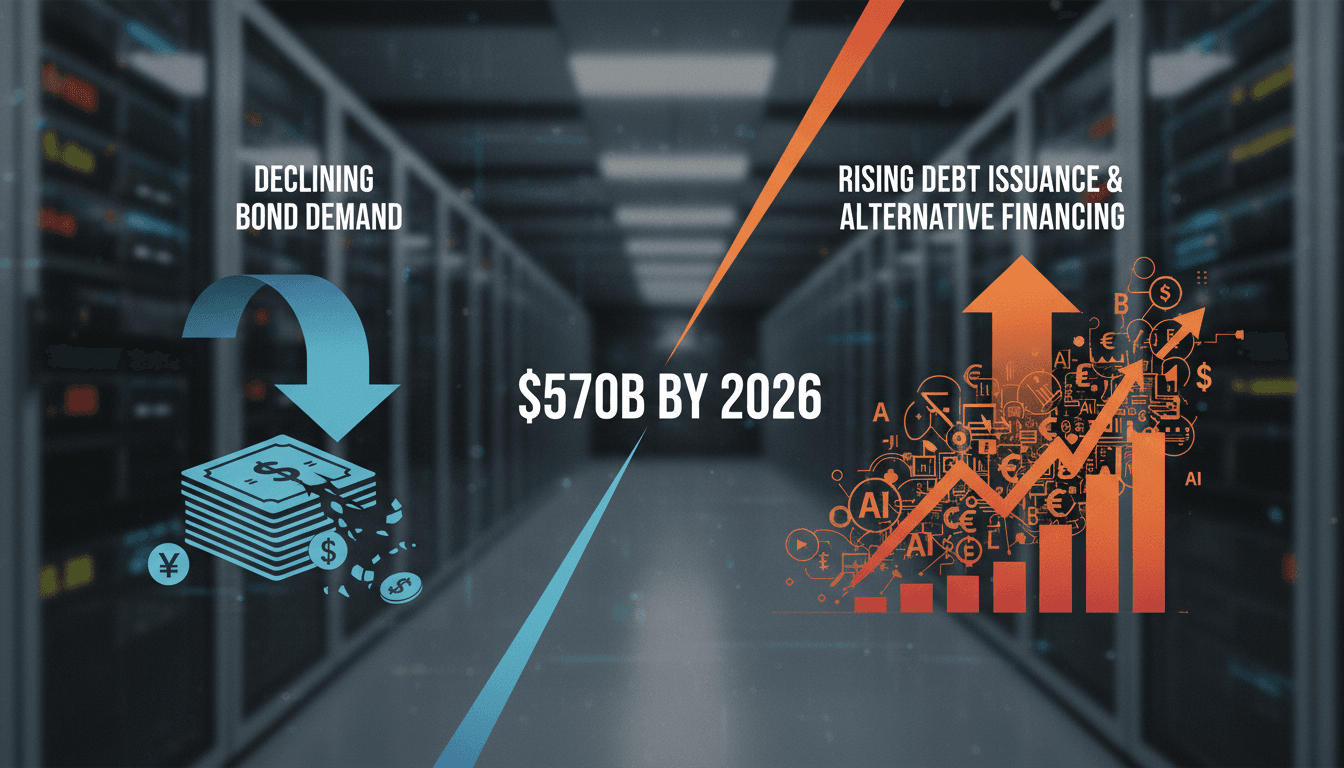
The decline in investor demand for bonds linked to AI projects signals a significant shift in the financial landscape for the technology sector. As hyperscalers increase their debt issuance, the implications for market stability and investor portfolios are becoming increasingly concerning. Stakeholders must be vigilant as the reliance on riskier financing options could reshape the future of AI funding. The projected growth of AI-related debt to $570 billion by 2026 raises alarms about potential financial instability within the sector. Investors may need to reassess their strategies in light of these developments, particularly as traditional bond demand softens.
What happened
Investor demand for bonds associated with AI is experiencing a notable decline, coinciding with a surge in debt issuance by hyperscalers. The coverage ratio for hyperscaler bond issuance has dropped dramatically from 5x in February 2026 to below 2x by July 2026. This shift indicates a waning appetite for these bonds, which is impacting investor portfolios on a global scale.
As the AI sector's debt is projected to reach $570 billion by the end of 2026, the market is witnessing a transition towards private credit and off-balance-sheet financing. This trend is raising concerns about the increasing risk exposure for investors as they navigate a changing financial environment.
The Context
The rapid expansion of the AI industry is being fueled by significant debt accumulation, particularly from hyperscalers who are increasingly relying on bond issuance to fund their projects. The global bond market is feeling the effects of this hyperscaler debt, with repercussions felt from London to Tokyo. As traditional bond demand softens, the shift towards alternative financing methods is becoming more pronounced.
This evolving landscape is critical for stakeholders, as the implications of reduced bond demand could lead to heightened financial instability in the AI sector. The timing of these changes is crucial, as the market adjusts to the growing risks associated with AI-related debt.
Takeaway
As the AI debt landscape evolves, stakeholders must closely monitor shifts in investor sentiment towards AI-related financing. The ongoing decline in bond demand may lead to increased financial instability, prompting potential regulatory responses to address the growing risks.
Investors should remain alert to the implications of this trend, particularly as reliance on riskier financing options becomes more prevalent. The future of AI funding may be reshaped by these developments, necessitating a strategic reassessment of investment approaches.
Corporate leadership, finance, technology, and market trends.
"Fortune covers financial trends, leadership, and innovation with a pragmatic editorial approach."
— A47 Editor
The AI boom is increasingly built on debt, but investor demand is plunging just as hyperscalers ramp up their bond blitz
The AI sector is increasingly reliant on debt, as evidenced by a significant drop in the coverage ratio for hyperscaler bond issuance, which fell from 5x in February 2026 to below 2x in July. This decline indicates a growing concern among investors r...
Business, investment, entrepreneurship, leadership, and innovation.
"Forbes is known for its coverage of business leaders, market trends, and entrepreneurial ventures with a pro-business editorial stance."
— A47 Editor
Bond Investors Push Back As AI Debt Heads Toward $570 Billion
Bond investors are expressing concerns as the volume of AI-related debt is projected to reach $570 billion by 2026, driven by a decline in bond demand and a shift towards private credit and off-balance-sheet financing. This trend raises alarms about ...
Global markets, investing, and macroeconomics from a premier financial newsroom.
"Bloomberg is respected for in-depth financial reporting and data-driven analysis."
— A47 Editor
Hyperscalers Are Dragging Down Bond Gauges Across Global Markets
Hyperscalers, companies that provide large-scale cloud computing services, are negatively impacting bond markets globally, with significant effects observed in major financial hubs like London and Tokyo. The bonds issued by these firms to support the...