
Brent crude oil prices fall below prewar levels amid improved Strait of Hormuz traffic
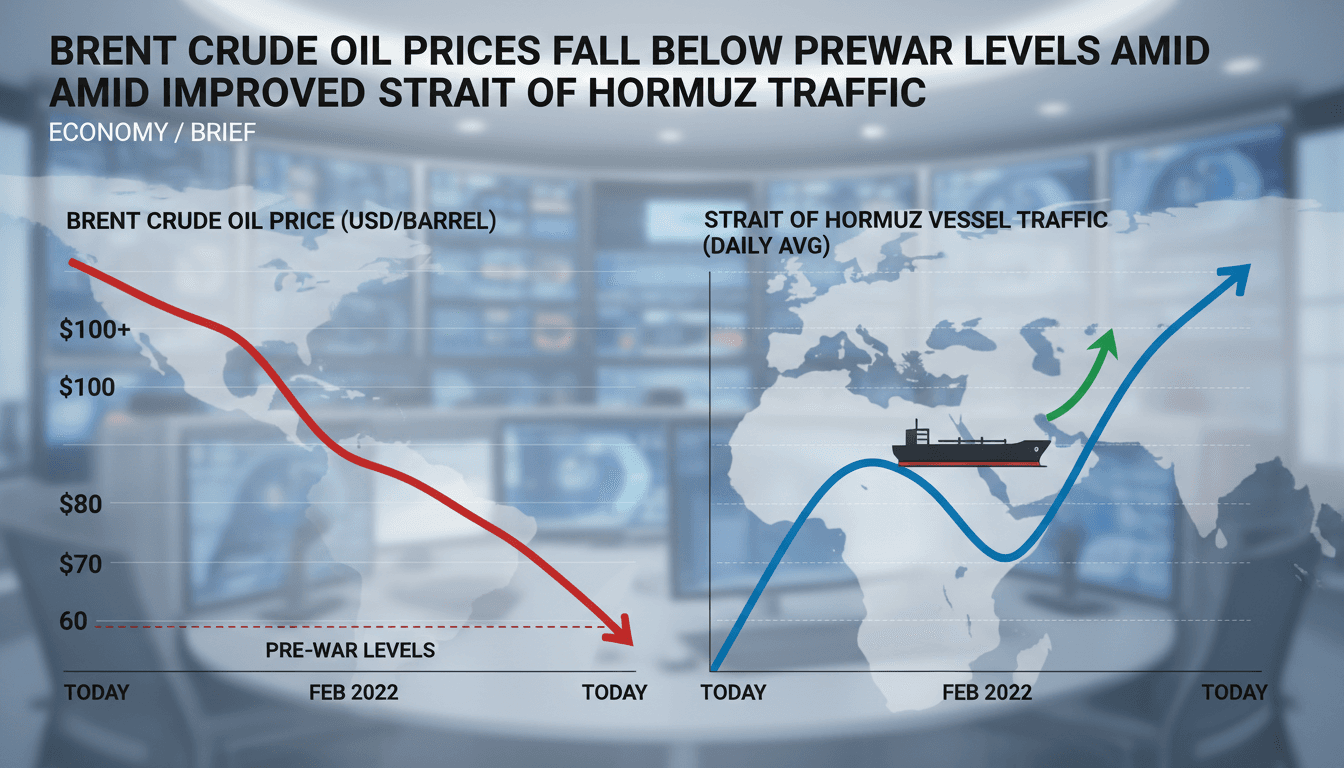
Here's what it means for you.
The recent decline in Brent crude oil prices signals a shift in the market landscape, particularly for stakeholders in the energy sector. With prices dropping below pre-Middle East conflict levels, businesses and policymakers must navigate the implications of this volatility. Improved traffic in the Strait of Hormuz, a vital shipping route, suggests potential stabilization, but ongoing geopolitical tensions remain a concern. As traders monitor these developments, the oil market may continue to experience fluctuations that could impact global supply chains and pricing strategies. Companies reliant on oil should prepare for potential changes in operational costs and market dynamics.
What happened
Brent oil prices have experienced a significant decline, falling below levels seen before the recent Middle East conflict. This week alone, oil prices are set to drop by more than 9%, reflecting the market's response to evolving geopolitical tensions and supply chain dynamics. The improvement in traffic through the Strait of Hormuz has played a crucial role in this price shift.
As tankers navigate the Strait more freely, the overall sentiment in the oil market has shifted, leading to a notable decrease in prices. This trend highlights the interconnectedness of geopolitical events and market reactions, emphasizing the importance of monitoring key shipping routes.
The Context
The Strait of Hormuz is a critical shipping route for oil tankers, making it a focal point for global energy supply. Recent improvements in traffic through this strategic passage have influenced oil prices significantly. However, the backdrop of ongoing geopolitical tensions in the region continues to affect market sentiment and stability.
As the situation evolves, stakeholders in the oil market, including traders and analysts, are closely watching developments in the Strait of Hormuz. The interplay between shipping dynamics and geopolitical factors will be crucial in determining future price movements and market stability.
Takeaway
Looking ahead, the oil market is likely to remain under pressure as geopolitical factors continue to evolve. Traders and analysts should keep a close eye on developments in the Strait of Hormuz, as any changes could have significant implications for oil supply and pricing. The current volatility suggests that further fluctuations in oil prices are possible as market conditions shift.
Monitoring these trends will be essential for businesses and policymakers alike, as they navigate the complexities of the energy landscape in a time of uncertainty.
Oil, metals, and agriculture: supply/demand headlines, OPEC chatter, inventories, and price action.
"Solid tape for energy and metals traders tracking macro and micro catalysts."
— A47 Editor
Oil set for more than 9% weekly loss after hitting pre-Middle East conflict lows
Oil prices are poised for a weekly loss exceeding 9%, having recently dropped to their lowest levels since the onset of the Middle East conflict. This decline follows heightened geopolitical tensions and concerns about supply disruptions, particularl...
Regional and international reporting focused on Middle Eastern politics, diplomacy, and economics.
"Asharq Al-Awsat is a Saudi-owned international newspaper reflecting mainstream Gulf political perspectives."
— A47 Editor
Oil Set for Big Weekly Losses as Tankers Exit Strait of Hormuz
Oil prices are poised for significant weekly losses as tankers exit the Strait of Hormuz, a crucial maritime route for global oil shipments. The ongoing geopolitical tensions and recent announcements regarding the closure of this vital passage have c...
UAE-based English-language newspaper covering regional politics, economics, and global affairs.
"The National reflects Emirati policy perspectives while maintaining international editorial standards."
— A47 Editor
Brent oil below prewar levels as Strait of Hormuz traffic improves
Brent oil prices have fallen below prewar levels as traffic through the Strait of Hormuz improves, reflecting a significant shift in the oil market dynamics. The increase in maritime activity follows a peace agreement between the United States and Ir...