
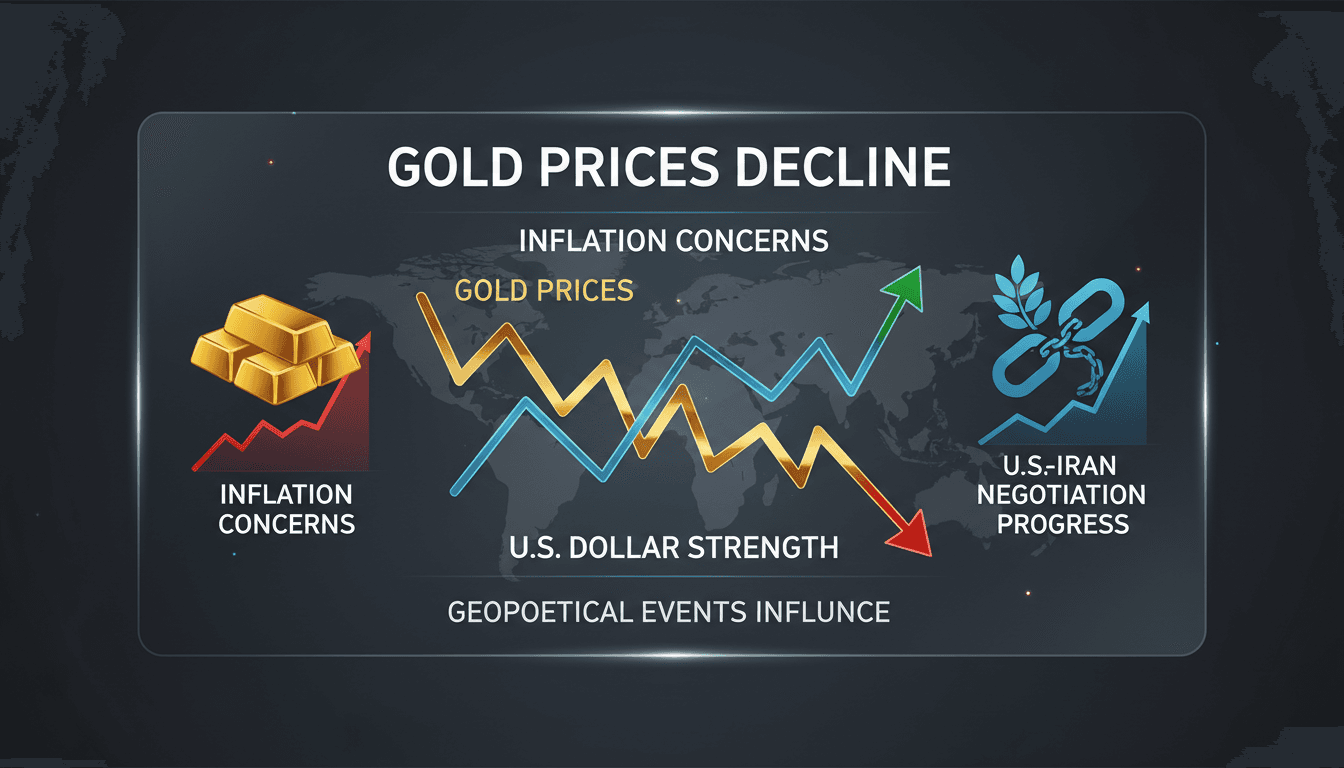
Gold prices decline amid inflation concerns despite U.S.-Iran negotiation progress
Here's what it means for you.
The recent decline in gold prices highlights the delicate balance between geopolitical developments and economic indicators. Investors should remain vigilant as inflationary pressures continue to shape market sentiment. The ongoing U.S.-Iran negotiations could have significant implications for gold prices, making it essential to monitor these discussions closely. As the dollar strengthens, gold may face additional downward pressure, complicating investment strategies. Understanding these dynamics will be crucial for market participants navigating this volatile landscape.
What happened
Gold prices have fallen as inflation risks overshadow optimism surrounding the ongoing U.S.-Iran peace talks. Despite reports indicating progress in negotiations, the strength of the U.S. dollar has exerted downward pressure on gold prices. This situation has led to a mixed market response, reflecting the complexities of current economic conditions.
The fluctuations in gold prices are primarily driven by inflationary concerns, which continue to impact investor sentiment. As geopolitical tensions evolve, the market remains sensitive to both international relations and economic indicators.
The Context
The backdrop of this situation involves ongoing negotiations between the U.S. and Iran, which have garnered attention due to their potential impact on global stability. Reports of progress in these talks emerged on June 22, 2026, coinciding with a notable reaction in gold prices. The strength of the U.S. dollar is a significant factor influencing gold's performance, creating a challenging environment for investors.
As inflationary pressures persist, the gold market is navigating a complex landscape where geopolitical developments play a crucial role. Stakeholders must consider how these factors intertwine to understand the broader implications for gold prices.
Takeaway
Looking ahead, the outcome of the U.S.-Iran negotiations could significantly influence gold prices in the near future. Investors should monitor further developments in these peace talks, as well as inflation data, to gauge their impact on market trends. The interplay between geopolitical events and economic indicators will likely keep gold prices volatile.
As the situation evolves, staying informed will be essential for making strategic investment decisions. The gold market's sensitivity to these dynamics underscores the importance of vigilance in the current economic climate.
Global markets, investing, and macroeconomics from a premier financial newsroom.
"Bloomberg is respected for in-depth financial reporting and data-driven analysis."
— A47 Editor
Gold Falls as Inflation Risks Outweigh Progress in US-Iran Talks
Gold prices have fallen as inflationary concerns overshadowed early optimism surrounding negotiations aimed at resolving the conflict between the U.S. and Iran. The decline in gold reflects market reactions to ongoing geopolitical tensions and econom...
Oil, metals, and agriculture: supply/demand headlines, OPEC chatter, inventories, and price action.
"Solid tape for energy and metals traders tracking macro and micro catalysts."
— A47 Editor
Gold prices mixed as stronger dollar offset by positive U.S.-Iran peace talks
Gold prices showed mixed results as a stronger U.S. dollar countered optimism from ongoing peace talks between the U.S. and Iran, which aim to enhance regional stability. The dollar's strength has been attributed to hawkish signals from the Federal R...
Regional and international reporting focused on Middle Eastern politics, diplomacy, and economics.
"Asharq Al-Awsat is a Saudi-owned international newspaper reflecting mainstream Gulf political perspectives."
— A47 Editor
Gold Rebounds from One-Week Low as Iran Cites Progress in Peace Talks
Gold prices have rebounded from a one-week low following reports of significant progress in peace talks between Iran and the United States. Iran's ambassador to the United Nations highlighted ongoing discussions aimed at addressing sanctions and nucl...