
U.S. and Iran sign peace agreement leading to stock market rally and oil price drop
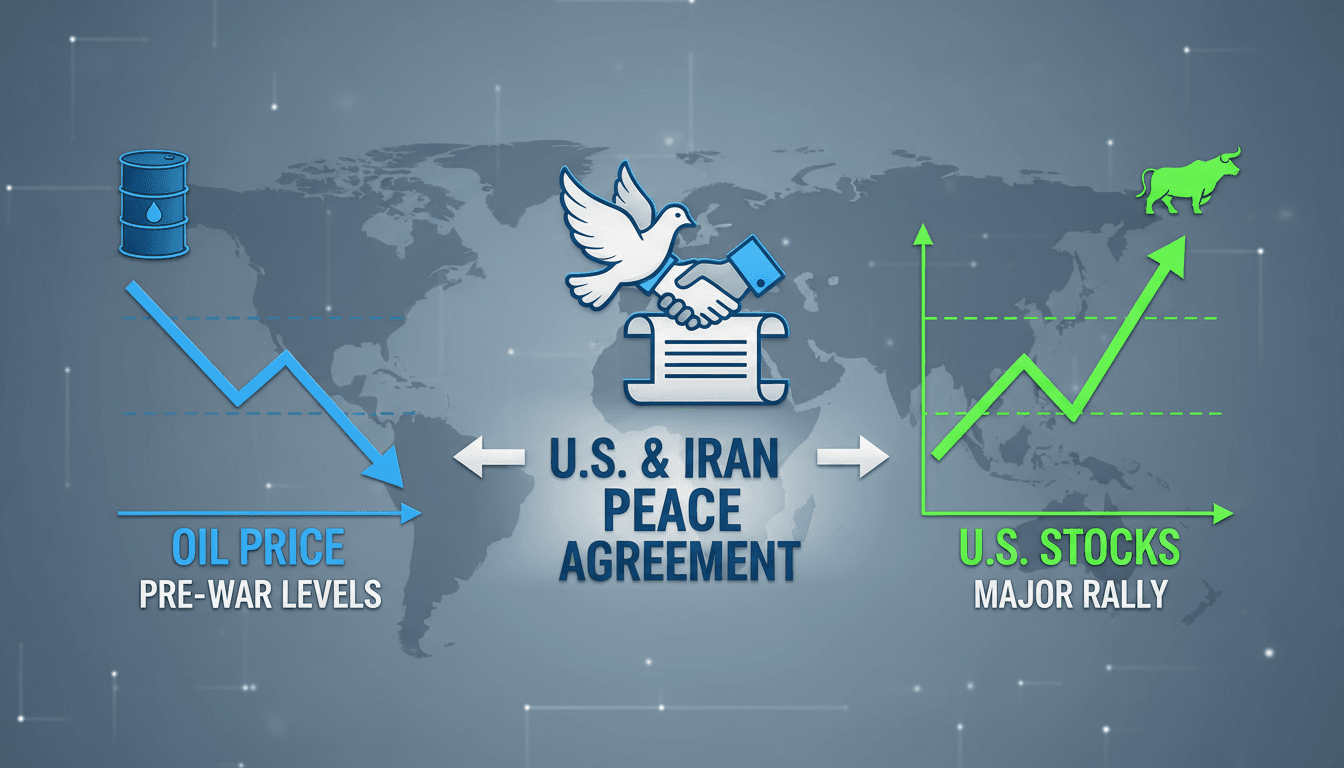
Here's what it means for you.
The recent peace agreement between the U.S. and Iran has significant implications for both the stock market and energy prices. With oil prices dropping to pre-war levels, consumers may see relief at the pump, which could positively influence spending patterns. This stabilization in oil supply is expected to create a more favorable environment for economic growth in the U.S. Investors should remain vigilant as the Federal Reserve's monetary policy continues to evolve in response to these developments. The interplay between interest rates and market stability will be crucial in the coming months.
What happened
U.S. stocks experienced a notable rally as oil prices fell following a peace deal between the U.S. and Iran. The interim pact, signed on June 18, 2026, effectively ended four months of conflict and reopened the vital Strait of Hormuz for oil supply. As a direct result of this agreement, gasoline prices have dropped below $4, providing relief to consumers.
The Dow, S&P 500, and Nasdaq all saw increases of over 0.5% during trading, reflecting investor optimism. This shift in market dynamics is significant, as it may lead to a more stable economic environment moving forward.
The Context
The peace agreement between the U.S. and Iran marks a critical turning point in a prolonged conflict that has had widespread implications for global energy markets. The reopening of the Strait of Hormuz is particularly important, as it is a key route for oil transportation. The agreement comes at a time when the Federal Reserve has been closely monitoring inflation forecasts, raising concerns about potential interest rate hikes.
This development not only affects the U.S. economy but also has broader implications for international relations and energy security. Stakeholders across various sectors will be watching closely to gauge the long-term effects of this agreement on market stability and consumer behavior.
Takeaway
The resolution of the conflict between the U.S. and Iran is likely to lead to more stable oil prices and a positive outlook for the stock market. Investors should keep an eye on the Federal Reserve's interest rate decisions, as these will play a crucial role in shaping market dynamics. Additionally, further developments in U.S.-Iran relations will be important to monitor, particularly regarding their impact on oil supply.
As the situation evolves, the potential for increased economic stability could foster a more favorable environment for growth. The interplay between energy prices and monetary policy will be key factors to watch in the coming months.
Macro commentary, policy analysis, growth/inflation themes, and global outlooks.
"Contextual macro coverage that complements day-to-day market headlines."
— A47 Editor
Trading Day: Stocks rally, oil hits pre-Iran-war lows as Strait of Hormuz reopens for business
Global stock markets rallied as optimism surged following the reopening of the Strait of Hormuz, a vital maritime route for oil shipments, which had been impacted by tensions between the U.S. and Iran. This development comes after a peace agreement w...
Regional coverage and analysis focused on politics, diplomacy, and business across the Middle East.
"Al-Monitor is known for analytical reporting on Middle East politics and policy developments."
— A47 Editor
Oil falls further on Mideast deal, but Fed outlook knocks equities
Oil prices fell further following the signing of a peace deal between U.S. President Donald Trump and Iranian President Masoud Pezeshkian, aimed at ending months of conflict and reopening the strategically vital Strait of Hormuz. This agreement has l...
Markets desk coverage, trading insights, and investor updates.
"WSJ’s markets reporting provides in-depth analysis and context for investors."
— A47 Editor
Stock Market Today: U.S. Stocks Close Week on a Strong Note
U.S. stocks closed the week on a strong note, buoyed by a significant decline in gasoline prices, which have fallen below $4 per gallon. This drop follows the signing of an interim peace deal between the U.S. and Iran, aimed at reducing hostilities a...