
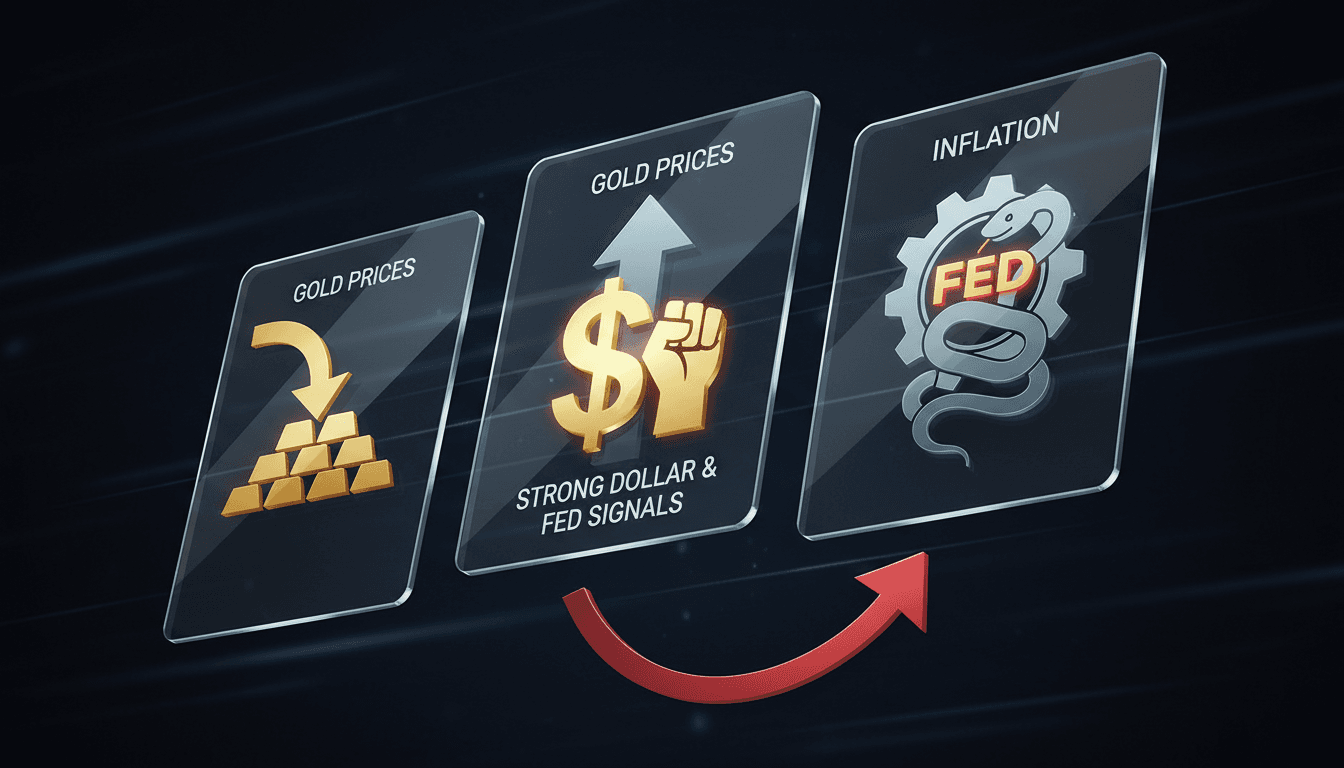
Gold prices decline for third consecutive week amid strong dollar and Fed signals
Here's what it means for you.
The ongoing decline in gold prices signals a cautious sentiment among investors, driven by a robust U.S. dollar and a hawkish Federal Reserve. As market participants grapple with these factors, the implications for investment strategies and asset allocation become increasingly significant. The situation underscores the importance of monitoring economic indicators and geopolitical developments that could influence market dynamics. The interplay between monetary policy and global events is critical, as delays in Middle East peace negotiations add another layer of uncertainty. Investors may need to reassess their positions in light of these developments, particularly in the precious metals market.
What happened
Gold prices are poised for a third consecutive weekly loss, primarily influenced by a firm U.S. dollar and a hawkish outlook from the Federal Reserve. This trend reflects growing investor concerns regarding the Fed's monetary policy and its potential impact on interest rates. Additionally, ongoing delays in negotiations for a permanent peace deal in the Middle East have contributed to market jitters.
As a result, gold has become less attractive to investors, leading to a cautious approach in the market. The combination of these factors has created a challenging environment for gold prices, which are now under significant downward pressure.
The Context
The Federal Reserve's hawkish stance is a key factor affecting investor sentiment, as it signals potential increases in interest rates. This outlook has made gold less appealing, particularly in a strong dollar environment where the metal typically struggles to maintain its value. Furthermore, the uncertainty surrounding Middle East peace negotiations has compounded market concerns, leading to increased volatility.
As traders navigate these complexities, the implications for gold prices are becoming clearer. The current market conditions highlight the interconnectedness of monetary policy and geopolitical stability, making it essential for investors to stay informed about these developments.
Takeaway
Looking ahead, market participants will closely monitor upcoming Federal Reserve meetings and their implications for interest rates. Additionally, developments in Middle East peace negotiations will be crucial in shaping the future trajectory of gold prices. The interplay between these factors will likely dictate investor sentiment and market movements in the coming weeks.
As the situation evolves, the focus will remain on economic indicators that could provide further direction for gold and other precious metals. Investors should remain vigilant and prepared to adjust their strategies based on new information.
Oil, metals, and agriculture: supply/demand headlines, OPEC chatter, inventories, and price action.
"Solid tape for energy and metals traders tracking macro and micro catalysts."
— A47 Editor
Gold heads for third straight weekly fall as hawkish Fed eclipses Iran truce cheer
Gold prices are set to decline for the third consecutive week, primarily due to a hawkish stance from the Federal Reserve, which has overshadowed recent optimism stemming from a truce between the U.S. and Iran. This shift in sentiment has led to a de...
Regional and international reporting focused on Middle Eastern politics, diplomacy, and economics.
"Asharq Al-Awsat is a Saudi-owned international newspaper reflecting mainstream Gulf political perspectives."
— A47 Editor
Gold Heads for Third Weekly Loss on Firm Dollar, Hawkish Fed Signals
Gold prices are on track for a third consecutive weekly loss, primarily influenced by a firm U.S. dollar and hawkish signals from the Federal Reserve regarding potential interest rate hikes. This trend reflects ongoing investor concerns amid rising i...
Global markets, investing, and macroeconomics from a premier financial newsroom.
"Bloomberg is respected for in-depth financial reporting and data-driven analysis."
— A47 Editor
Gold Set for Weekly Loss on Hawkish Fed and Peace Deal Jitters
Gold prices are on track for a third consecutive weekly loss, primarily influenced by a hawkish stance from the Federal Reserve and ongoing uncertainties regarding a permanent peace deal in the Middle East. Traders are reacting to the Fed's signals i...