
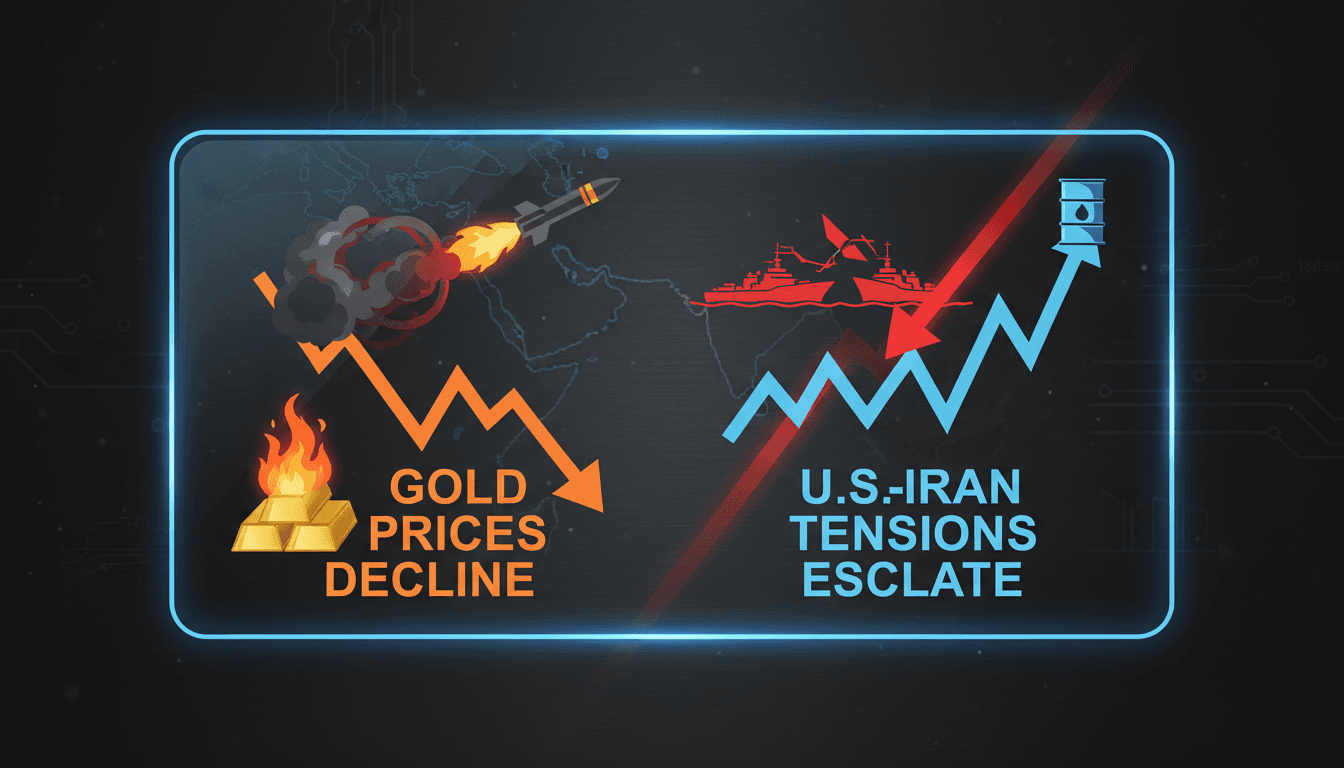
Gold prices decline as U.S.-Iran military tensions escalate
Here's what it means for you.
The recent military tensions between the U.S. and Iran have led to a notable decline in gold prices, reflecting investor reactions to geopolitical instability. As the situation unfolds, market participants should be prepared for potential fluctuations in commodity prices, particularly in gold and oil. The disruptions in the Gulf region raise concerns over supply routes, which could further impact market stability. The ongoing conflict may serve as a reminder for investors to consider safe-haven assets during times of uncertainty. Monitoring these developments will be crucial for understanding their broader implications on the global economy.
What happened
Gold prices have fallen as military strikes between the U.S. and Iran intensified, creating a ripple effect in global markets. The immediate trigger for this decline is the disruption in the Gulf region, which has raised concerns over navigation safety and supply routes. As a result, oil prices have increased by 0.69%, reflecting market reactions to the escalating tensions.
On June 29, 2026, gold prices opened lower against the U.S. dollar, indicating a shift in investor sentiment. The military exchanges that began on June 28 have heightened fears of further instability in the region, prompting a reevaluation of commodity investments.
The Context
The military actions between the U.S. and Iran have significant implications for global markets, particularly in the commodities sector. The Gulf region is a critical area for oil supply, and any disruptions can lead to increased prices and volatility. Gold is traditionally viewed as a safe haven during geopolitical tensions, making its price movements particularly noteworthy in this context.
As the situation develops, stakeholders, including investors and policymakers, must remain vigilant. The timing of these military exchanges coincides with a period of heightened global economic uncertainty, making the implications of these actions even more pronounced.
Takeaway
Looking ahead, market participants should closely monitor further military developments between the U.S. and Iran. Changes in oil supply and demand dynamics will also be critical to watch, as they could influence commodity prices in the near term. The ongoing conflict is likely to continue affecting market stability, particularly for gold and oil.
Investors should be prepared for potential volatility as the situation evolves, keeping an eye on how geopolitical tensions may shape market sentiment and economic conditions.
Pan-Arab news coverage spanning politics, business, sports, and regional affairs.
"Asharq Al-Awsat reflects a broad Arab editorial perspective with strong attention to regional geopolitics."
— A47 Editor
الذهب يتراجع مع تحفيز الضربات المتبادلة بين واشنطن وطهران لأسعار النفط
Gold prices declined on Monday amid escalating military strikes between the United States and Iran in the Gulf region, which contributed to rising oil prices.
Jordanian news and regional updates.
"Roya News is a Jordanian outlet focused on breaking news and local affairs."
— A47 Editor
تراجع أسعار الذهب عالميا وسط تجدد الضربات بين أمريكا وإيران
Gold futures opened lower against the US dollar as tensions between the United States and Iran have escalated, leading to a decline in global gold prices. This situation reflects ongoing geopolitical instability that often influences commodity market...
Jordanian news and regional updates.
"Roya News is a Jordanian outlet focused on breaking news and local affairs."
— A47 Editor
أسعار النفط ترتفع بعد تبادل الضربات بين واشنطن وطهران وتباطؤ الملاحة في هرمز
Oil futures rose by 50 cents, equivalent to a 0.69% increase, following exchanges of strikes between Washington and Tehran, coupled with a slowdown in navigation through the Strait of Hormuz. This escalation in tensions has raised concerns over the s...