
Canada imposes 10% tariff on canned vegetable imports to protect domestic agriculture
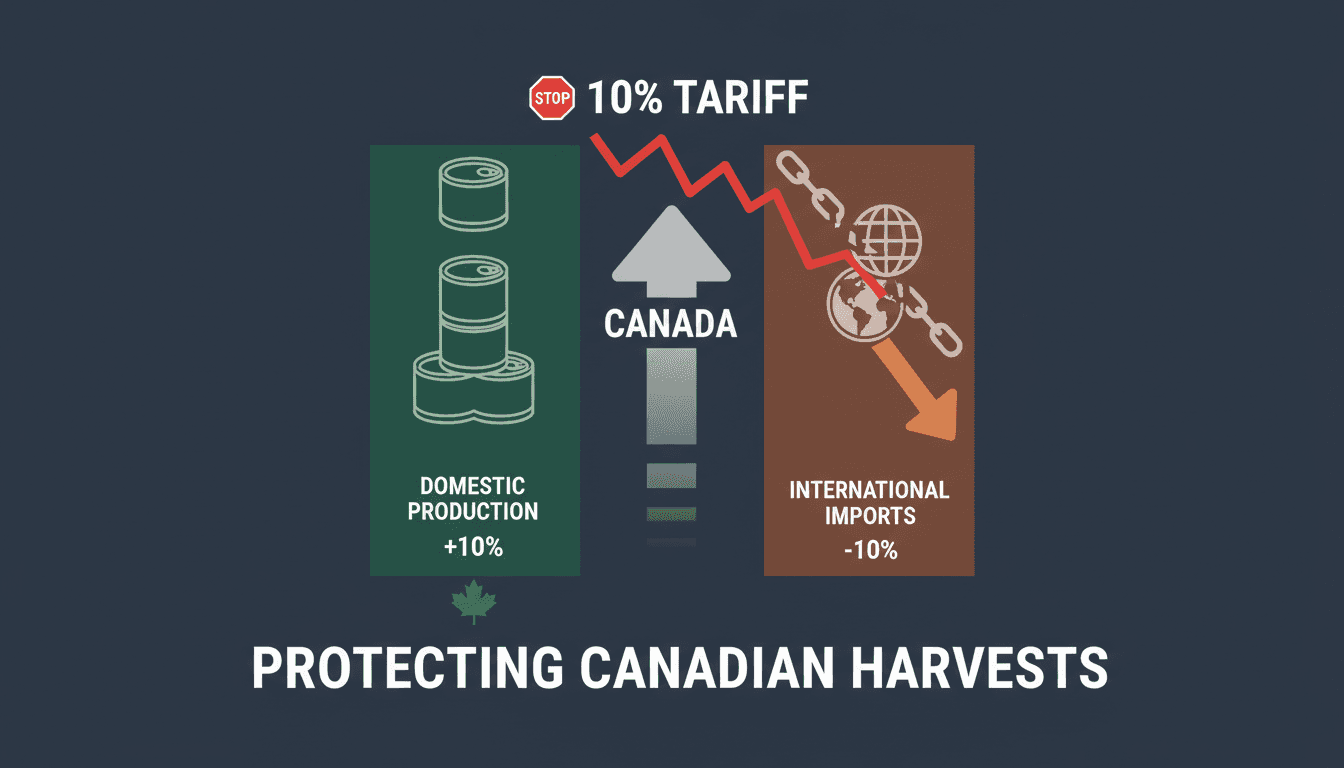
Here's what it means for you.
Canada's recent decision to impose a 10% tariff on canned vegetable imports signals a strategic move to bolster its domestic agricultural sector. This temporary measure, expected to last for up to 200 days, aims to support local growers and food processors while maintaining compliance with international trade obligations. The tariff's implementation may reshape market dynamics, potentially leading to increased domestic production of canned vegetables. However, it could also create tensions with international suppliers who are now facing additional costs.
What happened
Canada has officially imposed a 10% safeguard tariff on canned vegetable imports. This decision was announced by the Department of Finance and is designed to protect local agricultural interests. The tariff will not apply to imports from specific countries, including the U.S., Mexico, Israel, Chile, and various developing nations.
The measure is expected to remain in effect for a period of up to 200 days. This initiative reflects Canada's commitment to supporting its domestic agricultural sector while adhering to its international trade agreements.
The Context
The introduction of this tariff comes at a time when local growers and food processors are seeking greater protection against foreign competition. By exempting certain countries from the tariff, Canada aims to balance its domestic interests with its international trade obligations.
This decision is significant as it highlights the ongoing challenges faced by the agricultural sector in Canada, particularly in the context of global trade dynamics. Stakeholders, including farmers and food manufacturers, are likely to feel the impact of this policy shift in the coming months.
Takeaway
Looking ahead, the effects of the tariff on domestic vegetable prices will be crucial to monitor. Increased production of canned vegetables may result, but the potential backlash from affected international suppliers could complicate trade relations.
As the situation develops, it will be important to observe how these changes influence market dynamics and the responses from both domestic and international stakeholders.
Macro commentary, policy analysis, growth/inflation themes, and global outlooks.
"Contextual macro coverage that complements day-to-day market headlines."
— A47 Editor
Canada introduces 10% safeguard tariff on canned vegetable imports
Canada has introduced a temporary 10% safeguard tariff on imported canned vegetables, as announced by the Department of Finance. This measure is intended to protect domestic growers and food processors amid ongoing economic challenges.
Global markets, investing, and macroeconomics from a premier financial newsroom.
"Bloomberg is respected for in-depth financial reporting and data-driven analysis."
— A47 Editor
Canada Imposes Temporary 10% Tariff on Canned Vegetables
Canada has implemented a temporary 10% tariff on imported canned vegetables, as announced by the Department of Finance. This measure aims to protect domestic growers and food processors amid ongoing economic challenges.
National coverage of politics and current events across Canada.
"Global News is a mainstream Canadian outlet with a centrist editorial stance, focusing on factual reporting."
— A47 Editor
Canada slaps 10% tariff on canned vegetable imports for up to 200 days
Canada has imposed a 10% tariff on canned vegetable imports for a duration of up to 200 days, excluding imports from the U.S., Mexico, Israel, Chile, and certain developing countries, in line with its international trade obligations.