
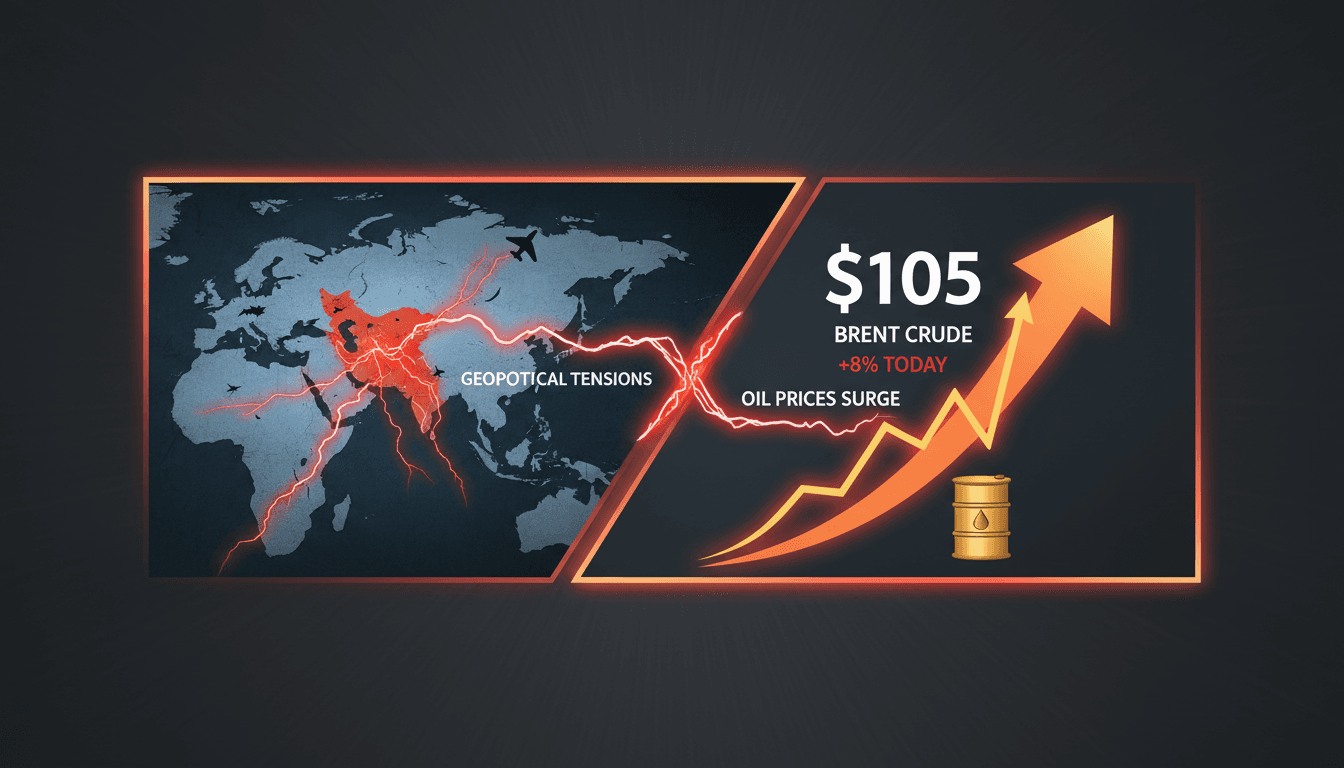
Brent crude oil prices surge to nearly $105 amid geopolitical tensions
Here's what it means for you.
The recent surge in Brent crude oil prices to nearly $105 per barrel signals a significant shift in market dynamics, driven by geopolitical tensions, particularly between the U.S. and Iran. This volatility may impact not only energy markets but also broader economic conditions, as fluctuating oil prices can influence inflation and consumer spending. Stakeholders in the energy sector should prepare for potential disruptions and adjust their strategies accordingly. As oil prices rebound after a period of declines, the implications for global markets are profound. Investors and policymakers alike will need to monitor these developments closely to navigate the evolving landscape.
What happened
Oil prices experienced a notable increase today, with Brent crude reaching approximately $105 per barrel. This rise follows a decline where both Brent and West Texas Intermediate had dropped nearly 2% the previous day. Specifically, Brent crude increased by $2.38 to settle at $104.96 per barrel, while West Texas Intermediate rose by $1.73 to $98.08 per barrel.
The recent price movements reflect ongoing market volatility and concerns surrounding geopolitical tensions. As these tensions evolve, they are likely to continue influencing supply-demand dynamics in the oil market.
The Context
The backdrop for this price surge includes escalating geopolitical tensions, particularly between Washington and Tehran. These developments have historically impacted oil supply and pricing, making the current situation particularly significant for market participants. The recent fluctuations in oil prices come after a period where prices had reached their lowest levels in nearly two weeks.
As Brent crude approaches the critical $105 mark, analysts are closely observing the implications for global economic stability. The interplay between geopolitical events and oil supply forecasts will be crucial in shaping market sentiment moving forward.
Takeaway
Looking ahead, the oil market is expected to remain volatile, influenced by ongoing geopolitical developments and potential changes in supply forecasts. Stakeholders should closely monitor U.S.-Iran relations, as any shifts could have immediate repercussions on oil prices. Additionally, fluctuations in market conditions may prompt further adjustments in pricing strategies across the energy sector.
The outlook for oil prices remains uncertain, and market participants should prepare for potential fluctuations as these geopolitical tensions evolve.
Jordanian news and regional updates.
"Roya News is a Jordanian outlet focused on breaking news and local affairs."
— A47 Editor
ارتفاع أسعار النفط وسط مخاوف من تعثر اتفاق السلام بين واشنطن وطهران
Oil futures for Brent crude have surged to $103.54 per barrel amid rising concerns over the potential collapse of the peace agreement between Washington and Tehran. This increase reflects market anxieties surrounding geopolitical tensions that could ...
Arabic-language reporting focused on domestic developments in Saudi Arabia.
"Okaz is a mainstream Saudi newspaper that often reflects domestic priorities and official-facing coverage."
— A47 Editor
النفط يرتفع إلى ما يقارب 105 دولارات للبرميل
Oil prices rose today, with Brent crude futures increasing by $2.38, or 2.3%, reaching $104.96 per barrel, while West Texas Intermediate (WTI) crude futures climbed by $1.73, or 1.8%, to $98.08. Both benchmarks had declined by approximately 2% yester...
Arabic-language economic and business reporting with strong UAE market relevance.
"Emarat Al Youm business coverage often centers UAE property, banking, consumer issues, and economic policy."
— A47 Editor
النفط يعاود الارتفاع وبرنت قرب 105 دولارات النفط يعاود الارتفاع وبرنت قرب 105 دولارات
Oil prices have rebounded today, with Brent crude futures rising by $2.38, bringing the price close to $105 per barrel. This increase follows a notable decline in the previous session, indicating a recovery in the oil market.