
U.S. natural gas futures decline amid cooler weather forecasts and reduced LNG exports
Here's what it means for you.
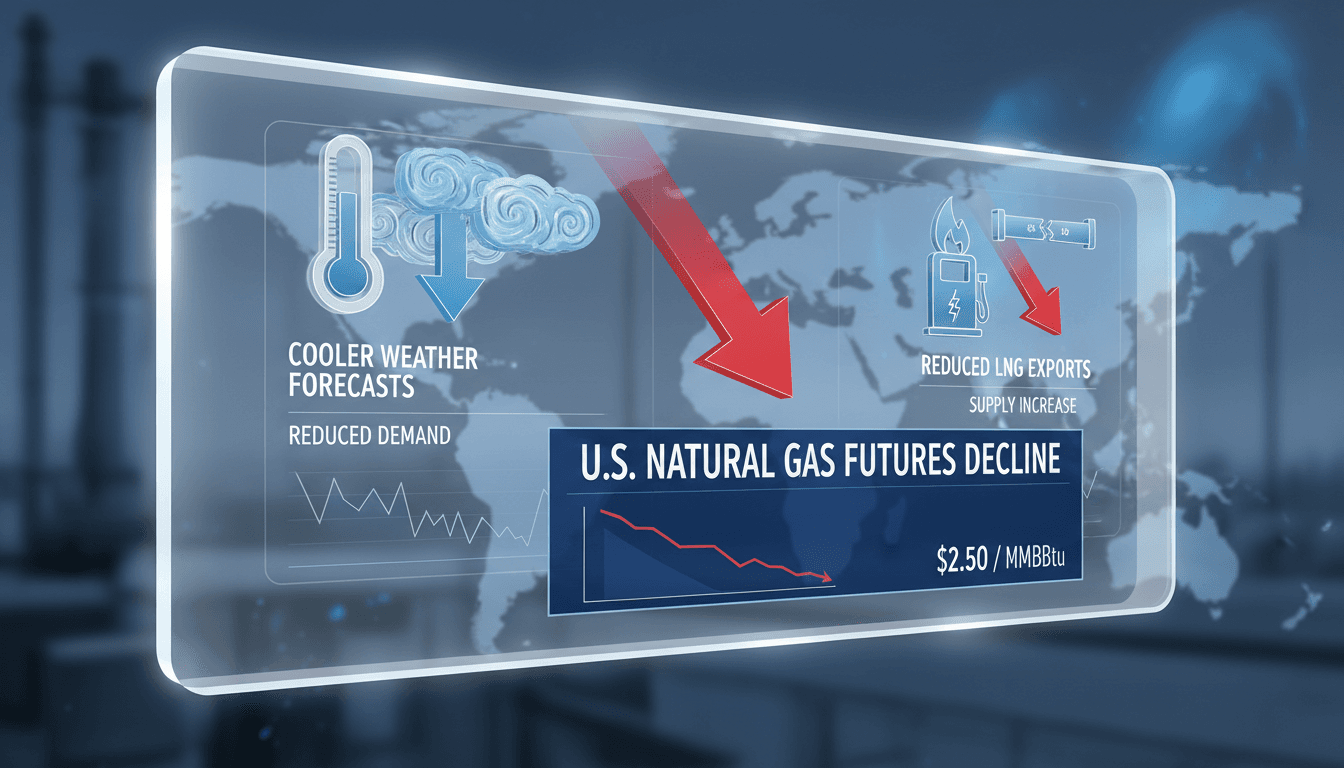
The recent decline in U.S. natural gas futures signals a shift in market dynamics, primarily driven by cooler weather forecasts and reduced LNG export flows. This change may impact energy prices and consumption patterns, particularly for businesses and consumers reliant on gas-fired electricity. Stakeholders should remain vigilant as these factors could influence future pricing and supply strategies. As the market adjusts to these developments, understanding the interplay between weather conditions and LNG exports will be crucial for forecasting energy costs. The current balance between supply and demand suggests a cautious approach for market participants.
What happened
U.S. natural gas futures have fallen as forecasts indicate cooler weather and decreased LNG export flows. The immediate impact of these cooler temperatures is a reduction in demand for gas-fired electricity, which has contributed to the price decline. On June 23, 2026, futures dropped following a brief uptick the previous day due to warmer weather patterns.
The decrease in LNG exports has led to an increase in domestic supply, further influencing market dynamics. Despite some warmer weather predictions for early July, solid production levels and comfortable inventories are currently limiting any significant price increases.
The Context
The U.S. natural gas market is navigating a complex landscape shaped by fluctuating weather forecasts and supply dynamics. Cooler weather predictions are expected to reduce the demand for air-conditioning, which typically drives up electricity consumption. Meanwhile, the decline in natural gas flows to LNG export facilities has resulted in a more abundant domestic supply.
Market participants are closely monitoring these developments, as they will play a critical role in determining future price movements. The interplay between weather patterns and LNG export trends will be essential for stakeholders as they strategize for the upcoming weeks.
Takeaway
Looking ahead, market participants should keep an eye on potential shifts in weather patterns as July approaches. Changes in LNG export demand will also be crucial in assessing the impact on domestic supply and pricing. The current balance between supply and demand suggests that any significant upward pressure on prices is unlikely in the near term.
As the market continues to evolve, understanding these dynamics will be vital for making informed decisions regarding natural gas investments and consumption strategies.
Global markets, investing, and macroeconomics from a premier financial newsroom.
"Bloomberg is respected for in-depth financial reporting and data-driven analysis."
— A47 Editor
US Natural Gas Falls on Cooler Outlooks, Smaller LNG Flows
US natural gas futures have declined as forecasts indicate cooler weather in the upcoming weeks, leading to a potential decrease in demand for gas-fired electricity as consumers reduce air-conditioning usage. Additionally, flows to liquefied natural ...
Markets desk coverage, trading insights, and investor updates.
"WSJ’s markets reporting provides in-depth analysis and context for investors."
— A47 Editor
U.S. Natural Gas Futures Fall in Early Trading
U.S. natural gas futures experienced a decline in early trading, influenced by a warmer weather forecast for early July that typically supports prices, while robust production levels and comfortable inventory stocks have limited potential gains.
Markets desk coverage, trading insights, and investor updates.
"WSJ’s markets reporting provides in-depth analysis and context for investors."
— A47 Editor
U.S. Natural Gas Futures Advance on Weather Outlook
U.S. natural gas futures have seen a modest increase as warmer weather patterns are anticipated heading into July, suggesting a potential uptick in demand for cooling. This follows a period of volatility in the market, where futures had previously ex...