
Gold prices decline to seven-month low amid rising Treasury yields and U.S.-Iran tensions
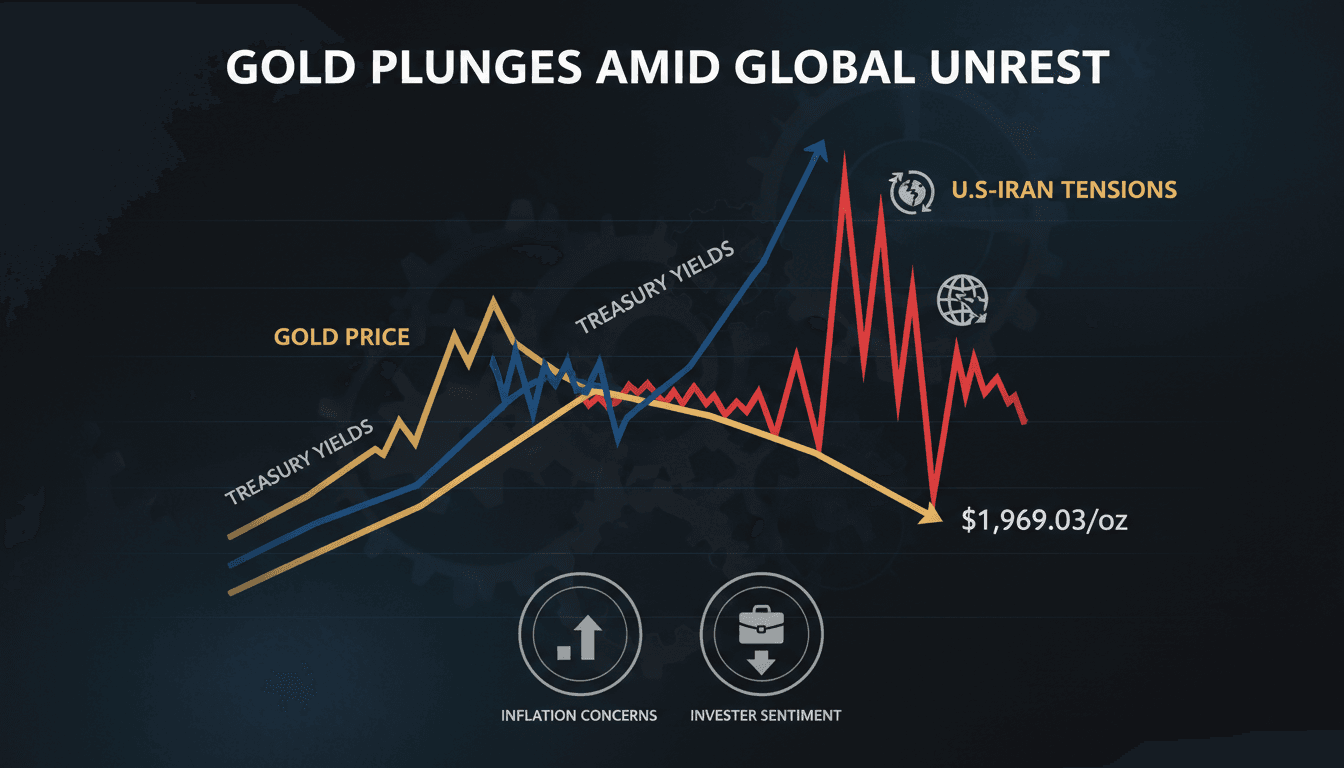
Here's what it means for you.
The recent decline in gold prices signals a shift in market sentiment influenced by rising Treasury yields and geopolitical tensions. Investors are increasingly concerned about inflation and the potential for Federal Reserve rate hikes, which could further impact gold's attractiveness as a safe haven. As these dynamics unfold, market participants should remain vigilant regarding economic indicators and geopolitical developments that may affect their investment strategies. The interplay between rising yields and geopolitical risks is likely to create volatility in the gold market. Traders will need to assess how these factors influence inflation expectations and overall market sentiment in the coming weeks.
What happened
Gold prices have fallen to near a seven-month low, dropping 1% to $3,969.03 per ounce. This decline follows a low of $3,942.99 per ounce, reflecting the market's reaction to rising Treasury yields and renewed tensions between the U.S. and Iran. As geopolitical concerns escalate, inflation worries have also intensified, prompting traders to reassess their positions.
Expectations for Federal Reserve rate hikes are growing, with a 67% chance of a hike in September. This anticipation is contributing to the downward pressure on gold prices, as higher interest rates typically diminish the appeal of non-yielding assets like gold.
The Context
The current situation in the gold market is shaped by multiple factors, including rising Treasury yields and geopolitical tensions, particularly between the U.S. and Iran. These developments have led to increased inflation concerns, which are further exacerbated by higher oil prices. The market is closely monitoring these dynamics, as they significantly influence investor sentiment and trading strategies.
Gold has recorded its largest quarterly drop since 2013, indicating a substantial shift in market conditions. Additionally, the strengthening U.S. dollar has made gold more expensive for foreign investors, further complicating the landscape for gold trading.
Takeaway
Looking ahead, traders will continue to watch key economic indicators, including upcoming ADP employment data and nonfarm payroll figures, which could provide insights into the health of the U.S. economy. Furthermore, developments in U.S.-Iran relations will be critical, as they may impact oil prices and inflation expectations.
The outlook for gold remains uncertain, with potential for further volatility as the market navigates the interplay between inflation, interest rates, and geopolitical tensions. Investors should stay informed about these factors to make strategic decisions in the evolving market landscape.
Business, markets, economy, and corporate news with strong UAE and regional relevance.
"Emirates 24|7 business coverage tends to center UAE markets, property, regulation, and regional economic developments."
— A47 Editor
Gold hovers near 7-month low as Treasury yields and rate outlook weigh
Gold prices fell 1% on Wednesday, nearing a seven-month low, influenced by rising Treasury yields and concerns over inflation amid diminishing prospects for a U.S.-Iran peace deal. Spot gold was priced at $3,969.03 per ounce, following a drop to $3,9...
Global markets, investing, and macroeconomics from a premier financial newsroom.
"Bloomberg is respected for in-depth financial reporting and data-driven analysis."
— A47 Editor
Gold Holds Above $4,000 as Traders Eye Fed Outlook, Iran Talks
Gold prices have remained above $4,000 an ounce as traders assess the implications of recent economic data and ongoing discussions between the U.S. and Iran. This stability follows a period of volatility influenced by geopolitical tensions and moneta...
Arabic-language economic and business reporting with strong UAE market relevance.
"Emarat Al Youm business coverage often centers UAE property, banking, consumer issues, and economic policy."
— A47 Editor
الذهب يتراجع بعد تجدد الضربات الأميركية الإيرانية الذهب يتراجع بعد تجدد الضربات الأميركية الإيرانية
Gold prices declined on Monday following renewed attacks between the United States and Iran, which led to a rise in oil prices. This escalation in tensions has created uncertainty in the market, impacting precious metal valuations.
Business, markets, economy, and corporate news with strong UAE and regional relevance.
"Emirates 24|7 business coverage tends to center UAE markets, property, regulation, and regional economic developments."
— A47 Editor
Gold slips as oil prices rise, rate hike expectations weigh on market
Gold prices fell on Monday as escalating tensions between the U.S. and Iran led to a rise in oil prices, while expectations of further interest rate hikes by the U.S. Federal Reserve dampened investor sentiment. Spot gold decreased by 0.5% to $4,067....