
China launches first overnight reverse repo operation injecting $44 billion into financial system
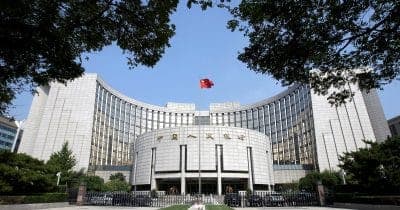
Here's what it means for you.
China's introduction of overnight reverse repos at a 1.25% interest rate marks a significant shift in its monetary policy strategy. This move is designed to enhance the precision of monetary policy and stabilize short-term liquidity, aligning China's practices with those of other global central banks. Investors will be closely monitoring the implications of this operation for interbank lending rates and overall economic stability. The $44 billion liquidity injection reflects a robust response to current financial conditions, indicating a proactive approach by China's central bank. As global markets react, the effectiveness of this new tool will be pivotal in shaping future monetary policy.
What happened
China has debuted its first overnight reverse repo operation, setting the interest rate at 1.25% and injecting $44 billion into the financial system. This operation is aimed at improving the effectiveness of monetary policy and stabilizing short-term liquidity. The significant liquidity infusion is a clear indication of the central bank's commitment to managing economic conditions.
This move aligns China's monetary practices with those of other global central banks, which have utilized similar tools to navigate financial challenges. The operation's details emerged on June 29, 2026, highlighting the central bank's strategic shift in liquidity management.
The Context
The introduction of overnight reverse repos is a notable development in China's monetary policy landscape. This tool is commonly employed by central banks worldwide to manage liquidity effectively, and its adoption signifies a potential evolution in China's approach to economic management. Stakeholders, including investors and analysts, are keenly observing this shift for signs of enhanced economic stability.
Concerns have been raised regarding the undisclosed interest rate in some reports, which could introduce short-term uncertainty. However, the overall intent behind this operation is to bolster the financial system and ensure that liquidity remains stable in the face of global economic pressures.
Takeaway
As China refines its monetary policy tools, the effectiveness of the overnight reverse repo operations will be critical to watch. Analysts will be monitoring the impact on interbank lending rates and any further announcements from the People's Bank of China regarding monetary policy adjustments. This operation could signal a broader shift in how China manages liquidity and responds to economic challenges.
The global investment community will be particularly attentive to the outcomes of this operation, as it may provide insights into China's economic trajectory and stability in the coming months.
Research, news, and analysis on blockchain startups, DeFi, and regulations.
"Crypto Briefing provides research, news, and analysis on blockchain startups, DeFi, and crypto regulations with investor-focused coverage."
— A47 Editor
China debuts overnight reverse repos at 1.25%, injecting $44 billion in liquidity
China has introduced an overnight reverse repo tool at an interest rate of 1.25%, injecting $44 billion into the financial system to enhance monetary policy precision and stabilize short-term liquidity. This move aligns with global monetary practices...
Macro commentary, policy analysis, growth/inflation themes, and global outlooks.
"Contextual macro coverage that complements day-to-day market headlines."
— A47 Editor
China debuts overnight reverse repos at 1.25%, sources say
China has introduced overnight reverse repos at an interest rate of 1.25%, marking a significant shift in its monetary policy aimed at managing short-term borrowing costs. This move is part of the People's Bank of China's broader strategy to enhance ...
Research, news, and analysis on blockchain startups, DeFi, and regulations.
"Crypto Briefing provides research, news, and analysis on blockchain startups, DeFi, and crypto regulations with investor-focused coverage."
— A47 Editor
China’s central bank conducts debut overnight reverse repo operation without disclosing interest rate
China's central bank has conducted its first overnight reverse repo operation without disclosing the interest rate, introducing short-term uncertainty into the financial markets. This move is seen as a response to ongoing economic challenges, particu...