
Oil prices decline as U.S.-Iran negotiations progress
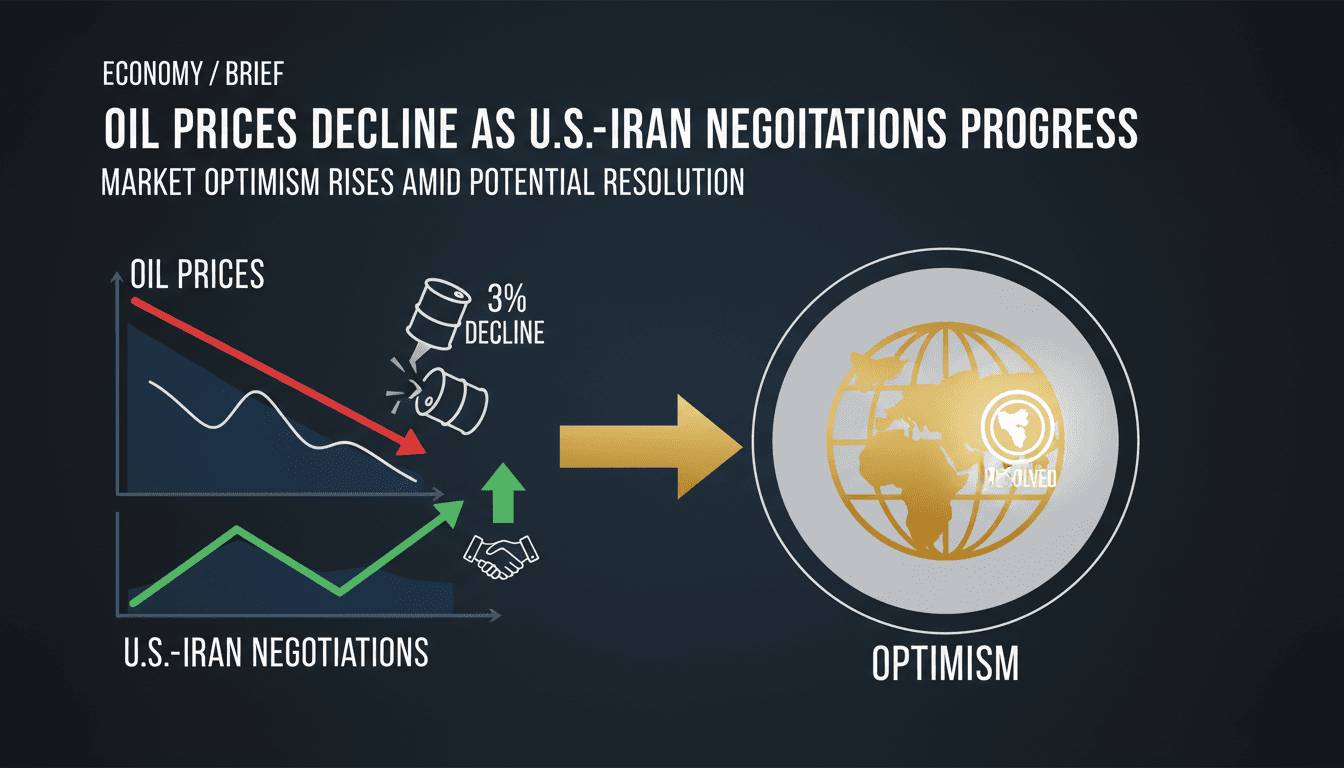
Here's what it means for you.
The recent decline in oil prices signals a shift in market sentiment as negotiations between the U.S. and Iran advance. A potential resolution could lead to significant changes in global oil supply and pricing, impacting various sectors reliant on stable energy costs. Stakeholders should prepare for volatility as the situation evolves, with traders closely monitoring developments.
What happened
Oil prices fell sharply by approximately 3% following President Trump's announcement that negotiations with Iran are in the final stages. This development has sparked optimism in the market regarding a potential resolution to the U.S.-Iran conflict. Crude futures settled lower amid mixed market reactions, reflecting traders' concerns and hopes regarding geopolitical stability in the region.
The immediate drop in oil prices highlights the market's sensitivity to geopolitical developments. As traders reacted to the news, the decline in oil prices was significant, indicating a shift in expectations surrounding the U.S.-Iran relationship.
The Context
President Trump's remarks suggest that talks with Iran are progressing towards a resolution, which could have far-reaching implications for global oil markets. The ongoing conflict has long been a source of instability, and any agreement could alter the dynamics of oil supply and pricing. The market's reaction to the announcement underscores the interconnectedness of geopolitical events and energy markets.
As negotiations continue, the oil market will remain volatile, with prices likely to fluctuate based on developments in U.S.-Iran relations. Stakeholders, including investors and policymakers, are keenly aware of the potential for significant changes in the geopolitical landscape that could impact oil prices.
Takeaway
The ongoing negotiations between the U.S. and Iran could significantly influence global oil prices in the near future. Market participants should monitor further statements from U.S. officials regarding the Iran negotiations, as these will likely shape expectations and trading strategies. As details of any potential agreement emerge, market reactions will be critical to watch.
In the coming weeks, the oil market's volatility is expected to continue, driven by the evolving geopolitical landscape. Stakeholders should remain vigilant as developments unfold, as they could lead to substantial fluctuations in oil prices.
Markets desk coverage, trading insights, and investor updates.
"WSJ’s markets reporting provides in-depth analysis and context for investors."
— A47 Editor
Oil Futures Lose Ground on Hopes for U.S.-Iran Deal
Oil futures experienced a decline amid fluctuating expectations regarding a potential agreement between the U.S. and Iran to resolve ongoing tensions. The market reacted negatively as crude futures settled lower, reflecting uncertainty about the futu...
Global business headlines with AI angles.
"General business outlet that frequently covers AI."
— A47 Editor
Oil Plummets As Hopes For An Iran Deal Rise After Trump's Remarks About Talks Being In 'Final Stages'
Oil prices experienced a significant drop on Wednesday following President Donald Trump's announcement that negotiations with Iran to resolve the ongoing conflict are in their 'final stages.' This statement has led to a decline in market confidence, ...
Pan-Arab news coverage spanning politics, business, sports, and regional affairs.
"Asharq Al-Awsat reflects a broad Arab editorial perspective with strong attention to regional geopolitics."
— A47 Editor
النفط الأميركي يهبط نحو7 % بعد الحديث عن آفاق التوصل إلى اتفاق مع إيران
U.S. oil prices fell by approximately 3% on Wednesday after President Donald Trump reiterated that the conflict with Iran would end 'very quickly.' This statement has raised expectations for a potential agreement between the U.S. and Iran, impacting ...