
Iran Closes Strait of Hormuz Causing Oil Price Surge
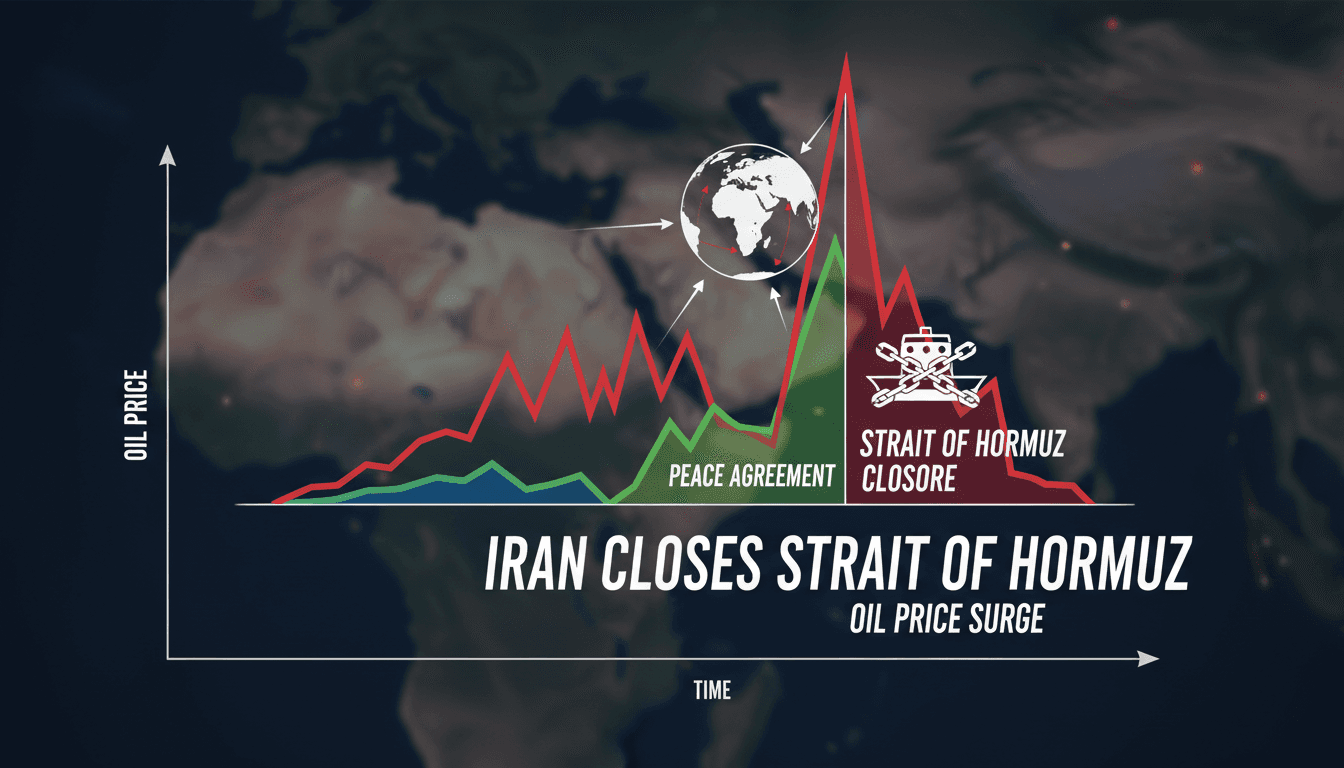
Here's what it means for you.
The closure of the Strait of Hormuz by Iran has significant implications for global oil markets, as this route is vital for oil transportation. With Brent crude prices surging to $150, stakeholders in the energy sector should prepare for continued volatility. Policymakers and investors alike must closely monitor developments in the region, as further escalations could lead to even higher prices. The situation underscores the fragility of recent peace agreements and the potential for renewed military tensions. As geopolitical dynamics shift, the impact on oil supply and pricing will be a critical area of focus for businesses and governments.
What happened
Iran has officially closed the Strait of Hormuz, a key shipping route for global oil supplies, resulting in a significant spike in oil prices. This closure follows a brief peace agreement between the U.S. and Iran, which lasted only three days. The announcement from Iran's military command has sent Brent crude prices soaring, now sitting at $150, just $8 above pre-war levels.
The closure is a direct response to escalating military tensions in the region, particularly involving exchanges between Israel and Hezbollah. As a result, the global oil market is reacting swiftly to these developments, highlighting the Strait's critical role in oil transportation.
The Context
The Strait of Hormuz is a strategic chokepoint through which a substantial portion of the world's oil supply is transported. The recent peace agreement between the U.S. and Iran was seen as a potential step toward stabilizing the region, but its abrupt end has reignited fears of conflict. The ongoing military exchanges between Israel and Hezbollah further complicate the situation, creating a precarious environment for energy markets.
As tensions rise, the implications for global oil prices are profound. The closure of this vital route not only affects supply but also raises concerns about the stability of the broader Middle East. Stakeholders must navigate these complexities as they assess the potential for future disruptions.
Takeaway
Looking ahead, it is crucial to monitor developments in U.S.-Iran negotiations, as any shifts could significantly impact oil supply and pricing. Additionally, further military actions in the region may exacerbate the situation, leading to increased volatility in oil markets. The ongoing geopolitical tensions in the Middle East are likely to keep oil prices under pressure in the near future.
As the situation evolves, businesses and policymakers should remain vigilant and prepared for potential disruptions. The interplay of diplomacy and military actions will be key in shaping the outlook for oil prices.
Oil, metals, and agriculture: supply/demand headlines, OPEC chatter, inventories, and price action.
"Solid tape for energy and metals traders tracking macro and micro catalysts."
— A47 Editor
Oil extends multi-week slide, Brent now only about $8 above pre-Iran war levels
Oil prices have continued their downward trend, with Brent crude now trading approximately $8 above levels seen before the Iran war, marking a significant multi-week decline. This drop reflects ongoing market volatility influenced by geopolitical ten...
Stock market news, investing ideas, and trading analysis.
"TheStreet provides market news and retail-investor-focused analysis."
— A47 Editor
Oil prices face sudden $150 spike after vital route shuts
Oil prices have surged dramatically, experiencing a sudden spike of $150 following Iran's announcement to close the Strait of Hormuz, a critical maritime route for global oil shipments. This closure comes just three days after a peace deal was signed...
Editor-curated FT homepage stories spanning markets, business, world, and opinion.
"The Financial Times is a globally respected business publication with a centrist/center-left tone and strong markets focus."
— A47 Editor
Iran says it closed Strait of Hormuz after Israel and Hizbollah exchange fire
Iran has announced the closure of the Strait of Hormuz following an exchange of fire between Israel and Hezbollah, marking a significant escalation in regional tensions. This decision comes as U.S. Vice President heads to Switzerland for peace talks ...