
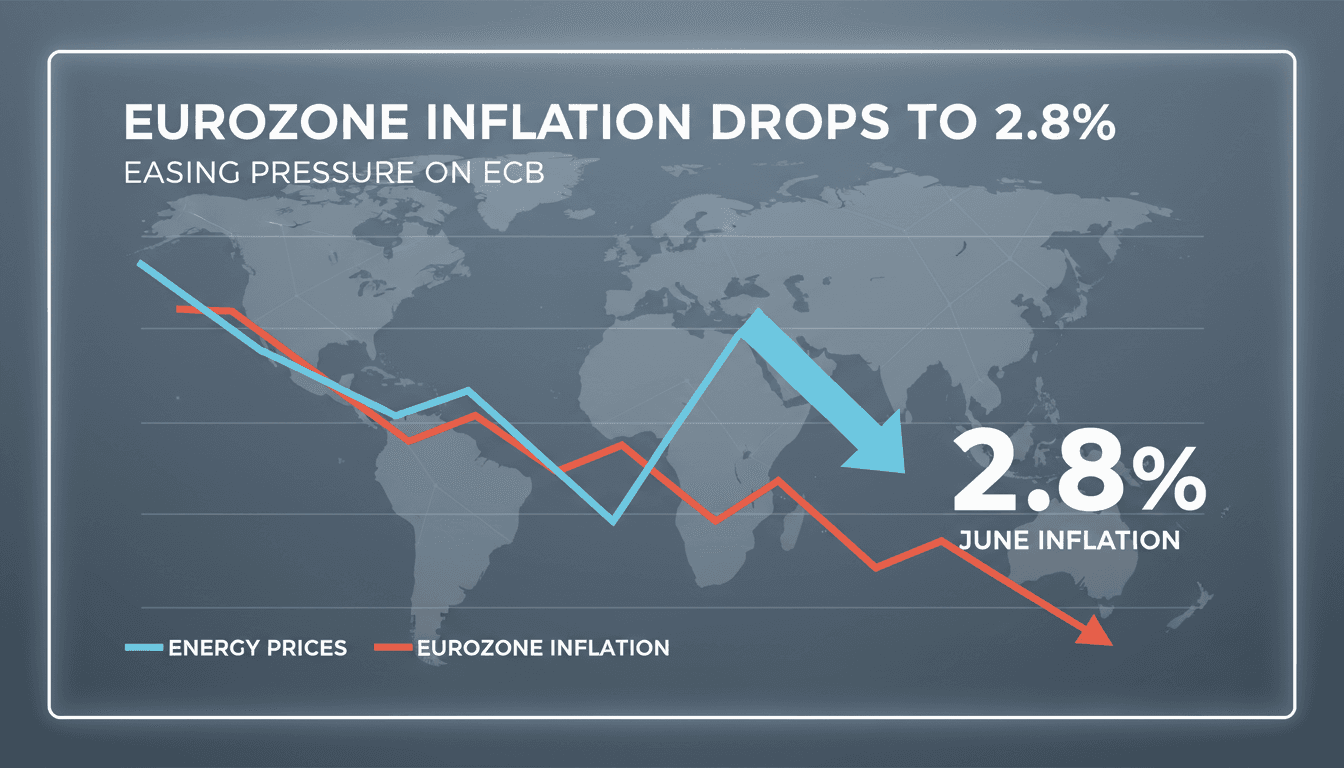
Eurozone inflation drops to 2.8% easing pressure on ECB
Here's what it means for you.
The recent drop in Eurozone inflation to 2.8% signals a potential shift in monetary policy from the European Central Bank (ECB). As energy prices decline, the ECB may feel less compelled to raise interest rates, which could foster a more stable economic environment. This development is particularly significant for businesses and consumers alike, as it may lead to more predictable financial conditions in the region. With inflation easing, stakeholders should remain vigilant about upcoming ECB announcements regarding interest rates. The implications of this shift could resonate across various sectors, influencing investment decisions and consumer spending patterns.
What happened
In June, Eurozone inflation fell to 2.8%, marking a notable decrease that alleviates pressure on the European Central Bank concerning interest rates. This decline is largely attributed to a significant drop in energy costs, which has been a critical factor in the inflation landscape. Notably, this is the first slowdown in French inflation since the onset of the Iran war, highlighting the broader economic implications.
The reduction in inflation rates provides the ECB with more room to maneuver in its monetary policy decisions. As the central bank assesses the current economic climate, this easing inflation may lead to a more cautious approach regarding future interest rate hikes.
The Context
The decline in inflation is a pivotal moment for the Eurozone, particularly as it relates to the ECB's monetary policy framework. Stakeholders, including businesses and consumers, are closely monitoring these developments, as they could influence economic growth and stability in the region. The timing of this inflation drop is crucial, occurring amidst ongoing global economic uncertainties.
Falling energy prices have played a significant role in this inflation decrease, providing relief to both the ECB and the broader economy. As the central bank evaluates its next steps, the implications of this shift could resonate throughout various sectors, impacting everything from investment strategies to consumer behavior.
Takeaway
Looking ahead, the ECB's response to this easing inflation will be critical. Analysts and market participants should keep an eye on upcoming announcements regarding interest rates, as these decisions will shape the economic landscape in the Eurozone. The potential for a more cautious stance from the ECB could stabilize growth and influence inflation trends moving forward.
Additionally, monitoring energy prices will be essential, as their fluctuations could continue to impact inflation rates. Stakeholders should prepare for a dynamic economic environment as the ECB navigates these changes.
Social/economic commentary and analysis relevant to business and markets.
"WSJ blends data-driven economic insight with commentary on policy and society."
— A47 Editor
Eurozone Inflation Declines as Energy Shock Fades in Relief for ECB
Eurozone inflation has decreased to 2.8% in June, a significant drop that suggests the European Central Bank (ECB) may opt to maintain interest rates in its upcoming meeting. This decline is attributed to a reduction in energy costs, which has allevi...
Pan-Arab news coverage spanning politics, business, sports, and regional affairs.
"Asharq Al-Awsat reflects a broad Arab editorial perspective with strong attention to regional geopolitics."
— A47 Editor
تراجع التضخم في منطقة اليورو إلى 2.8 في المائة خلال يونيو بأكثر من التوقعات
Inflation in the Eurozone decreased to 2.8% in June, surpassing expectations and easing pressure on the European Central Bank to continue raising interest rates this month.
Global markets, investing, and macroeconomics from a premier financial newsroom.
"Bloomberg is respected for in-depth financial reporting and data-driven analysis."
— A47 Editor
French Inflation Eases to Lowest Since March as Oil Prices Drop
French inflation has eased to its lowest level since March, primarily due to a decline in energy costs, marking the first slowdown since the onset of the Iran conflict. This development alleviates pressure on the European Central Bank (ECB) regarding...