
Canada's inflation rate reaches 29-month high of 3.2%
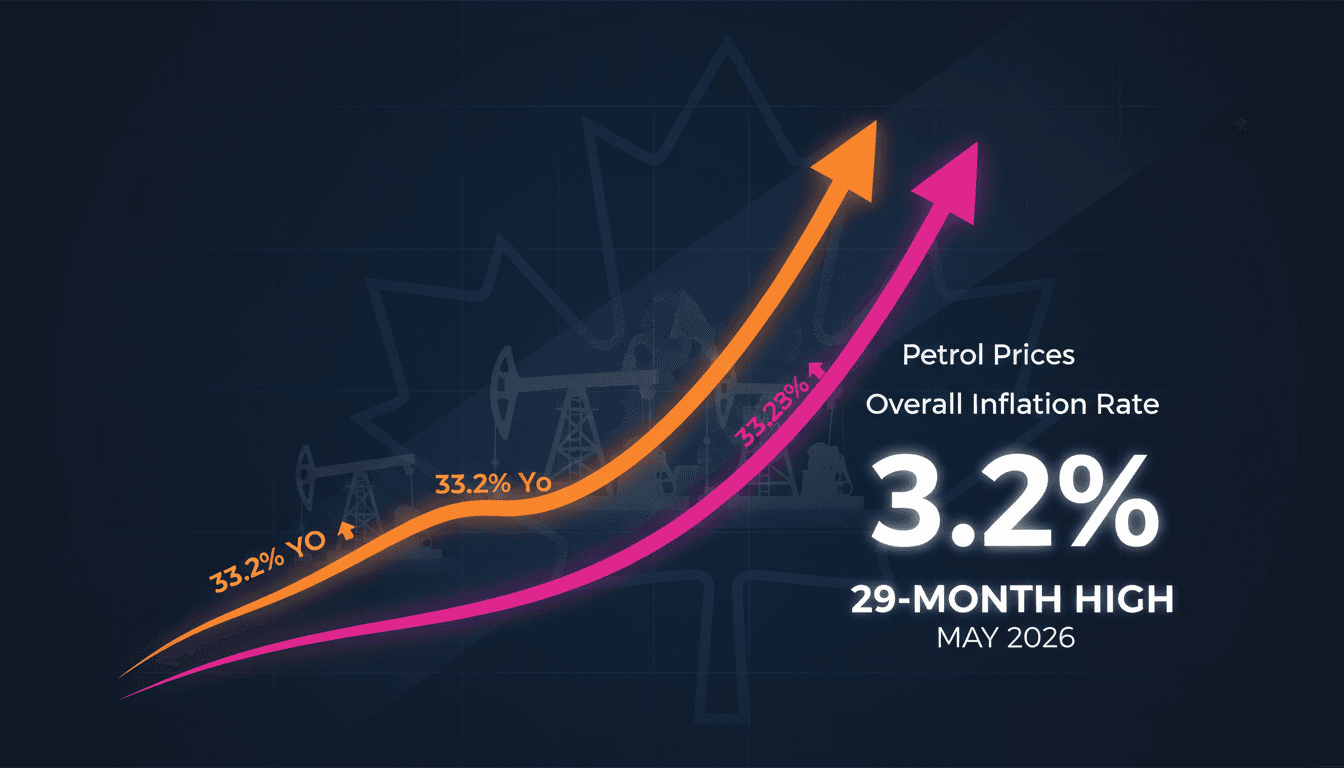
Here's what it means for you.
The recent surge in Canada's inflation rate to 3.2% signals potential challenges for consumers and businesses alike. With petrol prices rising significantly, the cost of living may increase, impacting household budgets and spending patterns. Policymakers, particularly the Bank of Canada, will likely need to assess interest rates to manage these inflationary pressures effectively. This inflation spike could also influence market dynamics, prompting businesses to adjust pricing strategies in response to rising operational costs. Stakeholders should remain vigilant as these economic shifts unfold.
What happened
In May 2026, Canada's inflation rate surged to 3.2%, marking the highest level in nearly two and a half years. This increase is primarily attributed to a dramatic 33.2% rise in petrol prices year-on-year. Statistics Canada highlighted that the escalation in oil and gasoline prices was the main driver behind this inflation spike.
Despite this notable rise in inflation, other sectors have largely maintained stable price levels. This suggests that the inflationary pressures are concentrated primarily in the energy sector, rather than being a widespread economic issue.
The Context
The recent inflation increase reflects broader economic pressures that are being felt across Canada. The significant rise in petrol prices has raised concerns among consumers and businesses, as energy costs directly impact transportation and production expenses. The timing of this inflation spike is critical, as it coincides with ongoing volatility in global oil markets.
As inflationary pressures mount, the Bank of Canada may need to consider policy responses, particularly regarding interest rates. The central bank's decisions will be closely monitored by economists and market participants, as they seek to balance economic growth with inflation control.
Takeaway
Looking ahead, the ongoing volatility in oil prices suggests that inflation trends in Canada may continue to be influenced by energy costs. Stakeholders should keep a close eye on future fluctuations in oil prices and their potential impact on inflation. Additionally, any policy responses from the Bank of Canada regarding interest rates will be crucial in shaping the economic landscape.
As the situation develops, it will be important for consumers and businesses to adapt to the changing economic environment and prepare for potential adjustments in spending and pricing strategies.
Comprehensive coverage of Middle Eastern and global issues.
"Al Jazeera is a prominent voice from the Global South, especially the Middle East, with an emphasis on underreported stories."
— A47 Editor
Canada’s inflation hits 29-month high amid heightened oil prices
Canada has reported a significant rise in inflation, reaching a 29-month high, primarily driven by a 33.2 percent annual increase in petrol prices. This surge in oil prices has contributed to the overall inflationary pressures in the country.
Social/economic commentary and analysis relevant to business and markets.
"WSJ blends data-driven economic insight with commentary on policy and society."
— A47 Editor
Canada Inflation Heats Up to 3.2% in May
In May, inflation in Canada surged to 3.2%, marking the highest level in 29 months, primarily driven by rising gasoline prices. Despite this spike, other price pressures remained largely stable, indicating a complex economic landscape.
National coverage of politics and current events across Canada.
"Global News is a mainstream Canadian outlet with a centrist editorial stance, focusing on factual reporting."
— A47 Editor
Inflation spiked to 3.2% in May amid higher gas prices, says StatCan
Inflation in Canada rose to 3.2% in May, driven primarily by increased oil and gasoline prices, as reported by Statistics Canada. This marks a significant rise from the previous month's inflation rate of 2.8%, which was also influenced by higher gas ...