
Saudi Arabia Reports 125.7 Billion SAR Budget Deficit for Q1 2026
Here's what it means for you.
If you're involved in the Gulf region's economy, this deficit signals potential shifts in investment and fiscal policies that could impact your business.
Why it matters
This budget deficit reflects ongoing challenges in oil revenue and highlights the urgency of economic diversification efforts in Saudi Arabia.
What happened (in 30 seconds)
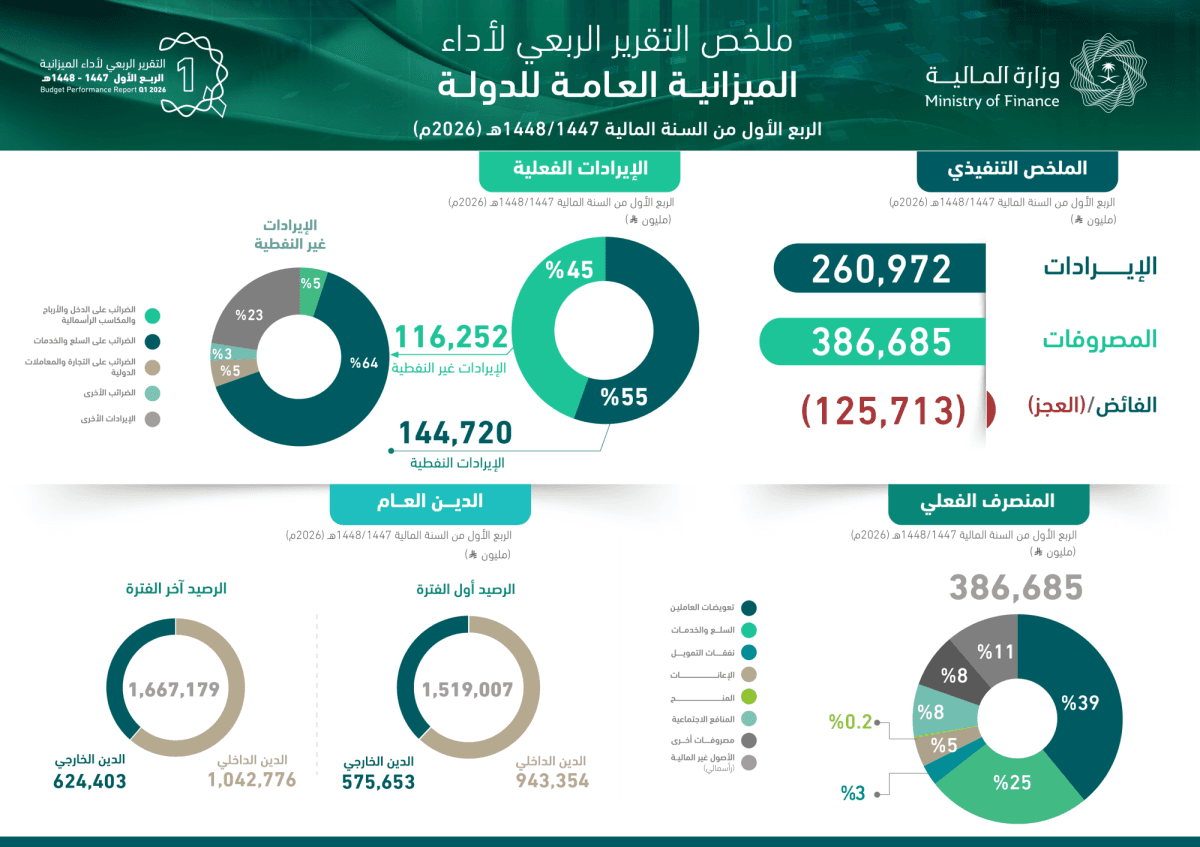
- Saudi Arabia's Ministry of Finance reported a budget deficit of 125.7 billion SAR for Q1 2026.
- Total revenues decreased by 1% year-over-year to 260.97 billion SAR, primarily due to lower oil income.
- Expenditures surged by 20% to 386.69 billion SAR, driven by investments in Vision 2030 initiatives.
The context you actually need
- Vision 2030 is Saudi Arabia's strategic framework aimed at reducing oil dependency through economic diversification and private sector growth.
- The FY2026 budget projected a total deficit of 166 billion SAR, indicating a planned approach to fiscal challenges amid volatile oil markets.
- Non-oil revenue growth is crucial, as it reflects the government's efforts to stabilize the economy against fluctuating oil prices.
What's really happening
The recent budget performance report from Saudi Arabia's Ministry of Finance reveals a significant deficit of 125.7 billion SAR for the first quarter of 2026. This figure is a direct consequence of a 1% decline in total revenues, which amounted to 260.97 billion SAR. The decline was primarily driven by a 3% drop in oil revenues, which totaled 144.72 billion SAR. However, non-oil revenues showed resilience, increasing by 2% to 116.25 billion SAR, largely due to higher taxes on goods and services.
On the expenditure side, the government ramped up spending by 20%, reaching 386.69 billion SAR. This increase was largely attributed to the government's commitment to Vision 2030, which aims to diversify the economy and reduce reliance on oil. Key areas of expenditure included employee compensation, which rose by 3% to 151.06 billion SAR, and capital expenditures, which surged by 56% to 43.43 billion SAR. Notably, allocations for health and social development, military, and education also saw significant increases, reflecting the government's focus on social programs and infrastructure development.
To finance this deficit, the Saudi government turned to both domestic and external borrowing, pushing public debt to 1.67 trillion SAR. While this increase in debt may raise concerns, the Ministry of Finance emphasized that the debt levels remain sustainable at approximately 30% of GDP. The government also highlighted its fiscal buffers, including reserves of 400.93 billion SAR, which provide a cushion against economic shocks.
The market's reaction to the announcement was measured, with no immediate volatility reported on the Tadawul index. Analysts viewed the resilience of non-oil revenues as a positive indicator of the country's diversification efforts, suggesting that the government is making progress in its long-term economic strategy despite the immediate fiscal challenges.
Who feels it first (and how)
- Investors: Those with stakes in Saudi infrastructure and non-oil sectors may see shifts in funding and project timelines.
- Public Sector Employees: Increased government spending on salaries and social programs could affect job security and benefits.
- Businesses in the UAE: Companies in Dubai and the broader UAE may experience changes in cross-border investments and labor mobility due to Saudi fiscal policies.
What to watch next
- Oil Prices: Fluctuations in global oil prices will directly impact Saudi revenues and the sustainability of the deficit.
- Non-Oil Revenue Growth: Continued growth in non-oil sectors will be crucial for reducing reliance on oil and stabilizing the economy.
- Public Debt Levels: Monitoring changes in public debt and government borrowing strategies will provide insights into fiscal health and future spending capabilities.
The budget deficit for Q1 2026 is 125.7 billion SAR.
Continued emphasis on non-oil revenue growth as a strategy for economic diversification.
The long-term impact of increased public debt on economic stability and investor confidence.
Frequently Asked Questions
- Why it matters?
- This budget deficit reflects ongoing challenges in oil revenue and highlights the urgency of economic diversification efforts in Saudi Arabia.
- What happened (in 30 seconds)?
- Saudi Arabia's Ministry of Finance reported a budget deficit of 125.7 billion SAR for Q1 2026. Total revenues decreased by 1% year-over-year to 260.97 billion SAR, primarily due to lower oil income. Expenditures surged by 20% to 386.69 billion SAR, driven by investments in Vision 2030 initiatives.
- What's really happening?
- The recent budget performance report from Saudi Arabia's Ministry of Finance reveals a significant deficit of 125.7 billion SAR for the first quarter of 2026. This figure is a direct consequence of a 1% decline in total revenues, which amounted to 260.97 billion SAR. The decline was primarily driven by a 3% drop in oil revenues, which totaled 144.72 billion SAR. However, non-oil revenues showed resilience, increasing by 2% to 116.25 billion SAR, largely due to higher taxes on goods and services.
- Who feels it first (and how)?
- Investors: Those with stakes in Saudi infrastructure and non-oil sectors may see shifts in funding and project timelines. Public Sector Employees: Increased government spending on salaries and social programs could affect job security and benefits. Businesses in the UAE: Companies in Dubai and the broader UAE may experience changes in cross-border investments and labor mobility due to Saudi fiscal policies.
- What to watch next?
- Oil Prices: Fluctuations in global oil prices will directly impact Saudi revenues and the sustainability of the deficit. Non-Oil Revenue Growth: Continued growth in non-oil sectors will be crucial for reducing reliance on oil and stabilizing the economy. Public Debt Levels: Monitoring changes in public debt and government borrowing strategies will provide insights into fiscal health and future spending capabilities.
Saudi newspaper coverage spanning local, national, and public-interest stories.
"Makkah Newspaper generally reflects mainstream Saudi editorial priorities with an emphasis on domestic issues."
— A47 Editor
الميزانية في الربع الأول من 2026م: الإيرادات 261 مليار ريال والنفقات 387 مليار ريال
The Ministry of Finance has released the performance results of the state budget for the first quarter of the fiscal year 2026, reporting revenues of approximately 261 billion riyals, which reflects a 1% decrease compared to 2025. The total expenditu...
Culture, society, and public-interest stories for Arabic-speaking readers.
"This Al Watan feed appears section-specific, and the label is kept broad enough to avoid overclaiming the exact mapping."
— A47 Editor
20% نموا بالنفقات العامة للمملكة
In the first quarter of the fiscal year 2026, Saudi Arabia's public expenditures reached approximately 387 billion riyals, marking a 20% increase of 65 billion riyals compared to the same period in 2025, where expenditures were around 322 billion riy...
Arabic-language coverage of Saudi, regional, and international affairs.
"Al Bilad offers mainstream Saudi newspaper coverage across domestic and broader Arab topics."
— A47 Editor
المالية: ميزانية الربع الأول.. 387 ملياراً نفقات و261 ملياراً إيرادات
The Saudi Ministry of Finance has released its performance report for the first quarter of 2026, indicating total expenditures of 386.7 billion riyals and total revenues of 260.9 billion riyals, resulting in a deficit of 125.7 billion riyals. The rep...
Sports reporting with a focus on Saudi and regional competitions.
"Okaz sports coverage is broad and audience-friendly, with strong attention to Saudi teams and leagues."
— A47 Editor
45 % من إيرادات الدولة غير نفطية.. وتوظيف 140 ألف سعودي في 3 أشهر
The Saudi budget for the first quarter of 2026 revealed total revenues of 261 billion riyals, a 1% decrease compared to the same period in 2025, with expenditures rising by 20% to 387 billion riyals, resulting in a deficit of 126 billion riyals. Non-...
Culture, society, and public-interest stories for Arabic-speaking readers.
"This Al Watan feed appears section-specific, and the label is kept broad enough to avoid overclaiming the exact mapping."
— A47 Editor
20 % ارتفاع الإنفاق بميزانية السعودية في الربع الأول 2026
Saudi Arabia's budget report reveals a 20% increase in actual expenditures during the first quarter of the fiscal year 2026, totaling 386.685 billion riyals compared to 322.317 billion riyals in the same period of 2025. The report highlights that emp...
Pan-Arab news coverage spanning politics, business, sports, and regional affairs.
"Asharq Al-Awsat reflects a broad Arab editorial perspective with strong attention to regional geopolitics."
— A47 Editor
الميزانية السعودية بالربع الأول: إنفاق استراتيجي بـ103 مليارات دولار لترسيخ الحصانة الاقتصادية
The Saudi government has committed to a strategic spending plan of $103 billion in the first quarter of the 2026 fiscal year, reflecting a strong dedication to developmental and social expenditures. This budgetary approach aims to reinforce the Kingd...