
Fiscal Policy
Latest news, analysis, and updates on Fiscal Policy from A47 News.
26 stories in Economy · Updated live

Brazilian Markets Plunge Over 13 Percent After Lula Wins Presidential Runoff
Brazil's Ibovespa index closed down roughly 14 percent on October 26, 2026, triggering a circuit breaker and sending the real down more than 8 percent against the dollar after President Lula da Silva unexpectedly won re-election over Flávio Bolsonaro. The sell-off was driven by the reversal of positioning built on expectations of a Bolsonaro victory and investor concerns that Lula's government will expand spending and widen fiscal deficits. Markets are likely to remain volatile as the new administration's fiscal policy path and Bolsonaro's challenge to the result become clearer.
Saudi National Water Company Restructures Residential Water and Wastewater Tariffs Effective January 2027
On October 25, 2026, the National Water Company announced a nationwide restructuring of water and wastewater tariffs, reducing residential consumption tiers to four and introducing fixed monthly charges scaled by meter diameter. The shift follows established Saudi energy and water pricing governance procedures and is intended to promote resource sustainability in a water-scarce region, coinciding with royal directives for citizen support allowances to offset bill impacts. Implementation begins January 1, 2027, with the long-term horizon centered on curbing consumption, improving service efficiency, and reinforcing sustainable water management across the Kingdom.

UK Chancellor Healey Unveils Cautious October 2026 Budget Centred on Energy Bill Relief and Delinking Reform
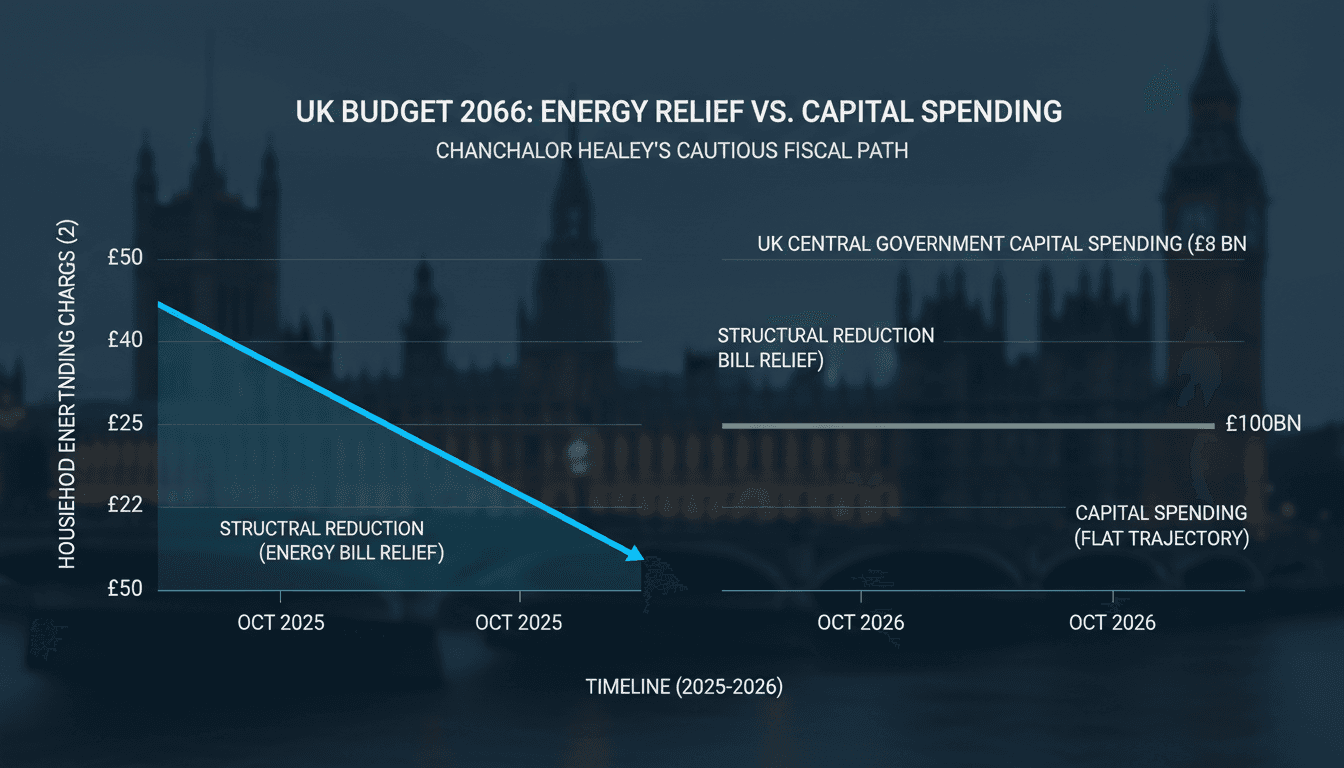
On October 28 2026 UK Chancellor John Healey delivered his first Budget placing energy market reform at its core, scrapping gas standing charges and curbing green levies while committing to delink gas and electricity prices over time. The move responds to a 4 percent rise in household energy bills to around £1,723 annually, driven by geopolitical tensions including the Iran conflict and constrained by fiscal rules and high borrowing costs. The government is likely to defer larger welfare, social care and defence decisions to 2027, using the current package to provide breathing space while pursuing structural energy market changes.
Lula Reelection Triggers Sharp Brazilian Market Selloff Over Fiscal Spending Fears
Brazil's Ibovespa index closed down nearly 14 percent on the first trading day after Luiz Inacio Lula da Silva defeated Flavio Bolsonaro in the October 25, 2026 presidential runoff, with the real falling 8 percent against the dollar and a 30-minute trading halt triggered. The sell-off was driven by investor concern that Lula's expanded social spending, cash transfers and debt forgiveness will worsen fiscal sustainability in a country with public debt above 80 percent of GDP and interest rates at 13.75 percent. Markets will likely remain volatile until the government names credible economic leadership and signals fiscal reforms, with a conservative-leaning Congress serving as a potential check on spending.

Latest Stories
Brazilian Markets Plunge Over 13 Percent After Lula Wins Presidential Runoff
Brazil's Ibovespa index closed down roughly 14 percent on October 26, 2026, triggering a circuit breaker and sending the real down more than 8 percent against the dollar after President Lula da Silva unexpectedly won re-election over Flávio Bolsonaro. The sell-off was driven by the reversal of positioning built on expectations of a Bolsonaro victory and investor concerns that Lula's government will expand spending and widen fiscal deficits. Markets are likely to remain volatile as the new administration's fiscal policy path and Bolsonaro's challenge to the result become clearer.
UK Chancellor Healey Unveils Cautious October 2026 Budget Centred on Energy Bill Relief and Delinking Reform
On October 28 2026 UK Chancellor John Healey delivered his first Budget placing energy market reform at its core, scrapping gas standing charges and curbing green levies while committing to delink gas and electricity prices over time. The move responds to a 4 percent rise in household energy bills to around £1,723 annually, driven by geopolitical tensions including the Iran conflict and constrained by fiscal rules and high borrowing costs. The government is likely to defer larger welfare, social care and defence decisions to 2027, using the current package to provide breathing space while pursuing structural energy market changes.
Netherlands Plans to Eliminate 25,000 Central Government Positions by 2035 Through AI-Driven Efficiency Drive
On October 26, 2026, the Dutch government announced a plan to reduce its central civil service by approximately 25,000 full-time equivalent positions by 2035, targeting €3.5 billion in annual savings through expanded AI deployment and other efficiency measures. The move follows a 41 percent rise in central government staffing since 2018, reaching a record 160,000 employees by end-2025 despite prior pledges to shrink the civil service and mounting fiscal pressure. The cabinet will present specific AI productivity targets and savings projections in Q1 2027, with cuts phased in gradually across ministries and agencies while police and defense are exempt.
UK Five-Year Gilt Auction Clears at 5.036% Highest Yield Since 2008 Ahead of Budget
On 27 October 2026 the UK Debt Management Office sold £4.5 billion of five-year gilts at an average yield of 5.036%, the highest since 2008, with demand 3.51 times oversubscribed. The sale was driven by pre-Budget fiscal pressures and a global bond sell-off fuelled by US-Iran conflict energy price spikes and persistent inflation concerns. Going forward, the result underscores the need for credible fiscal discipline from Chancellor John Healey to contain elevated debt servicing costs and maintain investor confidence.