
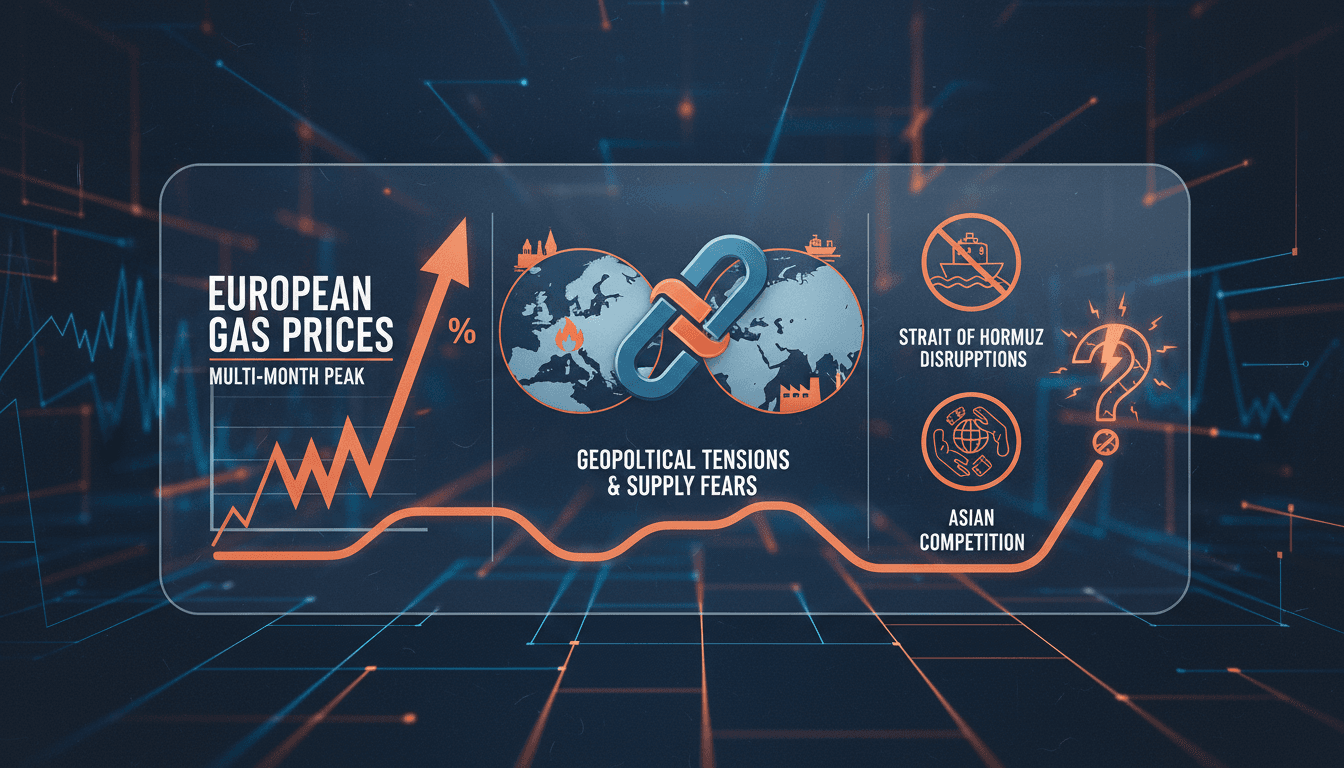
European gas prices surge amid geopolitical tensions and supply fears
Here's what it means for you.
The recent surge in European gas prices signals a critical juncture for energy markets, particularly as winter approaches. Stakeholders, including governments and energy companies, must navigate heightened competition and supply uncertainties. This volatility could lead to strategic shifts in energy sourcing, impacting both consumers and industries reliant on stable gas supplies. As countries scramble to secure liquefied natural gas (LNG), the implications for energy policy and market dynamics are profound. The ongoing geopolitical tensions and climate factors will likely continue to influence gas prices in the coming months.
What happened
Gas prices in Europe have reached multi-month peaks, driven by rising concerns over winter supply shortages. Traders are increasingly worried about the potential for disruptions, particularly as competition from Asian buyers for liquefied natural gas intensifies. The situation has been further complicated by maritime strikes in the Strait of Hormuz, which have raised fears of supply disruptions.
These developments have led to a significant increase in prices, reminiscent of levels seen during the Iran war. As a result, European gas futures remain elevated, reflecting the market's sensitivity to geopolitical events and climate conditions.
The Context
The current spike in gas prices is influenced by several factors, including extreme weather conditions that have impacted energy demand and supply. Heatwaves across Europe have strained resources, while Asian countries engage in a bidding war for LNG, driving prices higher. The Houthi maritime strikes have added another layer of instability, affecting critical shipping routes.
With winter approaching, the urgency for countries to secure energy supplies has intensified. This situation underscores the interconnectedness of global energy markets and the potential for localized events to have far-reaching consequences.
Takeaway
Looking ahead, it is crucial to monitor developments in the Strait of Hormuz, as any further disruptions could exacerbate the current volatility in gas prices. Additionally, the ongoing impacts of climate conditions on energy demand will be significant as winter approaches. Stakeholders should prepare for a landscape marked by uncertainty and potential price increases.
The combination of geopolitical tensions and aggressive competition for LNG suggests that the energy market will remain highly sensitive in the coming months. Strategic shifts in supply sourcing may become necessary as countries adapt to these challenges.
Editor-curated FT homepage stories spanning markets, business, world, and opinion.
"The Financial Times is a globally respected business publication with a centrist/center-left tone and strong markets focus."
— A47 Editor
European gas prices approach Iran war highs as traders fret over winter supplies
European gas prices are nearing levels last seen during the Iran conflict, driven by heatwaves and a bidding war with Asian buyers, raising concerns over potential supply disruptions through the Strait of Hormuz.
Global markets, investing, and macroeconomics from a premier financial newsroom.
"Bloomberg is respected for in-depth financial reporting and data-driven analysis."
— A47 Editor
Hormuz and Heat Trigger an Asian Scramble for LNG
Recent geopolitical tensions in the Gulf region, particularly around the Strait of Hormuz, have led to a significant increase in liquefied natural gas (LNG) prices across Asia, with some countries now compelled to purchase the most expensive fuel shi...
Oil, metals, and agriculture: supply/demand headlines, OPEC chatter, inventories, and price action.
"Solid tape for energy and metals traders tracking macro and micro catalysts."
— A47 Editor
Houthi maritime strikes keep European gas futures pinned near multi-month peaks
Houthi maritime strikes have kept European gas futures near multi-month peaks, reflecting ongoing geopolitical tensions that are impacting energy markets. The situation has been exacerbated by threats from the Houthi rebels to disrupt shipping routes...