
South Korea's Kospi Index experiences significant drop amid AI stock selloff
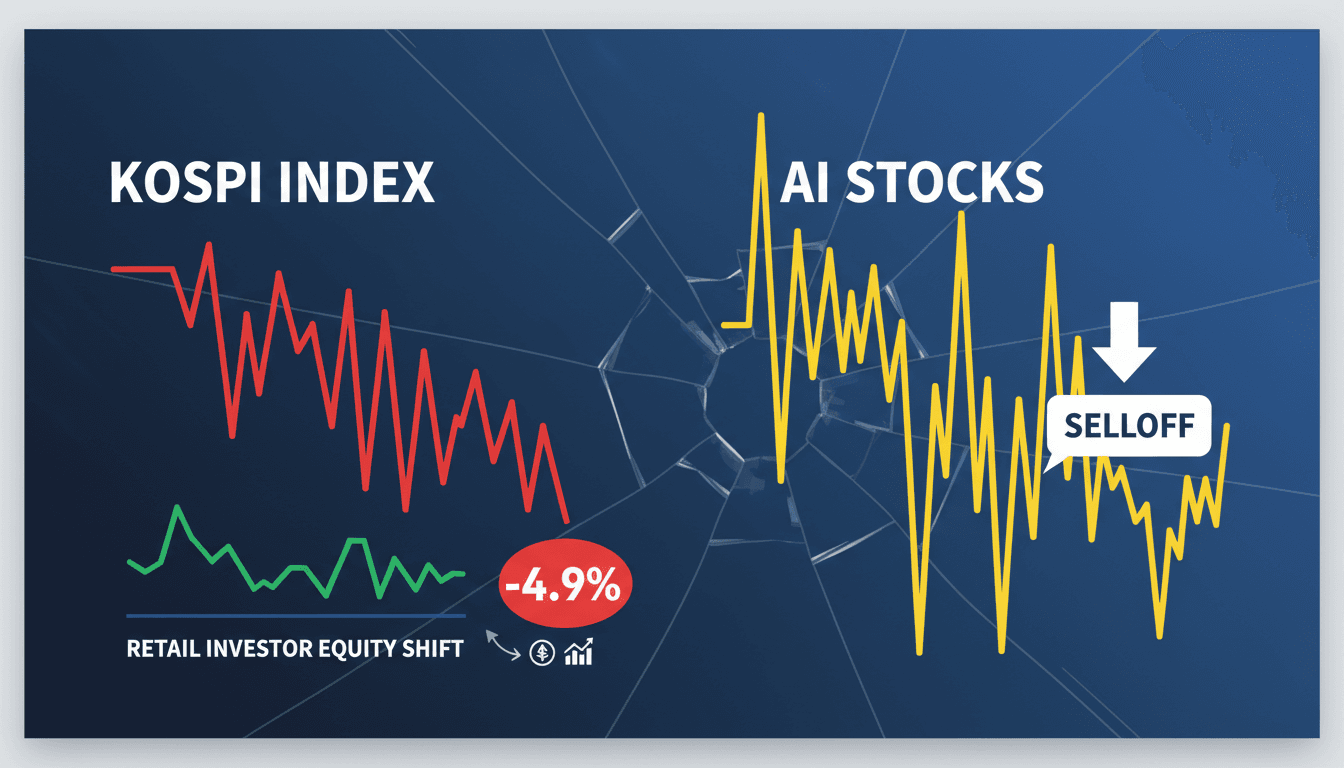
Here's what it means for you.
The recent decline in South Korea's Kospi Index signals a shift in investor sentiment, particularly as retail investors pivot from cryptocurrencies to equities. This trend highlights growing concerns over the volatility of AI-related stocks, which have been a focal point in the market. As economic conditions evolve, stakeholders must remain vigilant about the implications for both stock and cryptocurrency markets. The volatility of the Kospi Index, which has exceeded 60%, underscores the turbulent investment environment in South Korea. Investors will need to navigate these fluctuations carefully, as the market's direction remains uncertain.
What happened
The Kospi Index experienced a significant drop of nearly 5%, closing at 6,490.97 amid a selloff in AI-related stocks. This decline reflects a broader trend as investors pulled back from equities linked to artificial intelligence, which have been under scrutiny for their volatility. Major players like Samsung Electronics and SK Hynix were among the biggest decliners, contributing to the overall downturn.
This shift in investor behavior is notable as trading volumes on South Korea's major crypto exchanges have also decreased. Retail investors are increasingly favoring stocks over cryptocurrencies, indicating a significant change in market dynamics.
The Context
The Kospi Index has become the most volatile benchmark stock index globally, with fluctuations nearly double that of Japan's Nikkei 225. This extreme volatility has prompted retail investors to reassess their strategies, moving away from cryptocurrencies as they seek stability in equities. The recent selloff in AI stocks, coupled with rising oil prices, has further exacerbated the situation.
As the South Korean market grapples with these challenges, the implications for both stocks and cryptocurrencies are profound. Investors must consider how global economic conditions and technological advancements in AI will influence market sentiment moving forward.
Takeaway
Looking ahead, investors should closely monitor the performance of AI-related stocks and their impact on the Kospi Index. The ongoing volatility suggests that the South Korean market will continue to experience fluctuations as economic conditions evolve. Additionally, potential recovery signals in the cryptocurrency market may emerge as investor sentiment shifts.
As the landscape changes, stakeholders must remain adaptable and informed to navigate the complexities of both stock and cryptocurrency markets effectively.
Covers blockchain, cryptocurrency news, project analysis, and market insights.
"Cointelegraph is a leading crypto-focused media outlet known for timely news, analysis, and educational content related to blockchain and digital assets."
— A47 Editor
South Korea crypto volumes shrink as retail investors shift to stocks
Trading volumes on South Korea's five major cryptocurrency exchanges have sharply declined as retail investors pivot towards the stock market, coinciding with a surge in the KOSPI index. This shift highlights a significant change in investor sentimen...
Global markets, investing, and macroeconomics from a premier financial newsroom.
"Bloomberg is respected for in-depth financial reporting and data-driven analysis."
— A47 Editor
South Korea Stock Boom: Why Kospi Is World’s Most Volatile Benchmark Stock Index
South Korea's stock market has experienced significant volatility this year, with the Kospi Index showing fluctuations exceeding 60%, making it the most volatile benchmark stock index globally, far surpassing Japan's Nikkei 225 and even outpacing Bit...
Business, markets, economy, and corporate news with strong UAE and regional relevance.
"Emirates 24|7 business coverage tends to center UAE markets, property, regulation, and regional economic developments."
— A47 Editor
Asian markets mixed as AI selloff deepens; South Korea's Kospi slides nearly 5%
Asian stock markets exhibited mixed results on Monday, with South Korea's Kospi experiencing a significant decline of 4.9% to 6,490.97, primarily due to a continued selloff in artificial intelligence-linked shares. Major technology firms like Samsung...