
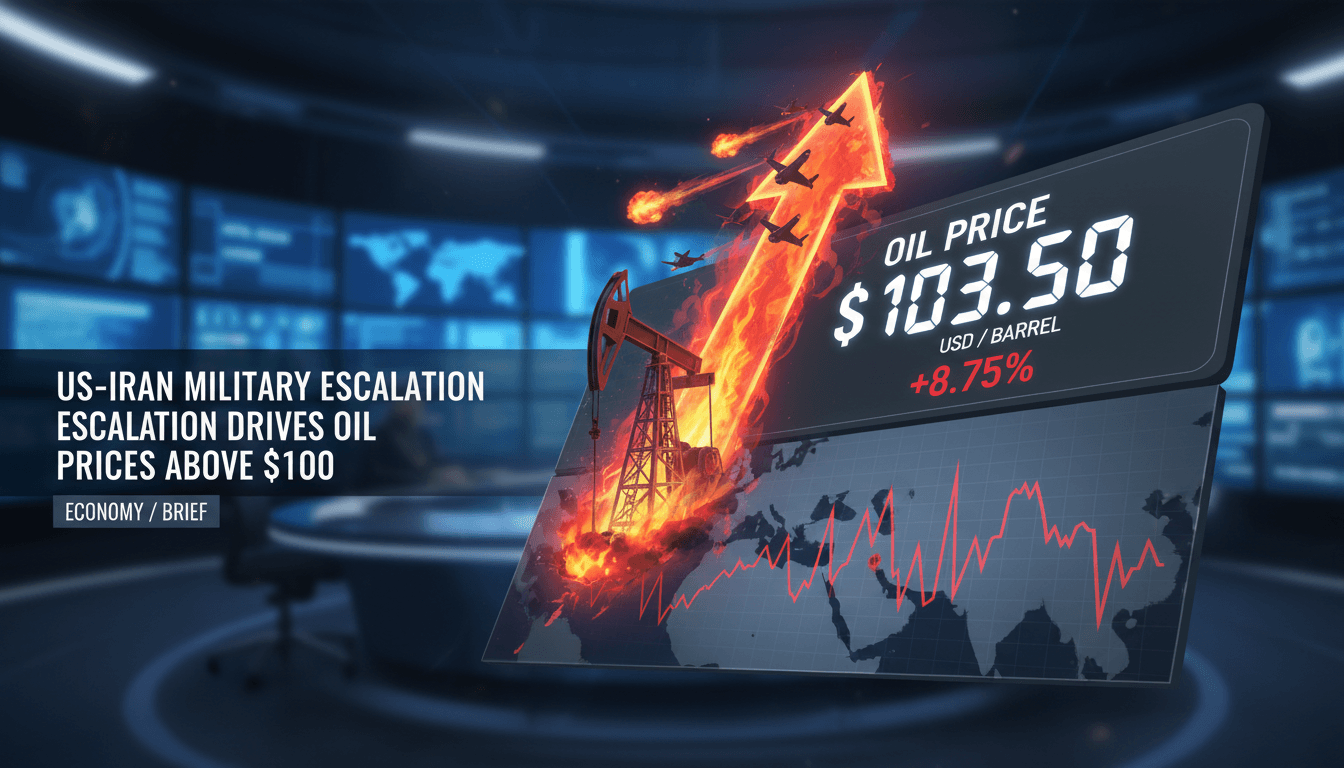
US-Iran military escalation drives oil prices above $100 per barrel
What happened
The United States has launched new military strikes against Iran, marking a significant escalation in ongoing confrontations that began on July 7. These actions have prompted retaliatory responses from Tehran, further heightening tensions in the region. As a direct result of these military developments, oil prices have surged, exceeding $100 per barrel for the first time since May. This spike reflects growing concerns over the stability of global energy supplies.
The Context
The U.S. and Iran have been engaged in escalating military confrontations for several weeks, with the situation intensifying following Houthi attacks on oil tankers. These incidents have exacerbated fears regarding potential disruptions to energy supplies, contributing to the volatility in oil prices. The ongoing conflict not only affects the two nations involved but also has far-reaching implications for global markets and energy security.
Takeaway
As military tensions between the U.S. and Iran persist, the global oil market is likely to experience continued volatility. Stakeholders should closely monitor further developments in military actions and their potential impacts on oil supply and prices. If the conflict escalates further, sustained high prices and supply chain disruptions could become a reality, affecting economies worldwide.
Pan-Arab political news and analysis.
"Al-Quds Al-Arabi is a London-based Arabic newspaper known for political coverage."
— A47 Editor
ضربات أمريكية وإيرانية جديدة والنفط يتخطى مائة دولار للبرميل
The United States launched a new wave of strikes against Iran on Friday night, prompting retaliatory actions from Tehran in the region. This escalation has led to a spike in oil prices, surpassing $100 per barrel before experiencing a slight decline....
Arabic-language reporting on global and regional news.
"BBC Arabic is part of the BBC, generally regarded for editorial standards and broad international coverage."
— A47 Editor
أسعار النفط تبلغ 100 دولار للبرميل للمرة الأولى منذ مايو/أيار من العام الحالي
Oil prices have reached $100 per barrel for the first time since May, driven by escalating tensions in the U.S.-Israeli conflict with Iran and Houthi attacks on oil tankers, raising concerns about global energy supplies.
Arabic-language coverage of international news and geopolitics.
"RT Arabic is a Russian state-funded outlet often criticized for promoting Kremlin-aligned narratives."
— A47 Editor
النفط يرتفع مع استمرار الضربات الأمريكية لإيران
Oil prices have risen today amid increasing concerns over supply disruptions following ongoing U.S. strikes against Iran. The situation has heightened fears in the market regarding potential impacts on oil production and distribution.