
U.S. crude oil stockpiles rise by 2 million barrels amid declining refinery operations
Here's what it means for you.
The recent increase in U.S. crude oil stockpiles signals a shift in the oil market dynamics, primarily driven by rising imports and declining exports. This unexpected rise could lead to significant fluctuations in oil prices, impacting both consumers and businesses reliant on stable energy costs. Stakeholders will need to adapt their strategies in response to these changes, particularly as refinery operations continue to decline. As crude inventories reach their lowest levels since 1984, the implications for energy policy and market stability are profound. The situation calls for close monitoring of refinery outputs and import-export levels to navigate potential price volatility.
What happened
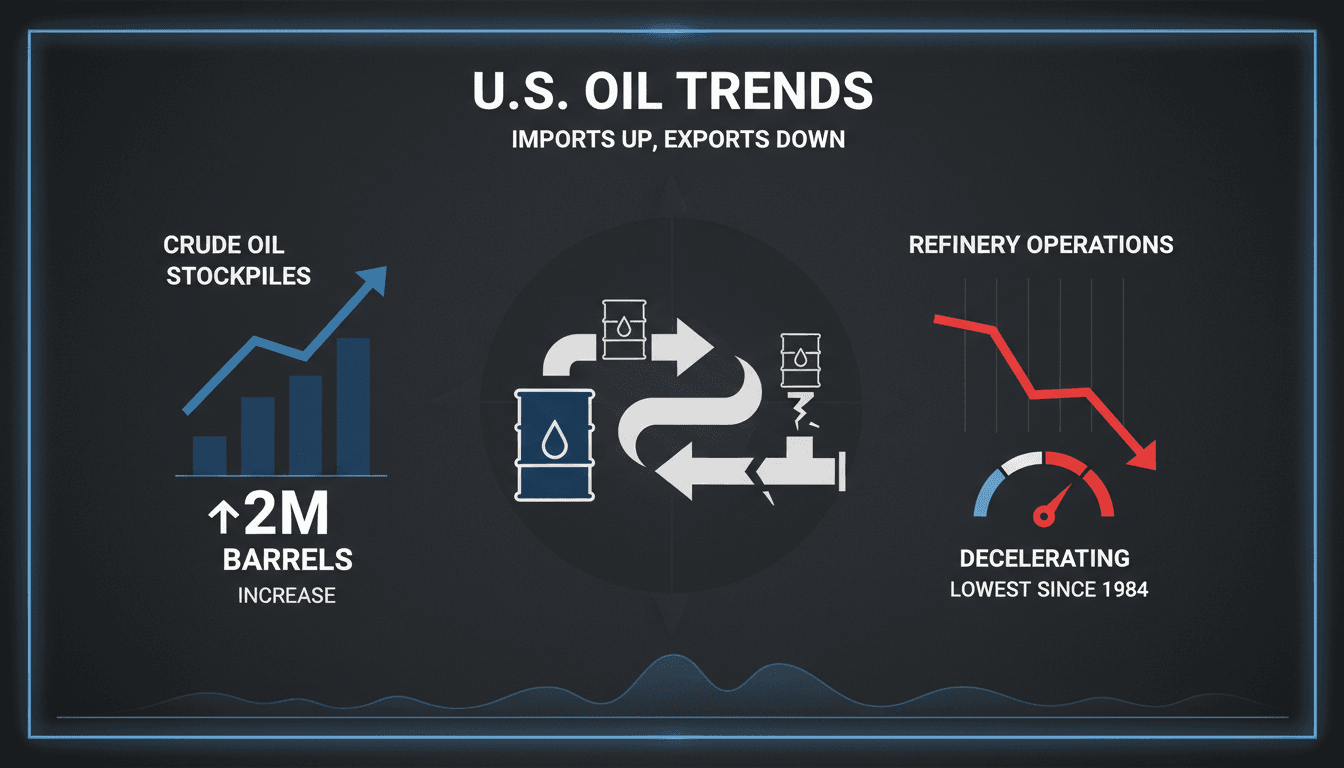
U.S. crude oil stockpiles unexpectedly increased by 2 million barrels last week, primarily due to rising imports and declining exports. This rise comes at a time when refinery operations are decreasing, leading to lower crude consumption across the nation. The total U.S. crude oil inventories, including strategic reserves, have now fallen to 723.1 million barrels.
Additionally, Cushing, Oklahoma, a key storage hub, has seen its crude oil stocks drop below the operational minimum. This combination of factors highlights a significant shift in the supply and demand dynamics within the oil market.
The Context
The recent data from the U.S. Energy Information Administration (EIA) reflects ongoing volatility in the oil market, with refinery utilization rates falling to 96.1%. This decline in refinery operations is critical as it directly impacts crude consumption levels. The current situation is particularly noteworthy given that overall crude inventories are at their lowest since 1984, raising concerns among market participants.
As stakeholders assess the implications of these changes, the focus will be on how these dynamics affect pricing strategies and supply chains. The timing of this report coincides with a broader trend of fluctuating oil prices, making it essential for industry players to stay informed.
Takeaway
Looking ahead, stakeholders should closely monitor refinery operation rates and their impact on crude consumption. Changes in import and export levels will also be crucial in the coming weeks, as they may further influence stockpile levels and pricing. The increase in stockpiles could lead to adjustments in market strategies as participants respond to the evolving landscape.
As the market adapts to these developments, understanding the interplay between refinery outputs and crude inventories will be vital for navigating potential price fluctuations.
Sports reporting with a focus on Saudi and regional competitions.
"Okaz sports coverage is broad and audience-friendly, with strong attention to Saudi teams and leagues."
— A47 Editor
هل ارتفعت مخزونات النفط في أمريكا؟
The U.S. Energy Information Administration announced an increase in U.S. crude oil inventories last week, rising by two million barrels to 411.7 million barrels, amid reduced refinery operating rates and a decline in crude exports, while imports incr...
Pan-Arab news coverage spanning politics, business, sports, and regional affairs.
"Asharq Al-Awsat reflects a broad Arab editorial perspective with strong attention to regional geopolitics."
— A47 Editor
مخزونات النفط الأميركية ترتفع على غير التوقعات مع انخفاض عمليات التكرير
The U.S. Energy Information Administration announced an unexpected increase in crude oil and fuel inventories in the United States during the past week, coinciding with a decline in refining activities.
U.S. business news, corporate developments, and economy.
"The Wall Street Journal is respected for deep financial and economic reporting with a center-right editorial perspective."
— A47 Editor
U.S. Commercial Crude Oil Stockpiles Post Weekly Build
U.S. commercial crude oil stockpiles unexpectedly rose by 2 million barrels last week, according to the U.S. Energy Information Administration. This increase is attributed to a rise in imports and a decline in exports, marking a notable shift in the ...