
US dollar stabilizes near 40-year high against yen amid rising oil prices and US-Iran tensions
What happened
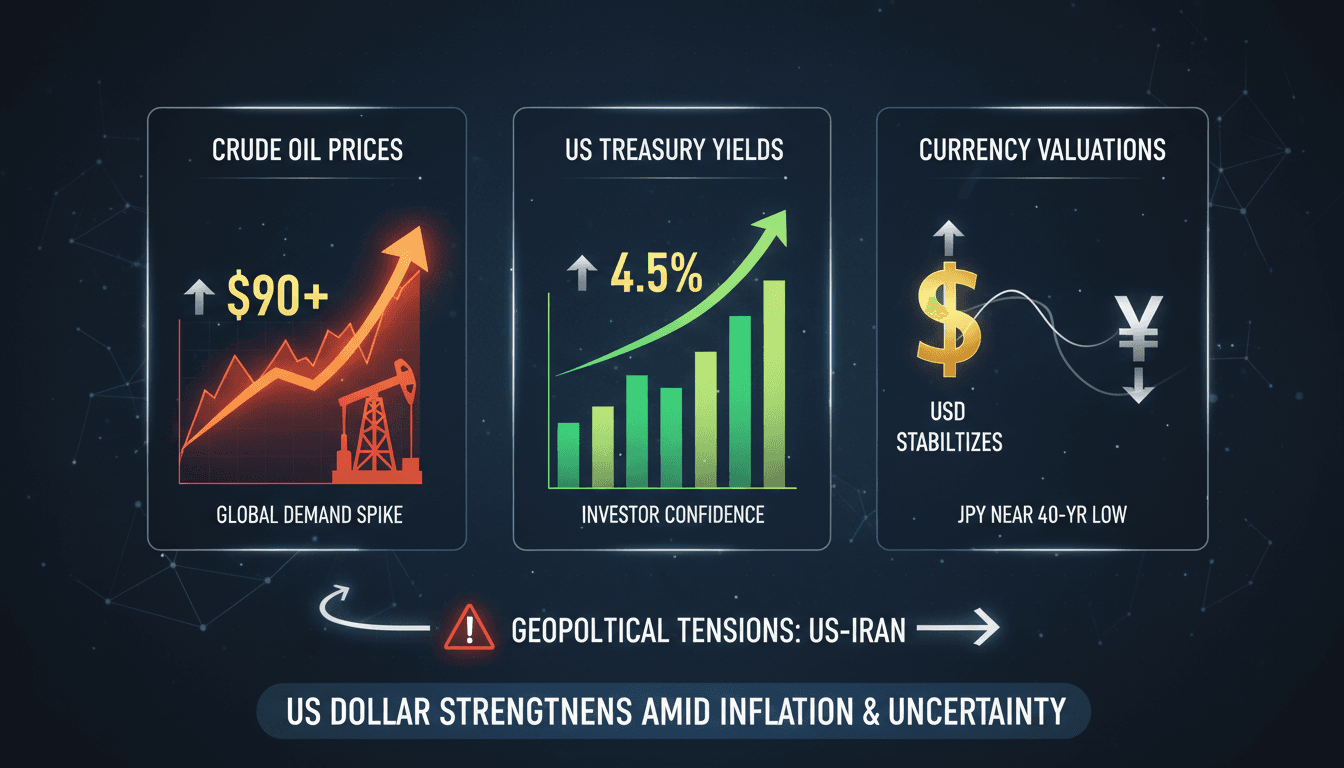
The US dollar has stabilized while the yen hovers near its lowest level in 40 years. This situation is largely attributed to rising US Treasury yields and escalating tensions between Washington and Tehran. As a result, the dollar has become increasingly sought after as a safe-haven asset, reflecting broader economic uncertainties.
Currently, the dollar index stands at 101.11, indicating its strength against a basket of currencies. Meanwhile, Brent crude oil prices have surged over 1.3% to $95.31 per barrel, further contributing to inflation fears that are impacting currency valuations.
The Context
Rising oil prices have heightened inflation concerns, which in turn affect currency valuations across the globe. The tensions between the US and Iran have intensified, driving demand for the dollar as investors seek stability amid geopolitical unrest. Additionally, US Treasury yields have reached their highest levels in 17 months, providing further support for the dollar's strength.
This economic landscape is complex, with various stakeholders, including policymakers and investors, closely monitoring the situation. The interplay of these factors is crucial for understanding the current state of the currency markets and the potential for future volatility.
Takeaway
As geopolitical tensions persist and inflation concerns grow, the dollar may continue to strengthen, while the yen could remain under pressure unless significant changes occur in the economic landscape. Investors should keep an eye on developments in US-Iran relations, as these could have a direct impact on currency valuations.
Additionally, changes in US Federal Reserve policy in response to inflation and economic data will be critical to watch. The evolving situation suggests potential volatility in currency markets, making it essential for stakeholders to stay informed.
Pan-Arab news coverage spanning politics, business, sports, and regional affairs.
"Asharq Al-Awsat reflects a broad Arab editorial perspective with strong attention to regional geopolitics."
— A47 Editor
الدولار يقترب من أعلى مستوياته مع صعود النفط وارتفاع عوائد السندات
The U.S. dollar has gained support from rising U.S. Treasury yields, hovering near a 40-year high against the yen, amid increasing oil prices. This development occurred on Friday, reflecting the interplay between currency values and commodity prices.
Sports reporting with a focus on Saudi and regional competitions.
"Okaz sports coverage is broad and audience-friendly, with strong attention to Saudi teams and leagues."
— A47 Editor
التوترات بين واشنطن وطهران تدعم الدولار.. والين قرب أدنى مستوى في 40 عامًا
The dollar has stabilized significantly amid rising tensions between Washington and Tehran, which have increased demand for the safe-haven currency. Meanwhile, the yen continues to decline, nearing a 40-year low without signs of reversal. The dollar ...
Arabic-language economic and business reporting with strong UAE market relevance.
"Emarat Al Youm business coverage often centers UAE property, banking, consumer issues, and economic policy."
— A47 Editor
استقرار الدولار والين قرب أدنى مستوياته في 40 عاما استقرار الدولار والين قرب أدنى مستوياته في 40 عاما
The exchange rate of the US dollar remained stable in today's trading, influenced by rising oil prices affecting inflation expectations. The dollar index also showed stability, reflecting the current economic conditions.