
U.S. dollar surges amid escalating Middle East tensions as Japanese yen declines
What happened
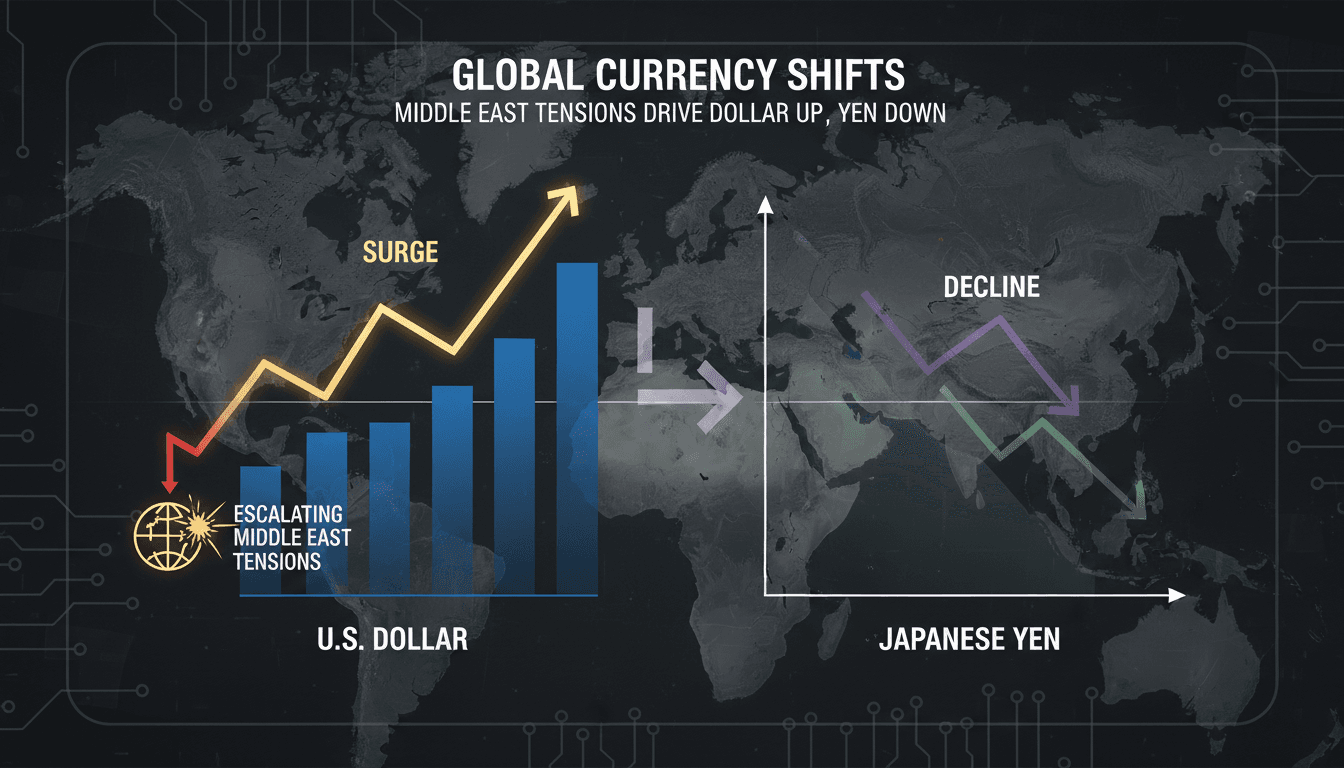
The U.S. dollar experienced a significant rise as geopolitical tensions in the Middle East escalated. This surge was primarily driven by fears surrounding potential energy supply disruptions and inflationary pressures. On July 23, 2026, the dollar jumped sharply, reflecting market reactions to the intensifying conflict.
In contrast, the Japanese yen recorded its largest weekly drop since May 2026, indicating a notable shift in market sentiment. The depreciation of the yen underscores the broader implications of the ongoing geopolitical developments in the region.
The Context
The current conflict in the Middle East has raised serious concerns about energy supply disruptions, which are critical for global markets. As tensions escalate, market participants are increasingly speculating about the potential for sustained higher interest rates. This situation is particularly relevant for investors and policymakers who must navigate the complexities of inflation and currency valuation.
The recent developments are closely tied to the intensifying Iran war, which has significant implications for energy markets. Stakeholders, including central banks and investors, are closely monitoring these events as they unfold, given their potential to reshape economic landscapes.
Takeaway
Looking ahead, investors should keep a close eye on the potential for further escalation in Middle East conflicts. Such developments could have profound impacts on currency markets and interest rate expectations. Additionally, central bank responses to inflationary pressures will be crucial in shaping future market dynamics.
As geopolitical tensions continue to evolve, the interplay between currency valuations and interest rates will remain a focal point for market participants. Staying informed about these developments will be essential for making strategic investment decisions.
Macro commentary, policy analysis, growth/inflation themes, and global outlooks.
"Contextual macro coverage that complements day-to-day market headlines."
— A47 Editor
Yen records biggest weekly drop in over two months, dollar climbs for the week
The Japanese yen has recorded its largest weekly drop in over two months, while the U.S. dollar has seen a notable increase during the same period. This decline in the yen is attributed to ongoing geopolitical tensions, particularly related to the U....
Regional and international reporting focused on Middle Eastern politics, diplomacy, and economics.
"Asharq Al-Awsat is a Saudi-owned international newspaper reflecting mainstream Gulf political perspectives."
— A47 Editor
Dollar Gets Yields Boost as Middle East and Trade Wars Raise Inflation Stakes
The US dollar has experienced a boost in yields as inflation concerns rise due to escalating tensions in the Middle East and ongoing trade wars. This development reflects a complex interplay of geopolitical factors that are influencing market stabili...
Global markets, investing, and macroeconomics from a premier financial newsroom.
"Bloomberg is respected for in-depth financial reporting and data-driven analysis."
— A47 Editor
Dollar Rises as Intensifying Iran War Lifts Rate Hike Bets
The U.S. dollar surged on Thursday as escalating conflict in the Middle East raised concerns about energy supply disruptions, leading to increased expectations that interest rates will remain elevated for an extended period. This rise in the dollar r...