
U.S. Implements New Tariffs Affecting 60 Trading Partners
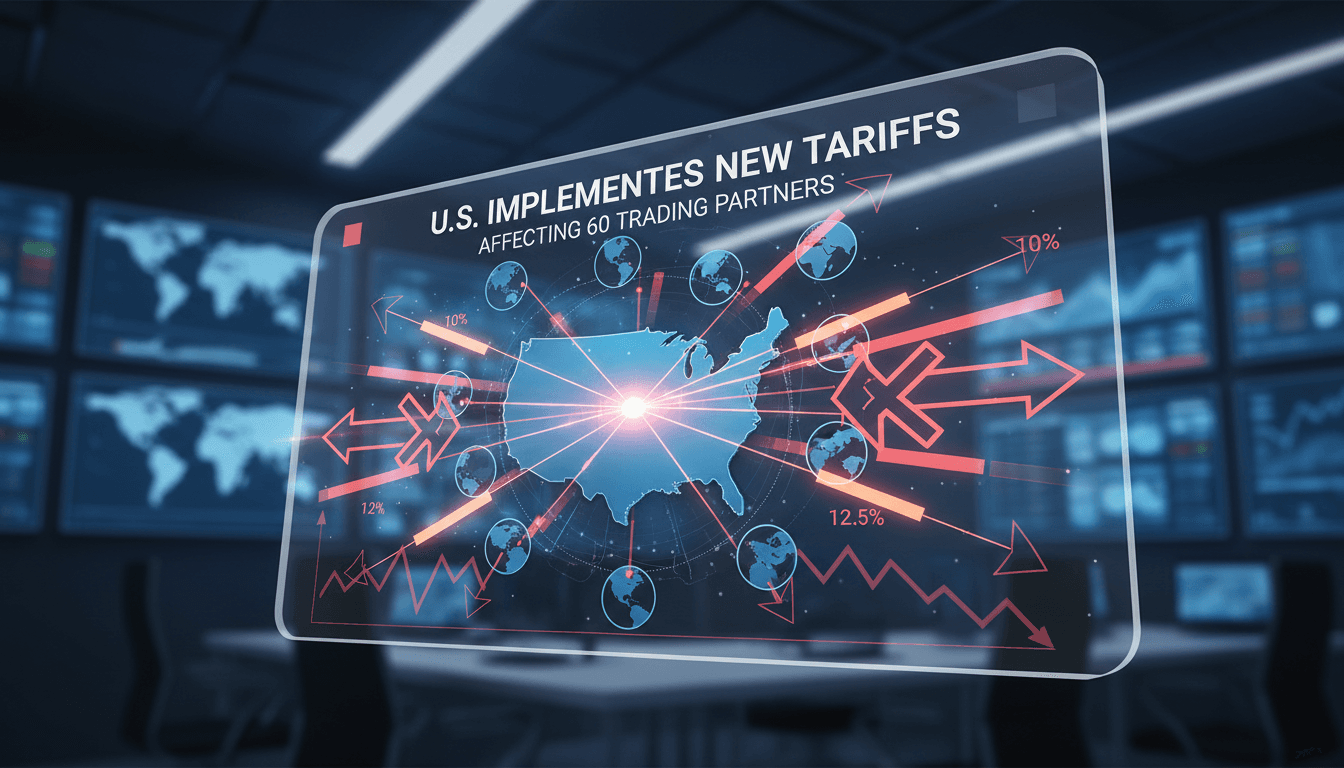
Here's what it means for you.
The recent implementation of new tariffs by the U.S. could significantly alter the landscape of international trade. With rates set between 10% and 12.5%, affected countries may face increased costs on exports to the U.S., potentially leading to higher prices for consumers. This move is likely to escalate trade tensions, prompting retaliatory measures from key trading partners. As the global economy adjusts, businesses and policymakers will need to navigate these changes carefully to mitigate adverse effects. The long-term implications could reshape trade relationships and impact market dynamics worldwide.
What happened
The U.S. has enacted a new set of tariffs that affect 60 trading partners, including major economies such as China, India, and the European Union. These tariffs, which range from 10% to 12.5%, replace previous global tariffs and have sparked significant backlash from international allies. The new measures officially came into effect on July 25, 2026, following their announcement by President Trump on July 24, 2026.
This decision is part of a broader trade strategy aimed at reshaping international trade relationships. The tariffs are expected to have immediate economic implications for the affected countries, which have expressed strong criticism regarding the potential impact on their economies.
The Context
The introduction of these tariffs is seen as a potential escalation in trade tensions between the U.S. and its allies. Key stakeholders, including governments and businesses in the affected countries, are voicing concerns over the economic ramifications. The timing of this move aligns with ongoing discussions about global trade policies and the U.S.'s approach under President Trump.
The broad scope of the tariffs, impacting 60 trading partners, highlights the U.S. government's intent to assert its trade policies more aggressively. This strategy may lead to a reevaluation of existing trade agreements and relationships, as countries respond to the new economic landscape.
Takeaway
Looking ahead, the implementation of these tariffs may lead to further trade disputes and negotiations among the affected countries. Observers should watch for reactions from these nations, as they may initiate retaliatory measures that could further complicate international trade dynamics. Future trade negotiations will be critical in determining how these tariffs will shape global markets.
As the situation evolves, the potential for increased economic tensions remains high, making it essential for businesses and policymakers to stay informed and prepared for the implications of these tariffs.
Arabic-language political and world news coverage for UAE readers.
"Emarat Al Youm world coverage usually presents international developments through a UAE and Arab audience lens."
— A47 Editor
رسوم أميركية جديدة على 60 شريكاً تجارياً رسوم أميركية جديدة على 60 شريكاً تجارياً
A new package of U.S. tariffs has come into effect, targeting 60 trading partners, replacing previous global tariffs ranging from 10% to 12.5%. This move primarily affects major economies including China, India, and the European Union.
Pan-Arab news coverage spanning politics, business, sports, and regional affairs.
"Asharq Al-Awsat reflects a broad Arab editorial perspective with strong attention to regional geopolitics."
— A47 Editor
رسوم ترمب الجديدة تفجر غضباً تجارياً بين الشركاء الدوليين
The new tariffs imposed by the administration of U.S. President Donald Trump on imports from 60 trading partners have sparked a wave of international criticism and reservations. This move has raised concerns among global trade partners regarding the ...
Arabic-language reporting on global and regional news.
"BBC Arabic is part of the BBC, generally regarded for editorial standards and broad international coverage."
— A47 Editor
ترامب يعلن "حرباً" تجارية جديدة على 60 دولة ويصدم الحلفاء بموجة رسوم جمركية
Former President Donald Trump has announced a new trade war affecting 60 countries, introducing tariffs ranging from 10% to 12.5%. This move targets key economic partners, including the United Kingdom, China, the European Union, Canada, Japan, and In...