
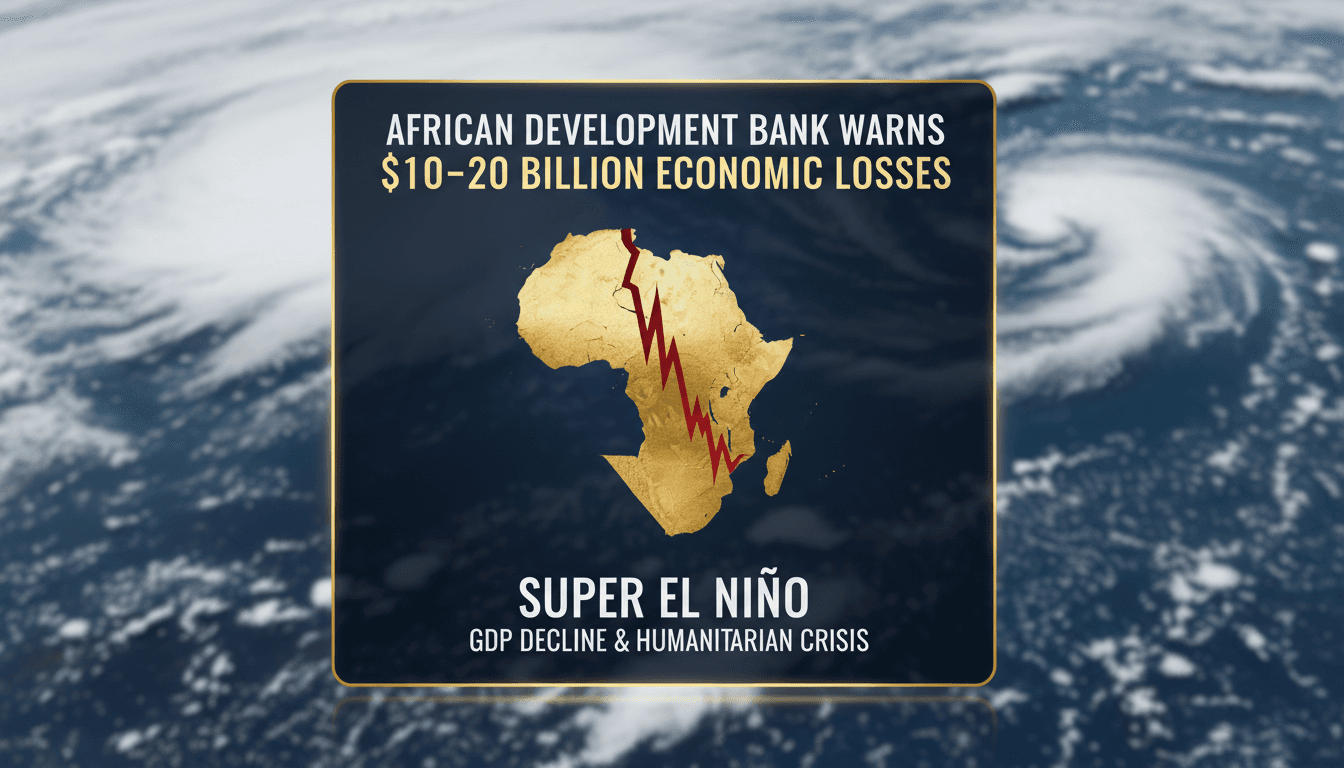
African Development Bank warns of $10-$20 billion economic losses from super El Niño
Here's what it means for you.
The African Development Bank's warning about the potential economic losses from the 'super' El Niño phenomenon underscores the urgent need for preparedness among African nations. With estimates ranging from $10 billion to $20 billion, the implications for GDP and humanitarian conditions are significant. Stakeholders must prioritize strategies to mitigate these impacts, as climate-related events increasingly threaten economic stability. As the situation evolves, policymakers and organizations will need to monitor the economic responses of affected countries closely. The anticipated challenges call for coordinated efforts to address both economic and humanitarian needs.
What happened
The African Development Bank (AfDB) has issued a stark warning regarding the anticipated 'super' El Niño, predicting economic losses for African nations between $10 billion and $20 billion. This phenomenon is expected to have a profound impact on the economies of the most affected countries, potentially leading to a GDP decline of 1-2%. The AfDB's assessment highlights the vulnerability of these nations to climate-related events.
The warning serves as a critical reminder of the ongoing challenges posed by climate change. As the effects of this phenomenon unfold, the economic repercussions could exacerbate existing humanitarian crises, leading to increased risks of mass migration.
The Context
The AfDB's warning comes at a time when climate-related events are becoming more frequent and severe, posing significant threats to African economies. The potential GDP decline of 1-2% in affected countries illustrates the fragility of these economies in the face of environmental challenges. This situation is compounded by the increasing likelihood of humanitarian crises, which could further destabilize the region.
Governments and organizations must recognize the urgency of this warning and take proactive measures to prepare for the impending challenges. The AfDB's insights serve as a call to action for stakeholders to develop robust strategies that address both economic impacts and humanitarian needs.
Takeaway
Looking ahead, it is crucial to monitor the economic policies implemented by African nations in response to the challenges posed by climate phenomena like El Niño. Observers should also keep an eye on updates regarding humanitarian efforts aimed at addressing the impacts of this event. The AfDB's warning highlights the necessity for urgent action and preparedness from affected nations.
As the effects of climate change continue to intensify, the need for comprehensive strategies to mitigate economic impacts and support humanitarian efforts will only grow. Stakeholders must remain vigilant and responsive to the evolving situation.
Pan-Arab news coverage spanning politics, business, sports, and regional affairs.
"Asharq Al-Awsat reflects a broad Arab editorial perspective with strong attention to regional geopolitics."
— A47 Editor
البنك الأفريقي للتنمية: خسائر «النينيو» قد تصل إلى 20 مليار دولار
The African Development Bank's chief climate expert has projected that the El Niño phenomenon could lead to total losses ranging from $10 billion to $20 billion for affected African countries. This significant financial impact highlights the severe c...
Algerian and regional news coverage.
"Echorouk is a major Algerian outlet with broad national reporting."
— A47 Editor
خسائر بـ 20 مليار دولار.. من سيدفع الثمن الأكبر لـ”النينيو الخارقة” في أفريقيا؟
The African Development Bank has warned that the anticipated 'super' El Niño phenomenon could lead to economic losses ranging from $10 billion to $20 billion for the most affected African countries, with a potential average decline in GDP of 1% to 2%...
Market-moving headlines impacting equities, bonds, and related risk assets.
"Real-time catalysts and volatility drivers across indices and sectors."
— A47 Editor
Africa facing $10-$20 billion economic hit from ’super’ El Niño, AfDB climate chief warns
The African Development Bank (AfDB) has warned that Africa could face an economic impact ranging from $10 billion to $20 billion due to the anticipated 'super' El Niño phenomenon, which is expected to disrupt weather patterns across the continent.