
Gold prices rise over 1% following oil price decline due to Middle East ceasefire
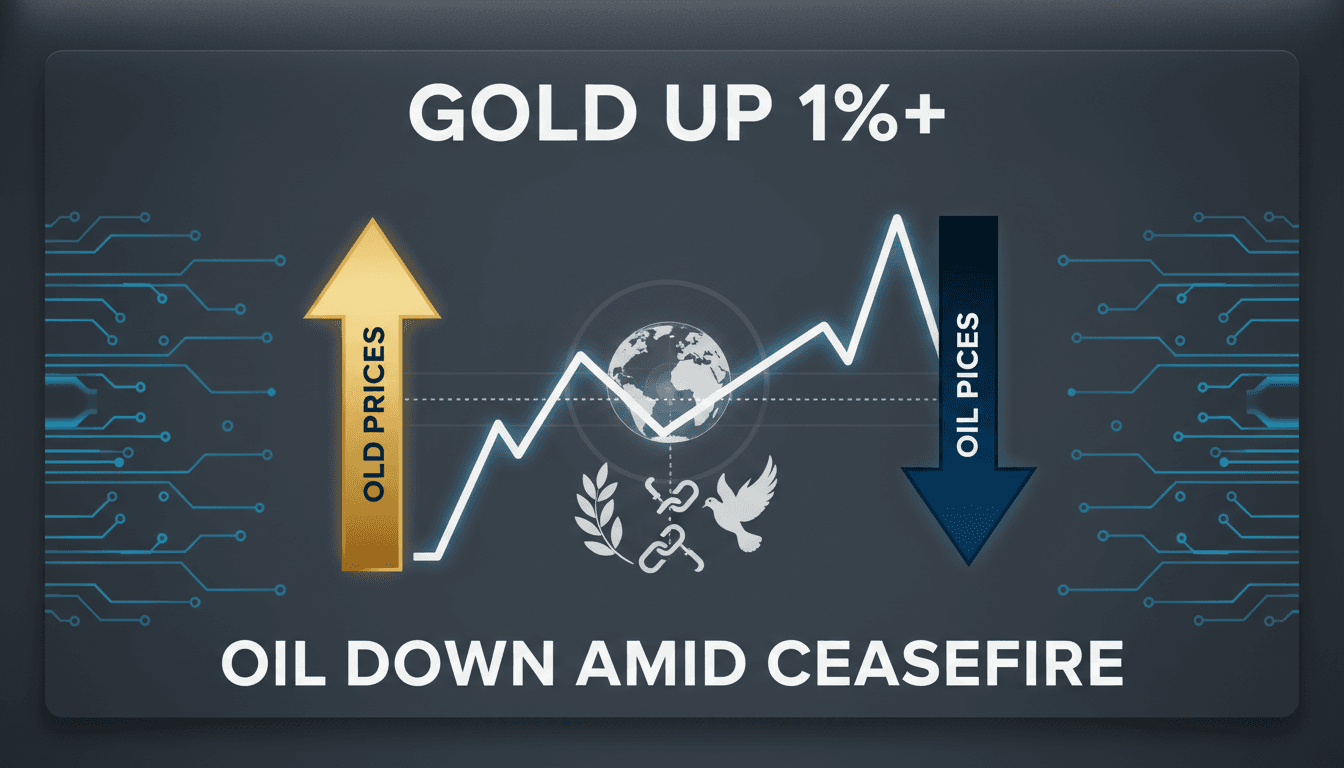
Here's what it means for you.
The recent rise in gold prices signals a shift in market sentiment as geopolitical tensions ease. Investors are likely to reassess their strategies in light of the declining oil prices, which have alleviated inflation concerns. This could lead to a more stable environment for interest rates, influencing commodity investments. As the market reacts to these developments, stakeholders should remain vigilant about ongoing geopolitical dynamics. The interplay between oil and gold prices will be crucial for future investment decisions.
What happened
Gold prices have increased by more than 1%, reaching $4103.99 per ounce during early trading. This rise is directly linked to a decline in oil prices, which followed a ceasefire in the Middle East. The easing of geopolitical tensions has contributed to a more favorable outlook for investors.
The increase in gold prices reflects a broader market reaction to these developments, highlighting the interconnectedness of commodities. As oil prices fell, concerns over inflation have also diminished, prompting a shift in investor behavior.
The Context
The recent ceasefire in the Middle East has played a pivotal role in the decline of oil prices, which in turn has influenced gold prices. The relationship between these commodities is significant, as fluctuations in oil often impact inflation expectations and interest rates.
With gold prices rising over 1%, market participants are closely monitoring how these geopolitical events will shape future economic conditions. The stabilization of interest rates could further affect investor confidence and behavior in the commodities market.
Takeaway
Looking ahead, market observers should keep an eye on potential changes in oil prices as geopolitical tensions evolve. The ongoing dynamics between oil and gold will be critical in shaping inflation trends and interest rate policies.
As investors navigate this landscape, understanding the implications of these shifts will be essential for making informed decisions. The interplay of these factors will likely continue to influence the commodities market in the near future.
Arabic-language coverage of international news and geopolitics.
"RT Arabic is a Russian state-funded outlet often criticized for promoting Kremlin-aligned narratives."
— A47 Editor
ارتفاع أسعار الذهب مع انخفاض النفط
Gold prices increased on Monday following a halt in fighting in the Middle East, which led to a decline in oil prices. This development has alleviated concerns regarding inflation and the prolonged rise in interest rates.
Pan-Arab political news and analysis.
"Al-Quds Al-Arabi is a London-based Arabic newspaper known for political coverage."
— A47 Editor
الذهب يرتفع بأكثر من 1% مع انخفاض أسعار النفط
Gold prices rose by more than 1% on Monday, reaching $4,103.99 per ounce, following a decrease in oil prices due to a halt in fighting in the Middle East. This development eased inflation concerns and the prospect of prolonged high interest rates.
Arabic-language economic and business reporting with strong UAE market relevance.
"Emarat Al Youm business coverage often centers UAE property, banking, consumer issues, and economic policy."
— A47 Editor
الذهب يرتفع بأكثر من 1% مع انخفاض أسعار النفط الذهب يرتفع بأكثر من 1% مع انخفاض أسعار النفط
Gold prices increased by more than 1% during Asian trading today, supported by a decline in oil prices. This rise reflects a positive trend in the gold market amid fluctuating commodity prices.