
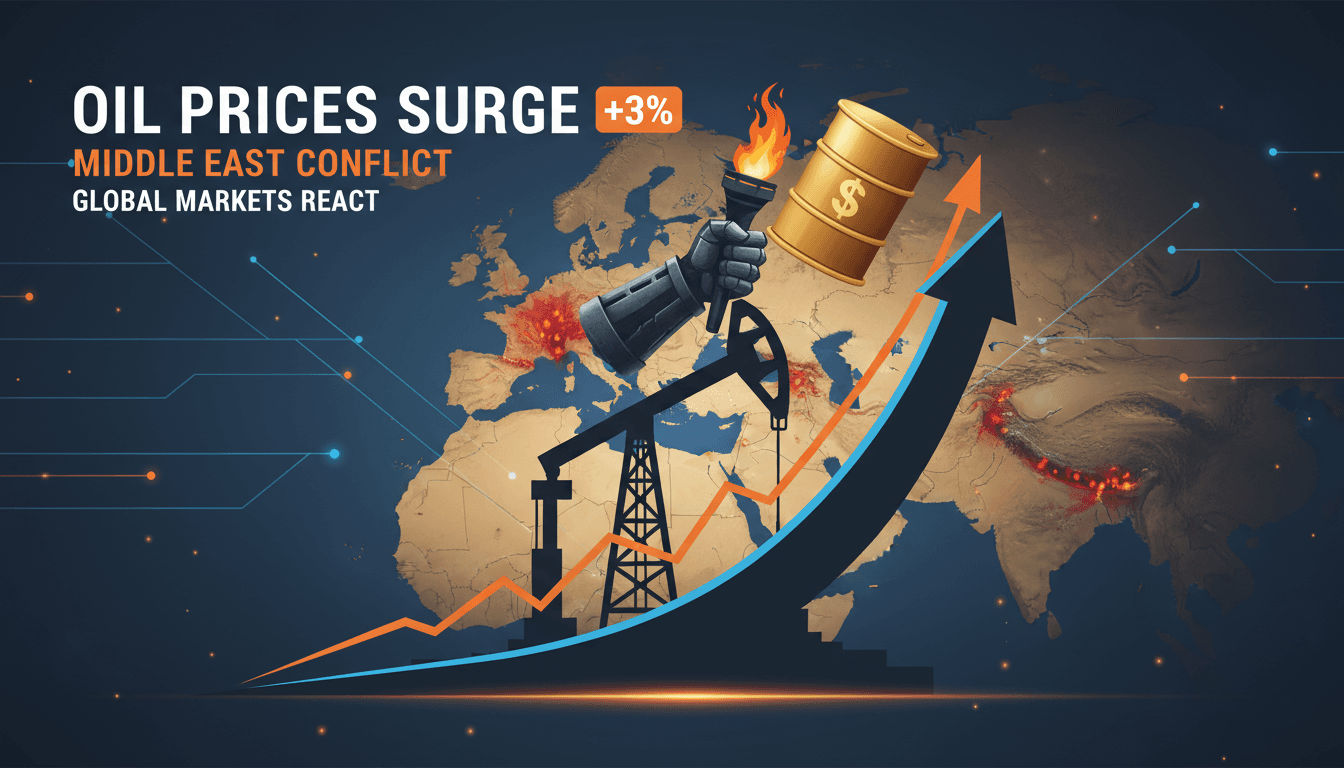
Oil prices surge over 3% amid renewed fighting in the Middle East
What happened
Oil prices have surged by more than 3% following a resurgence of fighting in the Middle East. This increase comes after a brief period of calm, which has now been disrupted by renewed violence. The situation raises concerns about potential disruptions to energy supplies, impacting global markets.
The conflict in the region has been ongoing for five months, and recent attacks have undermined diplomatic efforts aimed at stabilizing the area. As tensions escalate, the immediate impact on oil prices reflects the sensitivity of energy markets to geopolitical conflicts.
The Context
The ongoing conflict in the Middle East has significant implications for global energy security and market stability. Recent attacks have complicated diplomatic efforts, making it increasingly difficult to achieve a resolution. Despite the volatility in oil prices, Asian stock markets have shown gains, indicating a complex interplay between regional conflicts and global economic responses.
The situation is particularly concerning for energy stakeholders, as the resurgence of violence reignites fears of supply disruptions. With the conflict persisting, the potential for further escalation remains high, which could lead to more pronounced fluctuations in oil prices.
Takeaway
As the situation in the Middle East continues to evolve, stakeholders should monitor developments in regional diplomacy closely. The ongoing conflict is likely to influence global oil prices and market stability in the long term. Investors should be prepared for further fluctuations in oil prices and stock markets as the geopolitical landscape shifts.
Looking ahead, it will be crucial to observe how diplomatic efforts unfold and whether they can mitigate the impact of the conflict on energy supplies. The interplay between military actions and market responses will be a key area to watch in the coming weeks.
Social/economic commentary and analysis relevant to business and markets.
"WSJ blends data-driven economic insight with commentary on policy and society."
— A47 Editor
Oil Jumps as Fresh Middle East Strikes Threaten Fragile Diplomacy
Oil prices surged over 7% as Brent and West Texas Intermediate crude futures experienced significant gains following a new wave of violence in the Middle East, disrupting crucial oil-shipping routes. This escalation in conflict has raised concerns ab...
Global political, business, and cultural coverage from WSJ international desks.
"The Wall Street Journal offers extensive international reporting with a reputation for financial insight and a center-right editorial stance."
— A47 Editor
Oil Surges as Fresh Middle East Strikes Threaten Fragile Diplomacy
Oil prices surged over 3% amid renewed fighting in the Middle East, which has jeopardized ongoing diplomatic efforts to resolve a five-month conflict affecting energy markets. The recent escalation includes military actions involving the U.S. and Ira...
Jordanian news and regional updates.
"Roya News is a Jordanian outlet focused on breaking news and local affairs."
— A47 Editor
استئناف الضربات في الشرق الأوسط يرفع أسعار النفط مجددا
Airstrikes in the Middle East resumed on Wednesday after a period of calm, leading to renewed concerns over regional stability and security. The escalation in military actions is expected to have significant implications for the geopolitical landscap...
Global markets, investing, and macroeconomics from a premier financial newsroom.
"Bloomberg is respected for in-depth financial reporting and data-driven analysis."
— A47 Editor
Oil Gains After Iran Attacks, Asian Stocks Advance: Markets Wrap
Crude oil prices have risen following renewed military confrontations in the Middle East, particularly involving Iran, which has raised concerns about potential disruptions to energy supplies. This uptick in oil prices comes after a period of relativ...
Global markets, investing, and macroeconomics from a premier financial newsroom.
"Bloomberg is respected for in-depth financial reporting and data-driven analysis."
— A47 Editor
Latest Oil Market News and Analysis for July 29
Oil prices have rebounded after a significant three-day decline, driven by renewed fighting in the Middle East, which raises concerns over energy supply disruptions. This rebound follows a period of volatility influenced by geopolitical tensions, par...