
US Strategic Petroleum Reserve hits lowest level since 1983
What happened
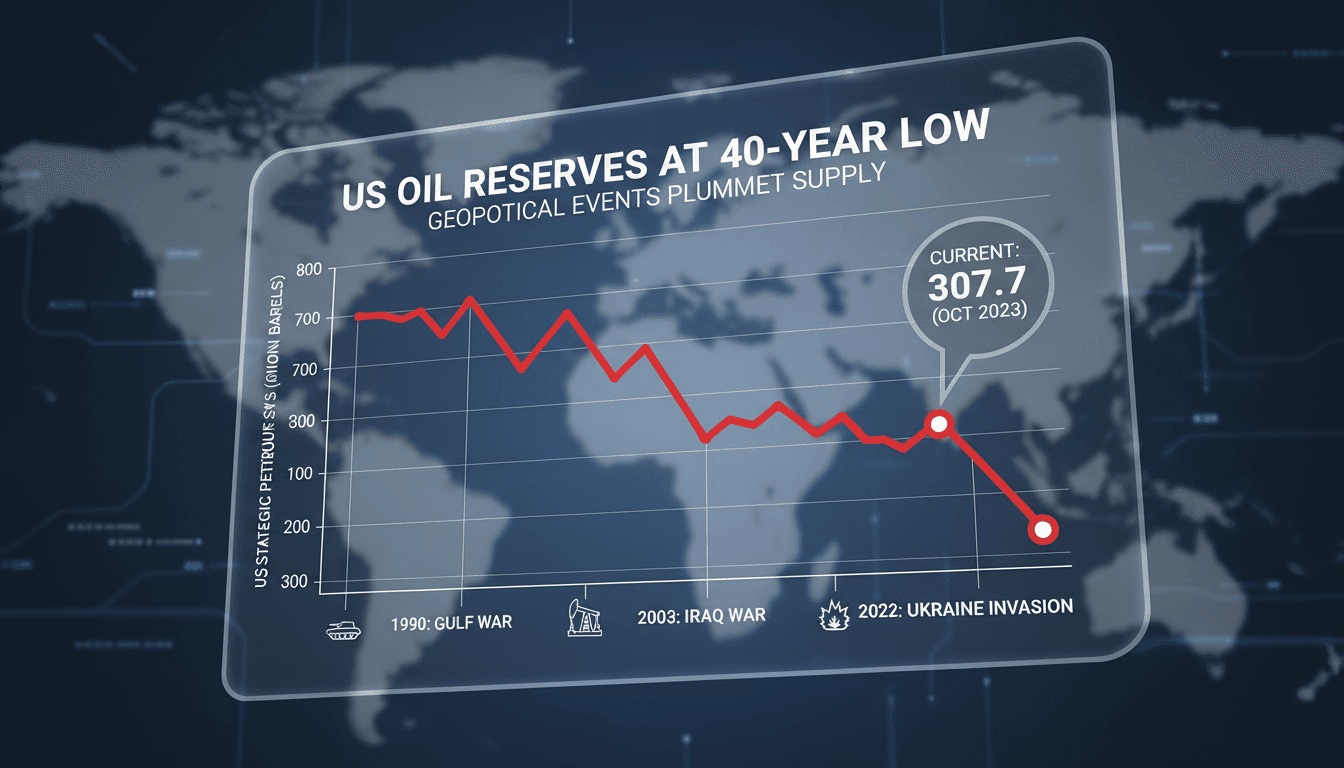
The U.S. Strategic Petroleum Reserve has fallen to 307.7 million barrels following a withdrawal of 3.7 million barrels last week. This marks the lowest level of the SPR since March 1983, highlighting a significant depletion in reserves. The recent withdrawals are part of a broader strategy to address supply shortages driven by ongoing geopolitical conflicts.
In total, the SPR has seen withdrawals of 352 million barrels over the past four years, with over 107.7 million barrels released since the current administration's withdrawal strategy began. The current reserve level is now below 310 million barrels for the first time in over four decades.
The Context
The depletion of the SPR is a critical issue as it reflects the U.S.'s vulnerability to external shocks in oil supply. The ongoing geopolitical conflicts have necessitated emergency measures, leading to significant withdrawals from the reserve. This situation underscores the delicate balance between addressing immediate energy needs and maintaining strategic reserves for long-term security.
As the SPR continues to decline, it raises questions about the U.S.'s preparedness for future energy crises. The current administration's approach to managing the reserve will be closely scrutinized by both policymakers and the public. The timing of these withdrawals coincides with heightened global tensions, making the need for a robust energy strategy more pressing than ever.
Takeaway
Looking ahead, it will be essential to monitor future SPR withdrawal plans and their implications for U.S. energy security. The ongoing depletion may impact the nation's ability to respond effectively to potential oil supply crises. Stakeholders should remain vigilant regarding geopolitical developments that could further strain oil supplies.
As the situation evolves, a reassessment of U.S. energy policies may be necessary to ensure adequate preparedness for future disruptions. The balance between immediate supply needs and long-term strategic reserves will be a critical focus for policymakers in the coming months.
Global business headlines with AI angles.
"General business outlet that frequently covers AI."
— A47 Editor
America's Emergency Oil Reserve Keeps Falling To Decade Lows. Auditors Warn It May Not Be Ready For Another Crisis
The U.S. Strategic Petroleum Reserve has fallen to its lowest level since March 1983, following the withdrawal of 352 million barrels of crude oil over the past four years to address geopolitical conflicts. This depletion raises concerns about the na...
Pan-Arab news coverage spanning politics, business, sports, and regional affairs.
"Asharq Al-Awsat reflects a broad Arab editorial perspective with strong attention to regional geopolitics."
— A47 Editor
انخفاض الاحتياطي الاستراتيجي النفطي في أميركا إلى أدنى مستوى منذ 1983
Recent data from the U.S. Department of Energy indicates that the strategic petroleum reserve in the United States has decreased by approximately 3.7 million barrels, bringing the total to 307.7 million barrels as of last week. This marks the lowest ...
Sports reporting with a focus on Saudi and regional competitions.
"Okaz sports coverage is broad and audience-friendly, with strong attention to Saudi teams and leagues."
— A47 Editor
كم سحبت أمريكا من احتياطي النفط الإستراتيجي؟
Recent data from the U.S. Department of Energy revealed a decrease in the Strategic Petroleum Reserve by 3.7 million barrels last week, bringing the total to 307.7 million barrels, the lowest level since March 1983. The withdrawals included 2.2 milli...