
Oil prices rise 7% amid renewed military actions in the Middle East
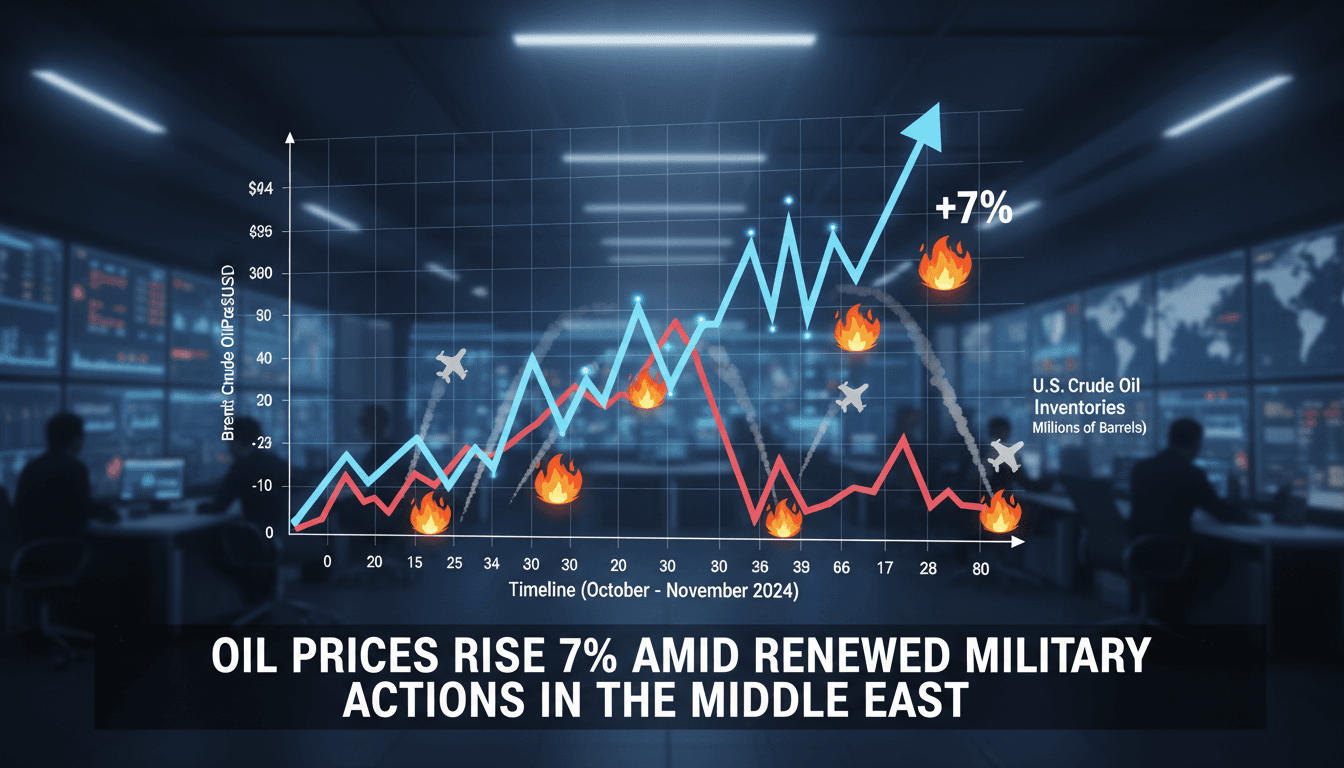
Here's what it means for you.
The recent surge in oil prices signals potential challenges for global markets and economies. As Brent crude oil prices hit $90.74 per barrel, businesses and consumers alike may face increased costs. This volatility could influence energy policies and investment strategies, particularly in sectors reliant on stable oil prices. The ongoing military tensions in the Middle East are likely to exacerbate supply concerns, making it crucial for stakeholders to monitor developments closely. The implications of these price changes could ripple through various industries, affecting everything from transportation to manufacturing.
What happened
On July 29, 2026, Brent crude oil prices surged by approximately 7%, reaching $90.74 per barrel. This spike was primarily driven by renewed military actions in the Middle East, particularly U.S. airstrikes in the region. Additionally, a significant decline in U.S. crude oil inventories, which fell by about 3.3 million barrels, further supported the increase in prices.
The rise in oil prices reflects ongoing geopolitical tensions and market reactions to supply concerns. As the situation evolves, market analysts predict continued volatility in oil prices, influenced by both military developments and inventory reports.
The Context
The recent military actions in the Middle East have heightened supply concerns, impacting global oil markets. The U.S. has resumed airstrikes, which raises questions about potential disruptions in oil supply from the region. This backdrop of geopolitical instability is critical for understanding the current market dynamics.
The decline in U.S. crude oil inventories adds another layer of complexity to the situation. With inventories dropping significantly, the market is reacting to fears of tighter supply, which could lead to further price increases. Stakeholders must remain vigilant as these factors interplay in shaping the oil landscape.
Takeaway
Looking ahead, it is essential to monitor U.S. military actions and their potential impact on oil supply. Upcoming reports on U.S. crude oil inventories will also provide valuable insights into market trends. As geopolitical tensions continue to evolve, oil prices are expected to remain volatile, with fluctuations likely based on military developments and inventory data.
The ongoing situation in the Middle East will be a critical factor in determining future price movements. Stakeholders should prepare for a landscape where oil prices could shift rapidly in response to new information.
Arabic-language economic and business reporting with strong UAE market relevance.
"Emarat Al Youm business coverage often centers UAE property, banking, consumer issues, and economic policy."
— A47 Editor
ارتفاع العقود الآجلة لخام برنت إلى 90.74 دولاراً للبرميل ارتفاع العقود الآجلة لخام برنت إلى 90.74 دولاراً للبرميل
Brent crude oil futures surged to $90.74 per barrel, marking a significant increase of approximately 7% on Wednesday, driven by renewed airstrikes in the Middle East that heightened supply concerns. This rise follows a period of fluctuating prices an...
Sports reporting with a focus on Saudi and regional competitions.
"Okaz sports coverage is broad and audience-friendly, with strong attention to Saudi teams and leagues."
— A47 Editor
7 % صعود لأسعار النفط.. برنت إلى 90 دولاراً
Oil prices surged by approximately 7% today, driven by renewed airstrikes in the Middle East, which dampened hopes for a resolution to the U.S.-Israeli conflict with Iran. Brent crude futures rose by $5.84, or 6.9%, reaching $89.93 per barrel, while ...
Sports reporting with a focus on Saudi and regional competitions.
"Okaz sports coverage is broad and audience-friendly, with strong attention to Saudi teams and leagues."
— A47 Editor
النفط يرتد.. أسعار برنت تعاود الارتفاع صوب 88 دولاراً
Oil prices have rebounded, with Brent crude rising by $3.56 to $87.65 per barrel, driven by a decrease in U.S. crude oil inventories. This increase partially offsets losses from the previous session, which were attributed to a halt in hostilities bet...