
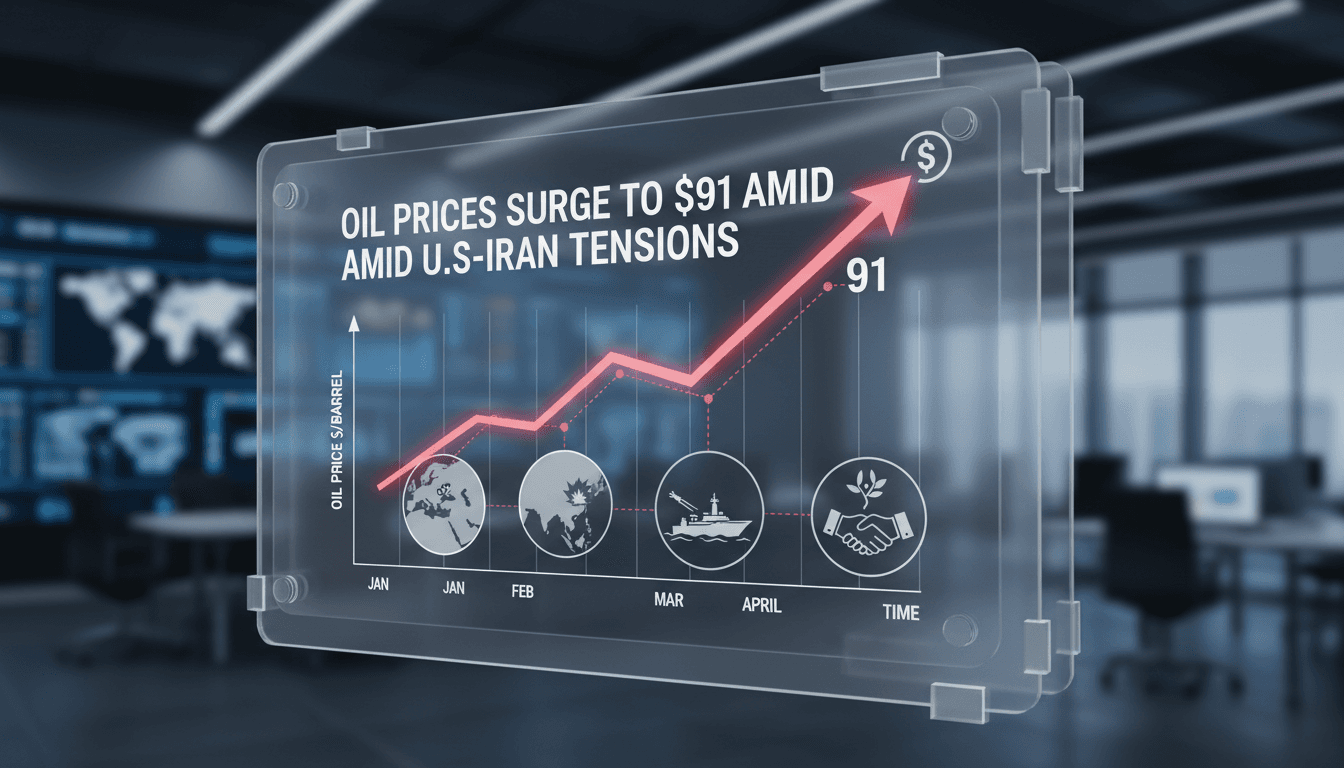
Oil prices surge to $91 per barrel amid escalating U.S.-Iran tensions
Here's what it means for you.
The recent surge in oil prices to approximately $91 per barrel signals heightened market volatility driven by geopolitical tensions. As military actions disrupt oil flows and diplomatic efforts unfold, stakeholders in the energy sector must remain vigilant. This situation could lead to increased operational costs and affect pricing strategies across various industries reliant on oil. The implications extend beyond immediate price fluctuations, as sustained tensions may influence long-term energy policies and supply chain dynamics. Investors and policymakers alike should prepare for a landscape where oil prices are likely to remain sensitive to developments in U.S.-Iran relations.
What happened
Oil prices have risen sharply as tensions between the U.S. and Iran have intensified, with Brent crude reaching around $91 per barrel. This increase follows a period of volatility influenced by military actions that have disrupted oil flows through critical shipping routes. The surge reflects a 7% rise in oil prices, underscoring the market's sensitivity to geopolitical tensions.
Recent military actions have raised concerns over potential supply disruptions, prompting a swift reaction in the oil market. Ongoing U.S. diplomatic efforts aim to resolve the conflict, but the situation remains precarious as developments unfold.
The Context
The backdrop of this price surge includes a significant decline in U.S. crude inventories, which fell by approximately 3.3 million barrels in the week ending July 24. Brent crude prices had previously dropped to as low as $83 earlier in the week, highlighting the rapid shifts in market sentiment. The interplay between military actions and diplomatic negotiations is critical, as both factors heavily influence oil supply and demand dynamics.
As tensions persist, the energy market is closely monitoring the evolving geopolitical landscape. Stakeholders, including governments and corporations, are assessing the potential long-term implications of these developments on energy security and pricing strategies.
Takeaway
The ongoing U.S.-Iran tensions are likely to continue influencing oil prices in the near future. As military actions and diplomatic negotiations unfold, market participants should keep a close eye on developments that could further impact oil supply. Monitoring changes in oil supply and demand dynamics will be essential for understanding the broader implications for the energy sector.
In the coming weeks, the focus will be on U.S.-Iran diplomatic negotiations and any shifts in military actions that could affect oil flows. The market's reaction to these events will be crucial in determining the trajectory of oil prices moving forward.
Arabic-language coverage of international news and geopolitics.
"RT Arabic is a Russian state-funded outlet often criticized for promoting Kremlin-aligned narratives."
— A47 Editor
النفط يرتفع مع تصاعد المواجهة بين إيران والولايات المتحدة
Oil prices have risen in today's trading, driven by the escalating confrontation between the United States and Iran. This increase reflects market reactions to geopolitical tensions that often influence oil supply and demand dynamics.
Capitol Hill news, legislation, and policy insight.
"The Hill specializes in U.S. politics and policy, with a focus on Capitol Hill developments and a reputation for insider reporting."
— A47 Editor
Oil prices jump up as US-Iran tensions escalate
Oil prices have risen significantly as tensions between the U.S. and Iran escalate, with Brent crude trading at approximately $91 per barrel, up from earlier lows of about $83. This increase follows a period of heightened military actions and geopoli...
U.S. business news, corporate developments, and economy.
"The Wall Street Journal is respected for deep financial and economic reporting with a center-right editorial perspective."
— A47 Editor
Oil Jumps as Fresh Middle East Strikes Threaten Fragile Diplomacy
Oil prices surged over 7% as Brent and West Texas Intermediate crude futures experienced significant gains following a new wave of violence in the Middle East, disrupting crucial oil-shipping routes. This escalation has raised concerns about the stab...
Sports reporting with a focus on Saudi and regional competitions.
"Okaz sports coverage is broad and audience-friendly, with strong attention to Saudi teams and leagues."
— A47 Editor
النفط يرتد.. أسعار برنت تعاود الارتفاع صوب 88 دولاراً
Oil prices have rebounded, with Brent crude rising by $3.56 to $87.65 per barrel, driven by a decrease in U.S. crude oil inventories. This increase partially offsets losses from the previous session, which were attributed to a halt in hostilities bet...
Arabic-language coverage of international news and geopolitics.
"RT Arabic is a Russian state-funded outlet often criticized for promoting Kremlin-aligned narratives."
— A47 Editor
النفط يقفز بأكثر من 3% مع تجدد التصعيد بين واشنطن وطهران
Global oil prices surged by more than $3 per barrel in early trading on Wednesday, ending three consecutive sessions of losses, amid escalating tensions between the United States and Iran in the Middle East.
Sports reporting with a focus on Saudi and regional competitions.
"Okaz sports coverage is broad and audience-friendly, with strong attention to Saudi teams and leagues."
— A47 Editor
بآمال تسوية صراع أمريكا وإيران.. النفط إلى 84 دولاراً
Oil prices continued to decline sharply today, with Brent crude falling to $83.68 amid cautious hopes for a resolution to the U.S.-Iran conflict. President Donald Trump indicated that positive discussions are ongoing with Tehran but warned of resumin...